
Seclusion of Elunestra
Σελήνη
"Truth is a lie."
Synopsis
Seat of Power: Veila'dorei, Twilight Forests
Part of: None
People Name: Moon Elves/Elf of the Moon (Salun'a'Luari/Salun'e'Lurin)
Adjective: Elunestran (An Elunestran sword)
Religion: Lunar Cult
Language: Low Sora'thelian
Introduction

"Hold a relationship with the Silence."
When it comes to the mystical nature of the elves, none fit the stereotype more than the Moon Elves. Filled with unhindered ambition and having abandoned the ways of the Sun, the Salun'a'Luari reside in their hidden groves concocting schemes and witchcraft in worship of The Witch in the Moon. Hidden away deep within the Twilight Forests, these Luari rarely leave their homes, both to guard their secrets from outsiders, as well as to protect themselves for those who do not abide their Chaotic ways. There is a tranquility in their hectic lives, just as there is a pattern to the ever-changing moon. It is this very moon that these elves claim for worship, with their Goddess Selv'aan, The Witch in the Moon, Wondermaker, who's all-seeing eye guides their ambitions and progress. Great and powerful magicks seep deep into these secluded lands, empowering both elf and spell alike. It is said that where a Moon Elf goes, change happens. While their history has been steeped with much change, including their schism with the United Elves and then the Star Elves, the current state of the Moon Elves is one of quiet scheming, plotting, planning. A Great Plan unfolds, and the Salun'a'Luari its agents; to restore the Divine Mind through great secrets uncovered, and kept.
Physiology
“Familiarity is a comfortable blanket.”
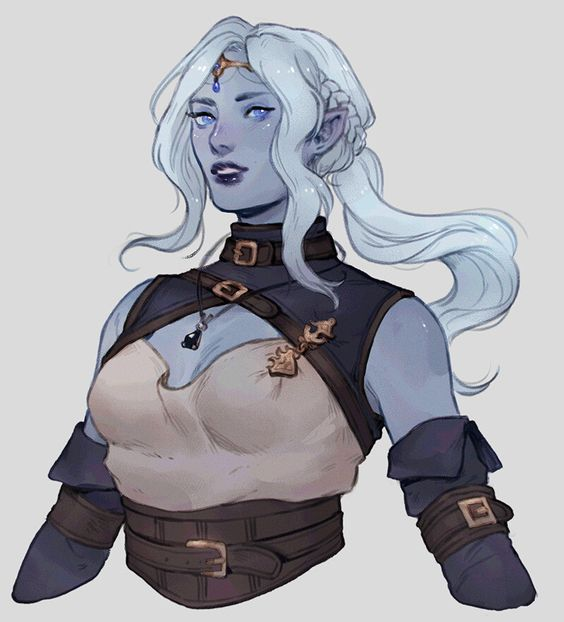
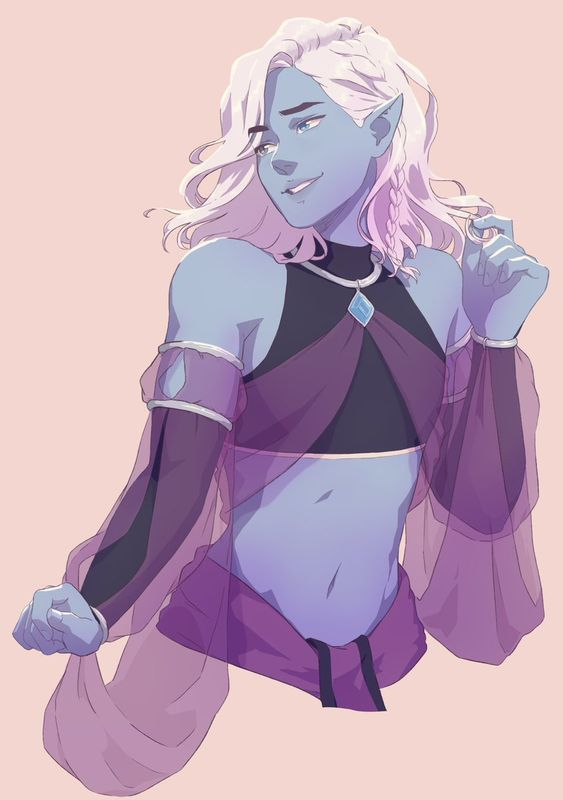
The shortest of the elves, the slender Salun'e'Lurin tends to stand around 6'3" for females, and 6'7" for males, with male Moon Elves weighing on average 165 lbs, and females at 150. Pale skin is what they sport, in light shades of blues. Skin colors can range from light blue, to very pale white, almost ghostly so, but do not encroach on the colors of black and gray of their cousins the Star Elves.
Their hair is usually white, with some sporting light blues. On occasion, there can be seen Moon Elves with black hair similar to their Star Elven cousins. Either black or white, a Moon Elf's hair will give a subtly blue glow under moonlight, nearly imperceptibly. Bright eyes peer out from their angular faces, with their pupils being shades of blue instead of black, with a variety of colors being seen in their iris including dark and bright blues, purples and teals. The ears that set on the heads of these elves droop down, in contrast to the high-rising ears of the Sun Elves and the middling ears of the Star Elves. Moon Elven hairstyles are quite varied, from long drooping braids on both sides to long bangs, or pushed all the way back.
As with all elves, they do not need to sleep, and instead prefer to bask in nature and meditate. Moon Elves prefer to meditate around pools of water, especially those with skylights to the moon. Though they do not need to sleep, if they are to do so, they will likely choose to sleep during the day, to avoid the overbearing sun.
Fashion
"Design reveals Destiny."
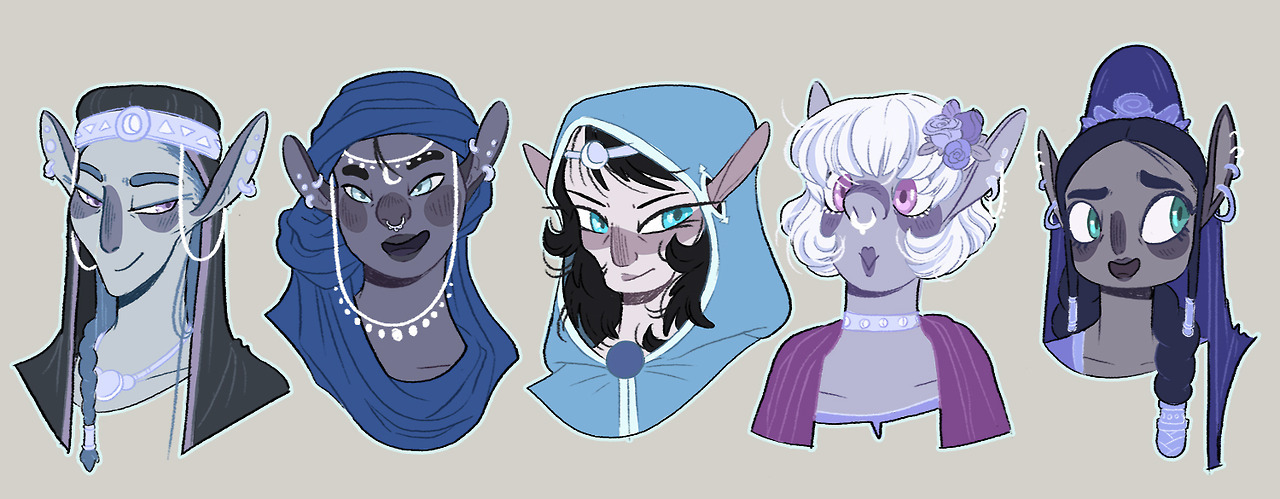
Flowing and breezy, the average Moon Elf's attire features long sleeves or robes, with a cinched cloth around the waist for both males and females. They are font of both jewelry and clothes that droop, with nose rings, earrings, necklaces, chains that sit on the ears and fall down to their chins, headbands and other fashionable articles that move and sway with their free-flowing movements. Often, a Moon Elf's ears are many pierced, with a variety of rings and piercings adorning them. Of course, Moon Elven attire is not fully actualized without proper jewelry to symbolize the moon. Moonstones, Silver, and the coveted Moonsilver and mixed and dotted throughout those who can afford such.
 Moon Elves keep their hair long, and cropping it short is often a social taboo. They prefer to not wear hats or headwear, only doing so when needed.
Most of their clothes incorporate the natural world they use to veil themselves, such that oftentimes one cannot make out a Moon Elf's outfit from the treeline of a forest. Cloaks and capes are quite common for both travel and domestic wear, with hoods being preferable at night to keep their hair from glowing in the moonlight. Leaves or faux leaves fashioned from cloth are commonly woven into capes and cloaks, but these are kept for travel. More traditional materials like tussar silk or a uniquely woven fur taken from a forest ermine in a fashion that does not appear as if from leather is a common clothing staple. More well-to-do Luari will put bands or strips of silver on their necks and foreheads, a belief of being connected to the Wondermaker as well as current fashion trends.
Wireleaf Pine needles are a more expensive material incorporated into their fashion if they can afford it, providing a natural protection comparable to chainmail while retaining the natural appearance they prefer. Haertwood is another Aphyllous material that makes its way into Moon Elf fashion, specifically the knots that are often disposed of in the fashioning of other Aphyllous crafts. The pinnacle of Moon Elven fashion includes the incorporation of Moonsilver, claimed to be the metal blood of The Witch in the Moon herself. This enchanting metal is left as is for the nobility, or it is even further enhanced for the rulers of the Forests with Occlusions, a unique fashion of Shadow Magick, a shifting and moving shade that obscures the appearance of the wearer. Those who cannot afford such extreme gifts make due with the nearly as expensive Arcanite, enchanted with a variety of Artificeries.
Their preferred hues for their clothing are blues, blacks, greys, whites, purples, with some small amounts of gold and red and brown. Ultramarine blue is an expensive dye and often reserved for the wealthy and well-to-do, and those who cannot afford much of this dye will dilute it into paler hues.
Values, Attitudes, Taboos, Morals, and Beliefs
"We shall cast off these outdated and nonsensical traditions!"
Of all the peoples on Volantis, it is the Moon Elves who are shrouded the most in mystery. Sly, scheming and secluded in their mystical Forests, their natures and personalities mirror their environment, sequestered and reserved. However, they are by far the most chaotic bunch of the elves, with a precedent for being quick to change, as well as having a tendency to conduct rituals for a variety of matters. Above all, they are ambitious, often selfishly so. No other group is more willing to step into morally grey areas or sacrifice the goodwill and standing of others to learn more, do more, have more. Theirs is a greed not dissimilar to the material greed of the dwarves, such that they are always striving for more.
Luari hailing from Elunestra resonate with existentialist philosophy, meaning they put emphasis on individual freedoms, authenticity, and the absurdity of existence. They believe that the whole should service the one, and that each person has the power to change the world. Some even might call them selfish, which Sun Elves are fond of spouting.
Central to their philosophy is the Grand Plan, a great work started before time immemorial by the Witch in the Moon Selv'aan to further an unknown divine agenda. For The Wondermaker's followers, a duty to create meaning in a chaotic and indifferent universe is their role to play, and how they view their role in contribution to Her Grand Plan.
Salun'a'Luari tend to be very expressive. Sometimes called dramatic, a Moon Elf is tune with their inner self, grappling with their complex thoughts and emotions and expressing them to those around them. Passionate and intense, sometimes these elves can overwhelm others, in the few times that others do interact with these reclusive people.
 Moon Elves have trouble focusing on things sporadically. Because of their chaotic ways, they tend to hop from topic to topic in conversation, or may even bring up a conversation that was suspended a month ago, expecting the other to keep up and know what is being discussed. They are whimsical and carefree, far less serious than their Sun Elven counterparts. Impulsive is a word often used to describe them, though they would rather be viewed as having a strong distaste for complacency and brave enough to avoid such.
The Moon Elf philosophy of chaos and existentialism leads them to embracing nature and living in harmony with it, rejecting that which is constructed or fake, such as social norms. These people tend to see themselves as part of the natural order, free from the constraints of civilization. Though they live together in their communes and they can make due within a large city, they will often not partake in the typical happenings of social life, such as social obligations, governmental positions, or any responsibility for that matter.
A Salun'e'Lurin often chooses to embrace chaos and spontaneity. Moon Elves value personal freedom and individual expression above all else. They believe that everyone should be free to pursue their own desires without being bound by societal expectations. Moon Elves are often seen as unpredictable and enigmatic by other races. They can be whimsical and carefree, but also fiercely independent and resistant to authority.
They see change as an inherent and necessary part of life, embracing it rather than fearing it. They view stagnation as a greater threat than Chaos.
A noticeable distinction is held between notion of what outsiders refer to as Chaos, and what Moon Elves refer to as chaos. To Moon Elves, this makes full sense. However, for full elaboration, a distinction is made. Chaos, as most of the lands put it, is the notion of "evil" things, chaotic things, this disorderly, monsters, dark gods, evil powers, lawlessness. Most would lump the Moon Elves into this nefarious category. However, the Moon Elves, steeped in their esoteric knowledge, know that the true enemy is not Chaos itself, but rather those that would oppose the free will of all in these lands, whether they be Chaotic, or Orderly. The chaotic ways of the Moon Elves are nuanced, and thought of as simply a manner of thought, rather than a side of a conflict.

Bad actors include the vile beings of both Chaos and Order, any who would impose their will upon another. This includes the Dark Gods locked deep within the bowels of Animus Liber that are not there out of the orders of Ka'ra't and His fear of Chaos after the 2nd Age are among this list, as well as well as the luminescent council that opposes them, Ka'ra't himself included. The Demons and Darkspawn, the devils and evil beings of the world that control others, even kings and rulers who do not heed their subject's cries for help.
Their adherence to the natural way of things leads them to not judging others for their base natures. A Moon Elf may utterly despise a Sun Elf to their core, but they do not blame them for their inclination for their love of the sun, sands or worship of whom they call Solarius. They do not lay guilt upon the dwarf for their greed, nor the Mer for their uncompromising mindsets. Such is the way of things, and their lot; all furthers the Grand Plan in some way or another. However, in all of this understanding, the Moon Elves are not understanding of those who move beyond their inclinations into active decisions to follow their base desires. Judgment is cast upon the Sun Elf who dedicates their life to the pursuit of Order and The Coruscated. Blame and disdain is cast upon the dwarf for not their greed, but their enacting of it by felling great forests and ancient trees to furnish their weapon handles. Discontent gazes fall upon the Mer for their inability to reconcile their base nature with others, being bullheaded and rushing into matters.
Moonsilver is their coveted material of interest, as it is said to be the fallen divine blood of Selv'aan, waging an eternal war upon her realm against the forces of Fundament. Usage of Moonsilver by any outsider in nearly any circumstance is entirely taboo.
Where Sun Elves yearn for the past and live in nostalgia, Moon Elves pine for the future and live for new innovations. They prefer new technology and are avid uses of Clockwerk Contraptions, though only Digerati are allowed to practice such complex matters. Even in the matter of their Great Plan, they wish not to just restore the Divine Mind unto it's healed state, but rather a new, more wise state for the children of the moon.
Naturally, being hidden deep in the forests of the Twilight Forests, The Moon Elves feel not above nature but rather in alignment with it. After all, their society was raised by the Beast known as Chayol'se the Wise Panther amidst the Ancient Arboreals. They live this out with a number of rituals and ways about their life, including a number of baptisms in their revered Moon Pools, aiming to purify their mind.
In contract directly with the Sun Elves, the Moon Elves claim they have seen what the acolytes of the Sun are trying to accomplish. Following a more nihilistic mindset on the future of things, the children of the Moon recall the evils of the United Elven Empire, and believe that elves are incapable of the "Greatest Good" the Sun Elves so hopefully cling to, and all of the Sun Elven ambitions towards such are pointless. This quasi-nihilism is not restricted to just the future, as it affects ongoing events as well. They would stand by and let things happen, not because they do not care and didn't oppose what was to transpire, but rather "things will unfold as they need to." This mindset is at odds with their ambitious and ever-striving desires of their heart, always rebellious, and never accepting of things just because they are the way they are.
Much of their mentality on the state of the world and the Grand Plan is tied to their faith and religion.
Family

"The day you teach the child the name of the bird, the child will never see the bird again." - An old Elunestran proverb.
Family is an ever-changing matter for the Moon Elves. They keep large families, and recognize that those who do not share blood ties can still be called brother and sister. Family is a social construct rather than purely biological, and one can leave and join a family based on personal gain, emotional ties, or even just on a whim. It is not uncommon for a family to swell in size after a festival held, only for it to shrink the next day.
Familial bonds is also tied to alliances, trust and temporary bonds; for example, a prolific adventurer may be admitted into a family as a retainer of sorts, without much deeper meaning. If the headmistress of the house deems the adventurer to have a lack of respect by bringing a freshly caught hare into the house, they may remove the family member with little fanfare. Personal freedom is valued above all, even the freedom to come and go from family. Lovers also come and go, and it often takes many relationships for a Moon Elf to find the one they wish to be with forever.
The hierarchies of these families are less defined as well, with roles and responsibilities being distributed based on current abilities and desires, rather than tradition and seniority. This of course can cause issues in establishing functional structures with so much change; if a young Salun'e'Lurin demands to be placed as the chef of a household and demonstrates the skills to perform, they often will get the job, even if temporarily. This does not prevent the Moon Elves from putting all of their investment into the current family however; their short and temporal bonds of alliances and family are known to be very intense, even if not long-lived.
However, as chaotic as it may seem for a society to live like this, the removal and acceptance of family members can only be done in accordance to the phases of the moon; on a New Moon, members may be ejected from the family, while on a Full Moon new members can be welcomed. It is a great taboo to disregard this practice, even if it is a familial change with little theatrics and of note.
Children intermingle with the village as a whole, with Moon Elven villages embodying the concept of "it takes a village." A child may have multiple mothers and fathers, while still respecting their blood parents as the ultimate authority.
Work & Trade

"The shadows of the forest teach us—those who walk in the Sun blind themselves to the truths beneath."
Those that work within the Seclusion of Elunestra are often the Jack and Jills of All Trades. They are the main proponents of the elven tradition of Renewal, changing their lives every hundred years to live entirely different lives. As such, they experience a breadth of jobs and occupations in their lives.
Some of these jobs critical to the success of the Seclusion include alchemists, foragers and gatherers, farmers bolstered by the ease of alchemy, scouts and pathfinders, woodcarvers, tanners, Water Keepers (those who search for and purify sources of water with The Wondermaker's Blessing), beekeepers, fisherfolk, shepherds, stoneworkers, hunters and trappers, Shamblers (A clandestine group of hidden passage makers), envoys for foreign bodies, Shade Steppers (ritual dancers), Silver Smiths, and Glimmerweavers (those who use a variety of magickal arts to refine fabric and cloth for wear, or imbuing such with Shadow Magick or Artificery).
Moonsilver, the signature metal of the Twilight Forests, is a staple of work to be seen in their lands as well as the attire of any well-off and self-respecting Moon Elf outside of Elunestra. Arcanite works of great magickal power are seen in the armaments of powerful Sisters of Secrets, and so are haertwood creations of aphyllous design, alongside wireleaf pine. Lumina is also the preferred method of lighting in Moon Elven settlements, rather than the dangerous fire of a torch or oil lamp.
Those that spend long in these lands will observe the phenomenon Lucubrate, which consists of the elves that enter a trance-like state as they study their arcane tomes and ritualistic records under the moonlight, in deep meditation. Some will be seen with their eyes closed and hardly any light provided from the moon above, yet they will absorb the knowledge contained within their tomes nonetheless.
Their working schedule naturally follows a lunar calendar, which intercedes in their work and mundane life. New moons are times for new projects, and changes in lifestyle. Full moons call for contemplation and stillness, reflection.
Religion

"The future is that of a new age of light! But not of that of the wretched Sun, but a world led by the light of Her restored beauty and the wisdom of the Divine Mind."
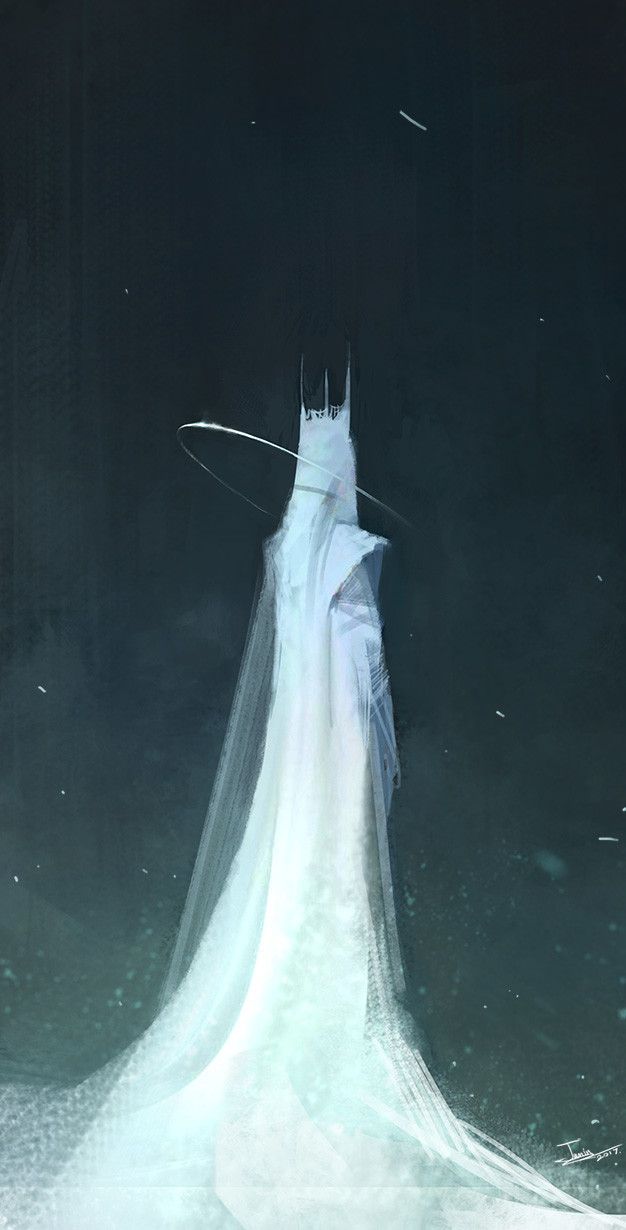
Central to these lunar-centric elves is none other than the Moon Herself, known to most as the Witch in the Moon, but known to the Salun'a’Luari as Wondermaker, Mirific Countess, Maiden of Mystery, Our Martyred Elfess, Selv'aan. It is she who remains as one of the sole Gods of Chaos remaining in the Outer Wilds (what most call Firmament) after the Chaos War, left in mockery as a faux example of an armistice between the faction of the gods in the disgraceful actions of Ka'ra't. She hosts the Divine Mind, keeper of all knowledge and secrets of Animus Liber, which was blasphemously mutilated by Solarius for knowledge, driving the Witch to madness.
Ka'ra't is the bane of all that is Elunestran Culture, slaughtering the Divine Mind which is still scarred and teetering ruin from his actions millennia ago.
Uniquely, the Moon Elven Faith (sometimes called the Lunar Cult) holds a god beget from an affair on Ka'ra't’s behalf with The Wondermaker, who conceived Skiaa, now known as Princess Nunavet, the Darkened Light, Leader of the Wilden Hunt, Mother of Beasts. It was Skiaa who was tempted by the Outsider into Fundament to unleash daemonica upon the world. It was Skiaa who was urged on and lied to by the to slaughter her brother, taking on deep darkness and turning into Princess Nunavet.
These gods play an integral dance in their faith, with stories and mythos existing for past, present and future times. Notably, the Moon Elves know it to be true that in some future age, the Sun will be put out by the devouring of the (sun devouring divine beast). After this apocalypse, the Moon will regain her fractured Divine Mind which has been stolen, Skiaa will be restored of her deep darkness and the eternal war on the moon will be conquered. Those that have provided their minds as pieces to rebuild the fractured Divine Mind will be rewarded with their toil and trouble on the Moon by being able to experience the full breadth of all of creation’s knowledge and secrets.
Discussing the future state of the world, the Moon Elves also concern themselves with the past, with much care given to ancient history. Their creation myth goes as so.
Before all things was a primordial sea of chaos, and before even the gods was a great Divine Beast, known as Manitou'keya, who took on the shape of a cosmic turtle. In their unknowable wisdom, they carried with them a pearl the size of the entire world. This pearl was to be the egg that the world would hatch out of. As Manitou'keya brought the Worldpearl throughout the Primordial Sea with their monumental fins, they found a suitable place to bury the egg so it may hatch. Along with it came more eggs that were buried, or Worldpearls, brought from that unknowable place. Content with their work, the Divine Beast left to continue sailing upon the celestial sea.
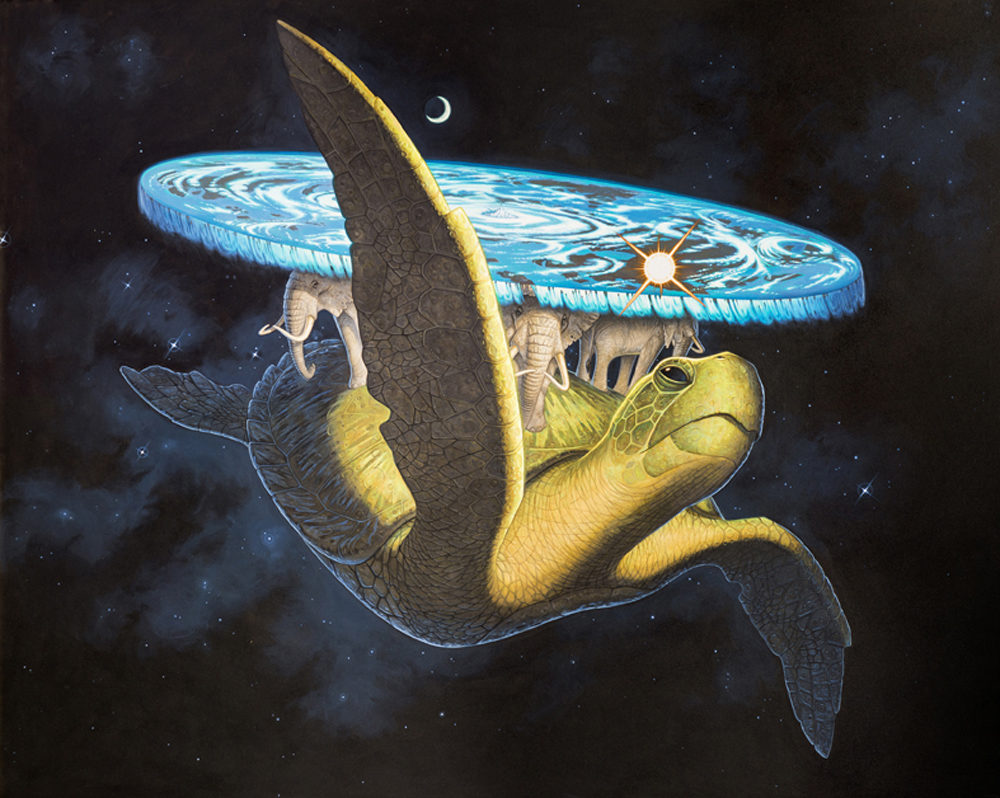
However, all was not to be well, as there were other Divine Beasts in this primordial realm, those that would wish harm upon others. The great and terrible Vulture known as Zokatl, swooped down and ate the pearls that would be come worlds in what is known as the Arribadas. Having little it could do, Manitou'keya could only watch as her eggs were consumed in divine hunger. Zokatl ate most of the eggs, but kept one for itself, which would become the Sun. In their offering, the Cosmic Turtle would hide a part of themselves into one of the eggs, while the rest of her was consumed by the vulture to protect her children. But one egg did remain, unspoiled, untouched. This was the original pearl held by the godly fins, and from it was Selv'aan born; she fashioned the egg into the moon as we know it today. From the remaining eggs, not free from blemish but surviving, were other gods born, and worlds fashioned from their eggs with the help of Selv'aan who was blessed with the Divine Mind. Out from this dream-state of quasi-form and curling celestial sea foam walked the first who would be called Salun'a'Luari, with their sibling elven race and all other mortals being formed from the damaged detritus of other Worldpearls, each composed of perishable flesh and imperishable souls.
One egg didn’t hatch. That was the egg which would hold the vestiges of the slain Divine Beast, cold and unmoving in the pearl. Wishing to return the favor which her progenitor had bestowed up her, Selv'aan bequeathed a secret to the egg, which, through means unknowable, helped it to hatch and marking the egg as hers. With the help of Selv'aan did the egg begin to warm. Out hatched the reincarnation of the Divine Beast, now a god we know as Riaa’Turask, now male, once known as God of Rebirth and Renewal. From the carcass left behind by the Sun Vulture Zokatl was the world fashioned. Her divine shell the land, her celestial blood the sea, her scales fashioned into mortals with the aid of imbuing of Wonder from the Wondermaker herself.
The world was now made, the celestial bodies hung in the Firmament, and mortals roamed the newly fashioned earth. However, they lacked guidance, as well as protection from Zokatl, who still remained. Fortunately there existed another Divine Beast which emerged from the woods and approached Selv'aan. The beast took the form of a great panther with 3 eyes and 5 tails and a voice like wistfulness, and it spoke of ideas for Selv'aan to resolve her plight. “Give your favored mortals and I some of your magick for defense against the Vulture, and I will guide them in the ways they should go.” The beast was then known as Chayol'se, the chosen beast of Wisdom, for no other creature heavenly or terrestrial is said to be more wise. With the deal struck, the sage Ancient Arboreals, great trees which were formed from the bones of the Divine Turtle, began to grow great and strong, gathering Her Chosen People, which would later become the Moon Elves.
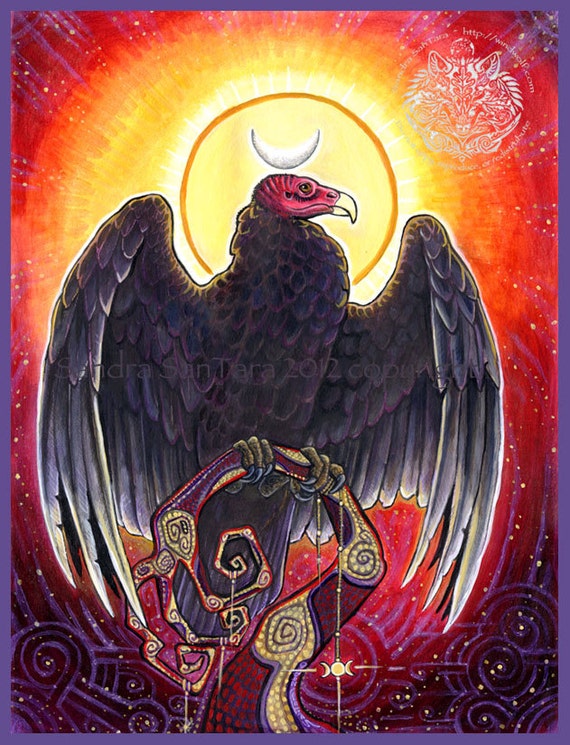
By this time the egg that would be the Sun had hatched, and from it sprung forth Ka'ra't, whom Zokatl heralded. Seeing the world that Selv'aan had made, Ka'ra't grew jealous, and was displeased at all the boons bestowed upon Selv'aan by Manitou'keya simply because she was first. Foremost was the desire to know the secret of how to rule all things, which only the one with the Divine Mind could know. Ka'ra't asked for the truth, and when he could not receive it, he entered Selv'aan’s mind, and searched for the secret himself, but found nothing, leaving the Divine Mind in shambles, and the birth of Skiaa from Selv'aan‘s sacrilegious act. Her defender, Rhiaa, was cast down to the earth, left to wander the realm shorn of her divine strength, hidden amongst the Ancient Arboreals to tend to her.
Thus, realizing his Divine Foley, Ka'ra't sent the newborn Skiaa, whom was his bastard daughter, to kill her half-brother Rhiaa and acquire the secret his mother hid in his heart. Skiaa did so, and skewered her brother through with either a sword, spear, or most often told as her horn as both are often depicted as unicorns. Rhiaa, the twice-slain, was no more, slain by his sister, but just as in the creation of the world, he hid his spirit away inside of his sister, along with some unknown and deeply evil darkness that was born from the repeated blaspheme of the divine family.
With this secret acquired, the devil that is Ka'ra't set the rule of Animus Liber from the Moon to the Sun, changing the rule of the world forever. Those that sided with Selv'aan were cast down into the hollow that is the shell of the world from creation, what we now call Fundament.
As a final act of injustice, The Martyred Elfess was placed within her realm the Moon at the end of this war, to act as a symbol of peace between the sects of Gods, and to prevent any of her fellow Gods of Chaos from breaching the Veil while abating the encroaching Deep Dark.
Thus is world: Selv'aan with a fractured mind desperately trying to restore what was lost while defending her home of her people from that which lies in the dark, Skiaa, now Princess Nunavet, estranged from her mother and harboring the twice-slain soul of the brother she murdered at the behest of he who rules upon the Overthrone, Ka'ra't, the Ancient Arboreals watching over a wounded world, and the Divine Panther Chayol'se and her wisdom is no where to be seen.
It is believed that the duty of every Moon elf is to rebuild the pieces of the Divine Mind by learning all there is to know, all manner of secrets and hidden truths so that when they pass into the afterlife, they may bring with them offerings of knowledge to their God, who shall become more whole because of it. This duty and goal is known as the Grand Plan. They also strive to tend to the Ancient Arboreals, guardians of the world, for their growth strengthens the Spirit of Rhiaa’Turask, aiding she of Two-Soul Skiaa. This, combined with the abatement of the ruling Sun, may bring back Chayol'se the Panther, who, after upholding their end of their ancient deal, would eliminate the Sun Vulture and consume the sun, and letting the moon regain her rightful place in the sky as ruler. Where the Sun Elves wish to reshape the world into their vision and return to a past state, the Moon Elves wish to accelerate to a future state of reunion with their God.
In death does an elf of Elunestra join their Matriarch in eternal toil, but not of labor to tire, but to experiment, to delve into deep secrets eternal, alchemical etchings upon the frayed fabric of reality. Within the Cauldron of the Eye upon the moon does a Salun'e’Lurin spend the rest of their days, able to pursue eternal all that is hidden from view, no matter how dark or unsightly. Those that have served The Witch in the Moon well in life are blessed with high status positions within the hierarchy of scientists and magi in the society led by their God, and those that refused the lessons of the Witch are forced to become slaves and assistants to those in power, eternally serving.
A particularly important symbol for their religion is that of the Seat of Thalyndros, where supplication is given to the Ancient Arboreals of myth through an effigy, if they even still exist. One can often see small offerings places around these wooden statues in various areas, indicating Elunestran activity.
Of small note, Moon Elves believe that all celestial creatures, that which others may call Angels or Demons, are instead the superfluous thoughts of the Divine Mind, which, because they come to naught, turn into demons, but if grounded, form into angels. So strong is the Divine Mind that just her thoughts are beings unto themselves.
Agriculture & Cuisine

In the depths of the forests that are the Twilight Forests, crops and creatures flourish abundantly. The creatures and meals that are seen in the Seclusion of Elunestra are some of the most exotic in the land barring the Lost Jungle.
Cervine creatures like deer are a staple meat, with wild boar and wild cattle closely monitored and culled upon need. Maize, beans, squash, potatoes, pumpkins, rice, and a long list of berries are classics of theirs. Of note, is that albino animals are considered to be blessed by The Wondermaker herself, and are protected at all costs. Any hunters or trappers that would attempt to conquer beasts of albino persuasion will find themselves at the end of a Moon Elven spear.
Uniquely, Moon Elves do not keep farms. They do not retain herds or crop fields, but rather will let the creatures roam wild and free, as well as sowing seeds throughout the lands. This makes the Twilight Forests a very luscious and rich place for food and life. However, the elves know which herds are theirs and where they are, causing complications when travelers pick fruit from a tree in the middle of the forest or hunt a hare in the belly of a dried river, only to be accosted of stealing from the locals. They are avid apiarists, or beekeeping that was exchanged from the Mer who were the original practitioners. The Moon Elves took their methods and transformed them into a natural method of keeping a list of nests in the woods, and harvesting them as needed. Some are surprised when a Moon Elf shows them this and they begin walking around in the woods and finding seemingly random beehives.
Fishing makes up a good portion of their food, both in rivers and on the far eastern coast they lay claim too. Salmon, trout, sturgeon, and catfish can be commonly seen roasting on an open pit in their villages, with shellfish, turtles, snapper, grouper and other oceanic fish being substituted when wayward east the sails are pointed. Spearfishing happens to be a favored sport of theirs as well.
Unique to the Moon Elves on a cultural level, they have a fascination for ingesting herbs and flora that are either exotic, magickal, or imbue some sort of effect on them. To them, there exists no better way of understanding something than to take on that aspect itself, and what better way to learn about the hottest pepper in the land than by experiencing it?
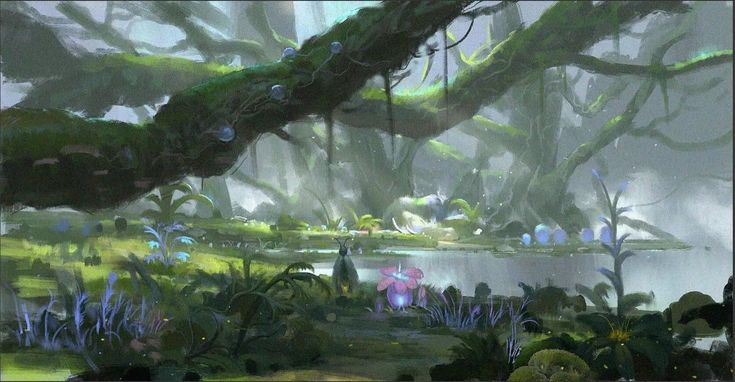
Annual Ambrosia is a unique plant employed in their fashion, that the Empire fondly likes to refer to as hagweed. Crow Maple is another curiosity seen in their enclosed Forests, bearing pitch black leaves with a glossy look to them as if obsidian. The Moon Elves have a technique of treating the leaves so that they do not rot, and incorporate it into their fashion on occasion. A long list of alchemical plants can be found in this realm as well, and makes their way into their agricultural sphere. Notably, one of these is Brëlmon, a beautiful type of nut-bearing tree similar to a walnut, with a bluish white hue on the shell and a hard core of white on the inside. They taste sweet, and happen to cure bunions.
Elephants are native to their forests, and bear religious significance for the Elves of the Moon. These elephants of the region exhibit what can only be described as a sort of ritual, where they will wave leafy branches at the waxing moon and conduct ritual bathing.
Radjah shellducks can be a rather comical sight at first, known for their great speeds they can travel on land. That humor can leave you once you are starving in the woods with an elf at your side that craves Shellduck. Carpenvir are thought to be relatives to the smaller bowerbird, but rather construct elaborate homes in the forest, with beds and rooms entirely designated within. Unfortunately for them, their eggs taste delicious to Moon Elves.
Food found to be native to Elunestra is known for it's varied and well-rounded presentation. A side of cranberries, a main course of roasted sturgeon, a grain of amaranth and quinoa, served with a cup of hot tea, leaves for very satisfied diners. For food preparation, they are proponents of cornbread and sofkee (a sweet drink derived from corn) which is possible through a process known as nixtamalization, where the corn is soaked in limewater and then washed and hulled for easier preparation. Hominy is also eaten, as well as pemmican, kanuchi (ground hickory nuts), and a great deal of chocolate created from the cacao plant.
Of all the lands, it is the Twilight Forests that allow the greatest connection to the Ancient Arboreals, though to many these are just a myth...
Architecture & Locale
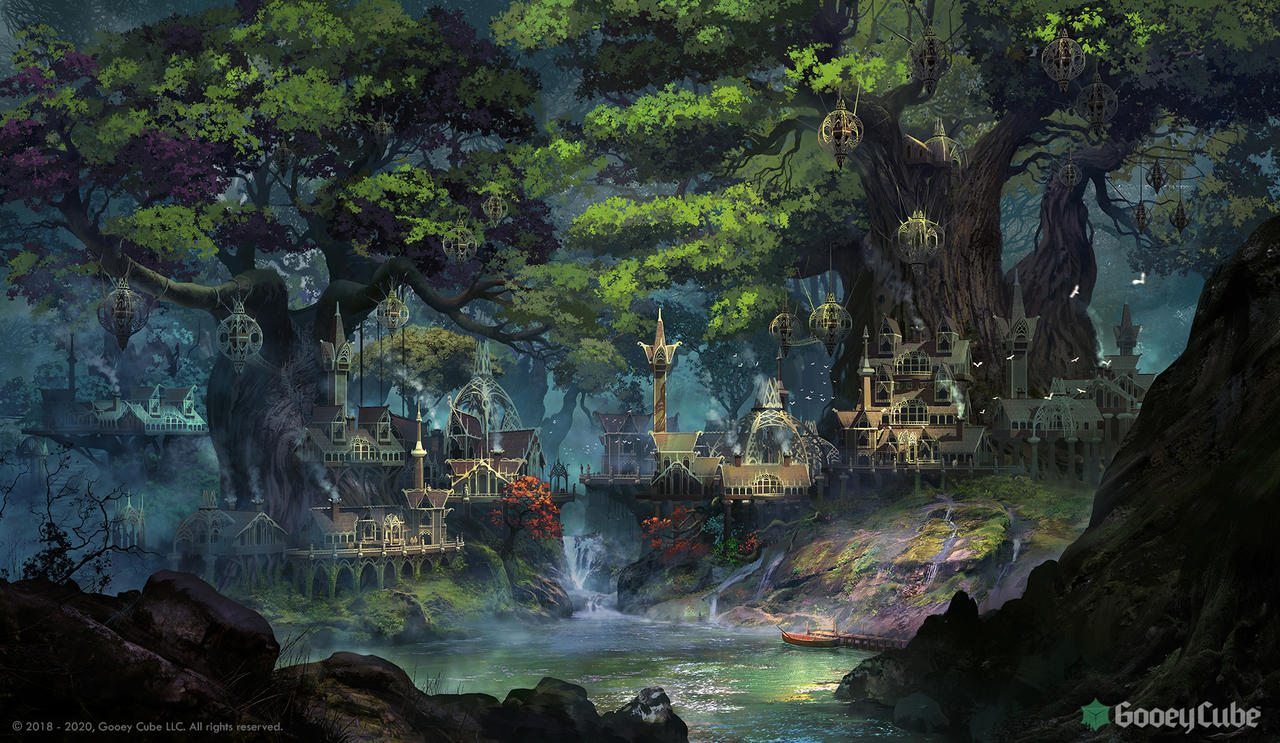
The locale of choice for the Salun'a'Luari is that of the Twilight Forests, a biome that combines elements of ancient forests and serene clearings with lakes and ponds, creating an ethereal and otherworldly environment. It is an unsettling fact that the sun never fully reaches it's apex in these lands, and the nights are long. A deep connection between them and the chaotic nature around them has fostered both elf and plant and beast. A pervasive mist hangs low on the ground, with some areas being obscured in thick fog which helps hide away their secluded retreats from prying eyes. Ponds are spotted throughout the land that hold religious significance to the land's people, as it is said that a pond of perfect stillness can reflect the moon in a fashion for communion with The Witch in the Moon, and is a symbol that the Witch is with them.
The cycles of the moon all have deep meaning, leading the Moon Elves to choose to live in places where the moon can be seen best, such as in locations of seclusion. They often live in secluded forests or mountains, preferring the tranquility of nature over the hustle and bustle of civilization.
Their architecture incorporates natural wood growth similar to that of the Clans of Galen, but with more integration into the trees themselves. It is an artform to draw out a tree to expand it's trunk to fit a hollow shape for a family to live within. They also like to fashion their roofs with strengthened glass to allow natural light into their homes. Those who are more affluent will hire a Digerati to incorporate Clockwerk Contraptions into their architecture, such as hanging vantages or rotating platforms. Outside on paths and on their homes you will find wood carvings of important figures or events, in homes and as statues on paths.
Government & Social Hierarchy

"Those who seek the sun are consumed by it. Power lies in the shadows."
The Moon Elf philosophy of chaos and existentialism leads them to embracing nature and living in harmony with it, rejecting that which is constructed or fake, such as social norms. These people tend to see themselves as part of the natural order, free from the constraints of civilization. Though they live together in their communes and they can make due within a large city, they will often not partake in the typical happenings of social life, such as social obligations, governmental positions, or any responsibility for that matter.
As such, there is often not a dedicated person for a specific role within Moon Elven government. Rather, the Tribe will have a number of people who can fill the role, such as Ambassador to the Ōkamis, and should one of the Ambassadors randomly vanish to chase their whims and wishes, the other Ambassadors will pick up where the other left off. This prevents the chaos of the Moon Elves from devolving them into a totally dysfunctional society. With their checks and balances, even order can be brought from chaos.
Positions that require static members, like important government offices, or owners of businesses or guilds, are viewed of in great respect by Moon Elves, not because of their enviable positions, but because of the burden of duty the elf must take on to conduct said role. Similar to how executioners are respected in human cultures due to their necessary but unsavory work, a Tribe Grek'at, or Leader, is seen as a bearer of burden, and respected as such.

Their capital, Veila’dorei, is said to be unable to be found unless one needs to. Somewhere in the Twilight Forests sits the heart of their nation, ruling from behind the scenes over their lands. Ruling the nation of The Seclusion of Elunestra is the Sylvan Synod, the head of their chaotic political structure. Their governmental structure is unique, drawing comparisons to the other nations in elements from aristocracies and meritocracies, but is primarily a magocracy. Those who hold positions don’t do so for long, for positions are constantly changing. Important figures on this Synod include the Keeper of Secrets (from the Sisters of Secrets), the Patriarch of Battle (from the Brothers of Battle Guild), Headmaster of Alkahestery, The Dominus Digerati and other lords and ladies of the table. They are led by a queen-like figure referred to as the Witch Queen (in Low Sora'thelian it is "Lunaya Tlatoani").
Moon Elves follow a matriarchal society, with females leading both household and governmental affairs often. It is not taboo for males to, but it is a social custom for females to lead.
There existed for a time a singular body of faith for the Moon Elves, but such is their chaotic ways, and it is no more.
Where Sun Elves yearn for the past and live in nostalgia, Moon Elves pine for the future and live for new innovations. They prefer new technology and are avid uses of Clockwerk Contraptions, though only Digerati are allowed to practice such complex matters.
Much like all of the elves, their social matters change frequently. For Moon Elves, the changing of their culture is breathtakingly rapid. What is seen as politically wise one week, may be seen as foolish the next. The fashionable earrings held dangling today may be better suited as a necklace in next month's public opinion. Keeping up the rapid environment is key to being viewed highly by your peers.
Weapons & Military

"Faith is my Shield!"
The savage beauty of the Twilight Forests is reflected in the polished sheen of metals fashioned into armaments that protect Elunestra, as well as attack to further the Grand Plan.
A very symbolic and prolifically used weapon of the moon elves is the epsilon axe, fashioned both in a short handle and long handle version for one handed and two handed needs. Crescent blades couple the armaments of a Salun'e'Lurin, which are often dually wielded. If they do not bear two blades, a crescent shield or a full buckler shield is used with a weapon of choice, such as a katar, or if looking for a more blunt weapon a ball headed war club.
A large variety of metals service their needs for weapons as well as adorning their armor. Most of their weapons are made of a variety of bronzes, most often phosphor bronze. With it's tough nature, workability and corrosion resistance, it serves as a workhorse for Moon Elven needs. Their armor is most often made out of elaborately carved wood. Surprisingly, this wood is boiled in resin in a unique method and coating to provide an armor that can compete with just about any material barring metal armor. More importantly, it is used for camouflaged.
For more higher-ranking defenders (and more secretive attackers) white bronze is used to ornament their gear, fostering a white decoration. The Aphyllous woods such as Wireleaf Pine and Haertwood are greatly employed in just about any high-ranking militant in the Brothers of Battle, and the Sisters of Secrets use ample amounts of the rare Moonsilver for their clandestine ways, and the exotic Star Plectrum for the most important of rituals in combination with Arcanite. Those that trade with Volks may even fashion some weapons out of Gurza, if they can stand the smell.
The standing army is known as the Brothers of Battle, are are seen as the best use of males in the matriarchal society. This leads to most outsiders only ever experiencing male Moon Elves, and believing them to be mainly male. The Brothers of Battle undergo rigorous training that most of the continent does not ever see. The myths claim that they are trained by lifting logs, swim in the icy ocean to the south Kaya'lira Gulf, and are whipped by alderwood branches. They wear elaborate wooden armor coated in coins from the lands of the Conglomerate of Ōkami and wear intricate helmets. The warriors travel out in giant 60 foot cedar war canoes, and have strong ballistae mounted on the vessels.
In the rare chance that a Sister of Secrets might be joining the conflict, their adept usage of the Shadow Magick may be employed to cast illusions and trickery on the enemy, shifting in and out of the shadows as if they weren't there.
Music & Art

A culture removed from the outside world like the Seclusion of Elunestra will end up having very unique expressions of art when compared to other cultures. Their art and music doesn’t compare much to others, and is considered exotic by many. A gentle serenity permeates their work, garnishing their chaotic nature with a more mindful context.
Their artistry, from paintings to storytelling to wood carvings, features a very fluid creativity, as they follow a creative mantra of putting stream of conscious into direct form. Not much contemplation on a work is done during construction, but only after it is made can it be fully reviewed and reshaped. This gives their art a very fluid form, sometimes dreamlike in depiction. Natural elements and motifs are common focal points, though many artists don’t feel constrained by the need to tell a story with their art, sometimes simply creating for art’s sake.
Those that have entered the Twilight Forests and not known of the Moon Elves have often called the lands haunted by roaming spirits that call out to them in haunting voices. They have encountered the Moon Elven practice of Kulning, an eerie song in upper-octaves set with many jumps and melancholic notes. While used for herding beasts, Moon Elves also communicate with one another through this almost spooky song.
One of their more prominent instruments is the Khaen, a set of hand pipes typically made of Bamblu imported directly from Kamirisei, the capital of Ōkami.
As many stereotypes of the land will have you believe, Moon Elves do indeed dance in the dark under the moonlight. This dance is called Xoltanzalë, and is a progressive dance featuring slow and languid movements, leading into fast and light/footed movements as the dancers do routines with colored fabric. This dance has the significance of reminding the dancers of the many-faceted aspect of the world, and a reminder that they are part of the natural world not above it, and is an excuse to get energy out for the kids.
The cultural art of memorial tapestry weaving is prevalent in Elunestra as well. Their expansive history is woven into beautiful tapestries that flutter with stories; where other elves may choose to weave the tale of families, Moon Elves prefer to recount personal stories, detailing favorite moments in each of their 5 lives.
Magick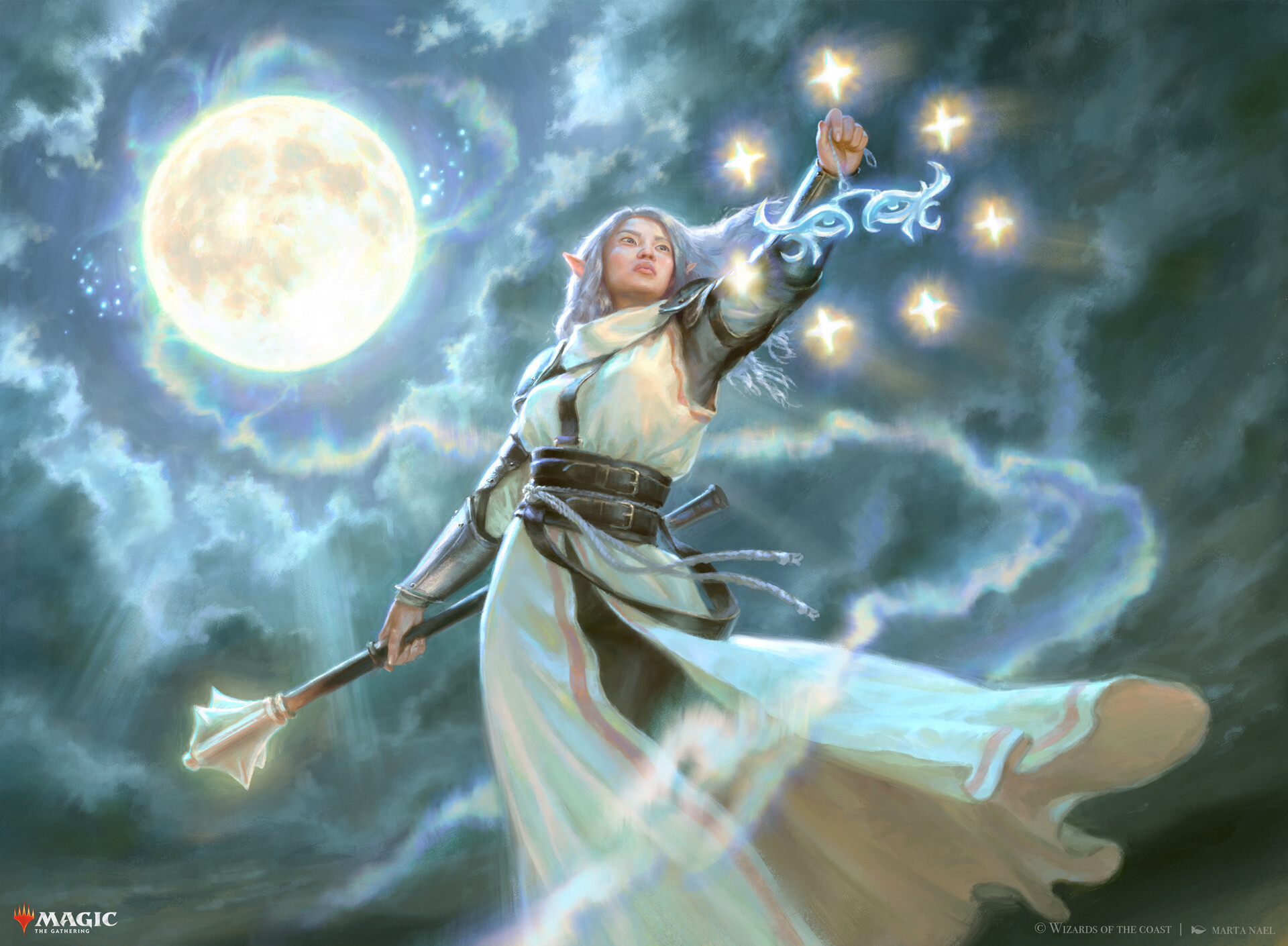
"As she pulls the tides too and fro does the tides of magick ebb and flow."
The Moon Elves are the only culture in the realms that has no taboo against any magick. That is except for the magicks of Luminara, but even so many moon elves have managed to convince their peers of their own mantra that “All is Knowledge.” Such is the reason that all magick is permissible for them, as with each magick must most certainly contain a piece of knowledge that must be restored to the Divine Mind, for it was Selv'aan that all magick (except solar) flowed from.
All magick is not made equal however, for it is the Umbral Tradition of magick known as Shadow Magick is their sacred secret, bestowed upon them by Chayol's the Panther, who was entrusted its care by The Wondermaker herself. Shadows and illusions jump at their command, ebbing and flowing with the tides of the moon as they conduct mystic rituals on the lunar light around Lacuna Wells, magickal water wells.
Their practice of Magick Chaotic is shocking to most, and appalling to some. Those within the Seclusion would even go as far to postulate that chaos magick and order magick are one and the same; different paths, from the same fount.
Magic is wild, untamed, and should not be conquered, nor could it, if you tried. Attempts to use magics for one's own ends is seen as blasphemy, and treating magic as a science, or a thing to be "acquired" or "solved" is sacrilege. If a magick can be practiced, then it should be.
Others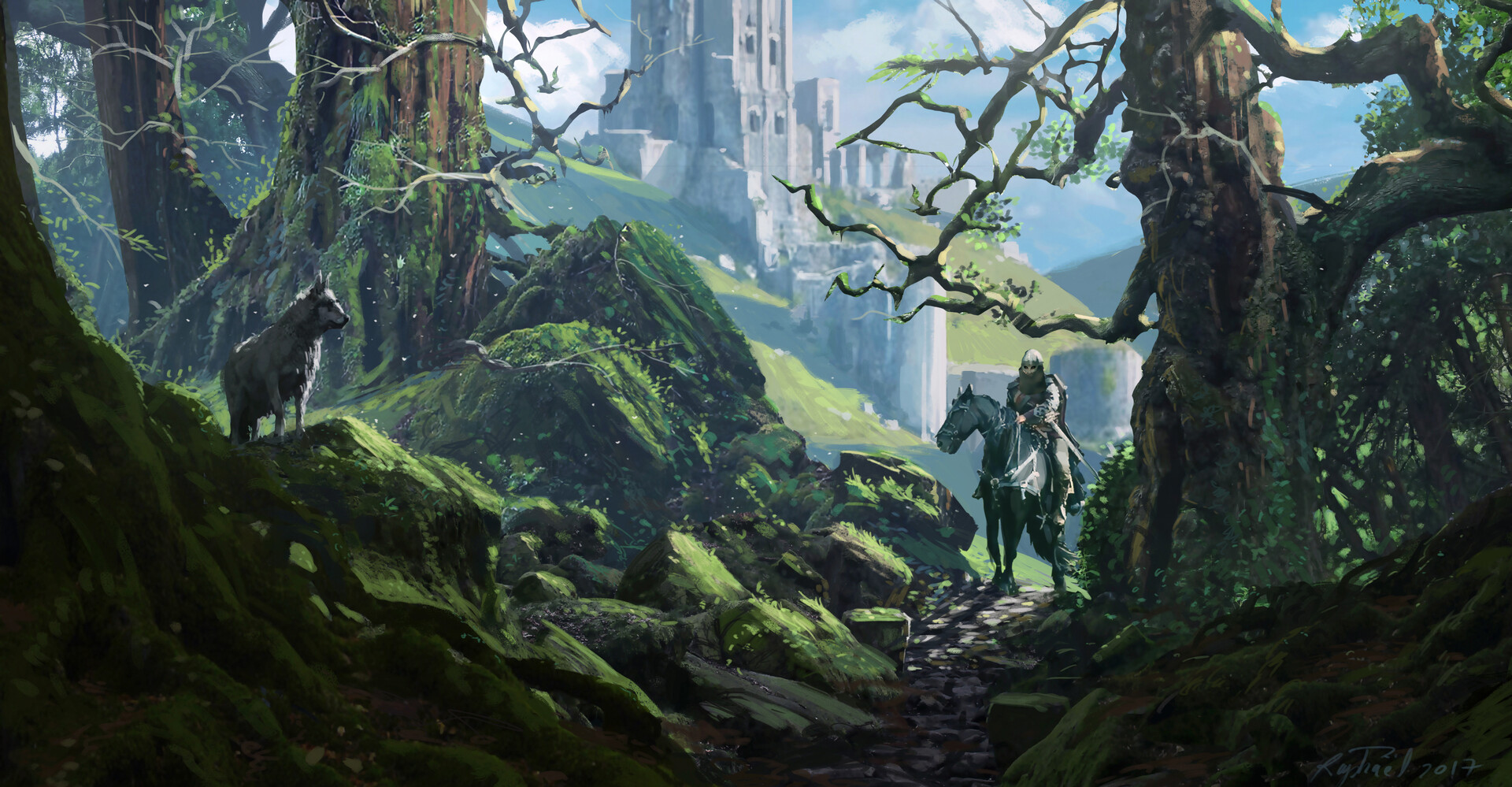
"If you wish for peace, be ready for war."
Dwarves: Troublesome and filled with egos far taller than their short stature, the Ironfists are a great annoyance to the Moon Elves, as they still begrudge the elves for what they call “trespassing” millennia ago when the United Elves shattered and the current Moon Elves fled to the Twilight Forests, crossing through the Lauttersänger Mountains, and above the dwarves. The Glassaxes see little cultural interaction with Moon Elves, but this does not keep the moon elves from disliking the desert dwarves all the same. Though they have hardly interacted, the Rimebeards have still managed to get on the nerves of the Moon Elves. Even so, they can manage to put up with each other when need be, and do not despise them as much as the Ironfists.
Elves: There exists no greater rivalry in the lands than that between the once-United Sun and Moon Elves. From the perspective of the Moon Elves, those who follow the so-called Overgod devote themselves to a great brute and imposter, sole ruination of the Divine Mind, and his followers are not so different. The Seclusion of Elunestra have declared numerous times that the greatest threat to the realm is not the malefic host, nor mankind, nor the forces of Chaos, or even dwarves, but the insipid devotes of the Solar Pantheon.
When regarding the Star Elves, these groups of elves do manage to get along, but there is a pervasive reminder of why they exist in the first place; a religious and ideological schism that led to the fracturing of the Moon Elves into what exists today. Considered to be the child amongst the elves, the Star Elves can be often viewed as neglecting their purpose, albeit not directly opposing it like the Sun Elves.
Humans: Moon Elves tend to distrust humans, whom they find to be too swift to violence. You never know when a human will turn on you.
Not all are given the option between following the right path forward or erring into blind faith, but the Empire was, and they chose poorly. The Moon Elves will never understand why the Empire of Man would willingly take up the Solar yoke, and view them as a flawed people.
As for the Clans of Galen, a love-hate relationship has built up between the two cultures of forest dwellers. Though the Gales have always been part of the empire in modernity as well as into more older times, the Moon Elves share much in terms of ideology with these humans. A love for nature, living amongst the trees, protectors of the natural order, and a quiet love for dragons marks some of the similarities between these people that has birthed cities in the hidden parts of Volantis between the two where, isolated from the rest of the war, enemies can become friends.
Far across the Kaya'lira Gulf do the dwellers of the Toklo Wastes reside, living a reclusive life similar to those in the Twilight Forests. The interaction between the Moon Elves and the Joaguns has most often been through their alliance with Ōkami, and the Moon elves view them in a positive light.
The City-State is looked upon with pity, for the Moon Elves remember when the Ibex King ruled, and their people shared dark secrets. Now the Culias are subject to the imperial Duke, their culture has eroded because of it, and the magic fleeting in the (landmass name) these days.
As one of the few public adherences to a god of Chaos, the Volks are seen with mutual respect and solidarity, although the Moon Elves do not agree with their less-than-peaceful ways. Either way, they are fellow opponents to the Empire of Man and Sun Elves, and the enemy of my enemy is my friend. Much disdain is fostered between their peoples however as the powerful magi of Elunestra tend to be the target of adventuring Volk.
The alliance between Ōkami and the Elunestra has been a strong one, for both groups have benefited by their shared love for secrets. Much alchemical knowledge and advancement as well as clockwerk contraptions have been either shared or developed by scientists and researchers from both cultures, and they have marched side by side in times of yore such as in the Great War of Volantis.
Conclave - Mer: Fortunately for them, the Moon Elves have not experienced the overbearing nature of Mer Victorian philosophy. This has led a friendly coexistence with the distant culture, in their sparse interactions. They are admired for their connected belief of nature, but those moon elves who are more in tune with nature than others may despise the Mer for their claims of both slaughtering the Wise Panther Chayol'se as well as the God of Dragons Arumvex.
Conclave - Ophidian: As advocates for the wildness of nature, the Moon Elves are one of the few allies of the Ophidian, often offering asylum for Dragonborn through the land where they can, and considering themselves to be the protectors of dragonkind.
Naming Conventions
Moon Elven names tend put ' in front of a number of vowel groups: 'aa, 'se, 'ryn. They follow a 2 name system as most, with their last names being one taken on in a noun-past participle schema (Zephyrtouched). They will also do a noun-noun combination (Zephyrwood)
Male Name Examples:
Tayoma Frostsinger, Nolk'aatra Darkmoon, Chon'aara Moonwatcher Sholketz, Zontari Mahoka Nightshade, Pahkoni Kiyotek Swiftleaf, Tlakora Chiyothal, Tzalyon Pahk'se Moonkissed, Chiyothal Tayom'ryn Nightbloom, Ayrak Miavon Nightwalker, Tavendir Karphu Watertreader, Tolwin Patokah Leafweaver
Female Name Examples:
Alythra Wiyaka Brightwater, Esharem Aponi Moonshadow, Yahna Zuni Silverleaf, Valira Takoda Shadowleaf, Tirayen Mahkota Nightfall, Selirith Tahoma Dreamstone, Syrithos Ahuli Mistwhisper, Oriand Tashina Windwalker, Chay'ryn Nizhoni Brightstone, Kalen Zatta'se Shadowfoot, Eryndor T'eloran Nightbloom, Lioran Wiyaka Stormrider, Iliras Aponi Moonshadow, Thalira Takoma Thornsent, Veylan Ahuli Moonfire, Zoriel Tashina Skydancer, Nyrius Nizhoni Thornwind
Important Figures
Witch Queen Makatel Yatoma: Known as the Radiant Huntress, Makatel was blessed by Chayol'se in secret with the ability to see into the future through visions, becoming a mystic amongst her people. Her rule was marked by much unification and cultural advancement, with an alliance between feuding tribes and their Grek'at being forged until a full moon, a symbol to her people of divine blessing. Many still call upon her name in the moon's darkest phases.
Lokanai Kiyoka, the True: in the dark times of the Great War, he shot an arrow across the continent to deliver a message, falling at the feet of the general. His blessing is asked for by those wishing to aim true in both archery and goals.
Nayok'aar Ematok'aa, Shadebinder: In an experiment gone horribly right, a terrible marriage between Shadow Magick and the undead created what is now known as Shades, terrible spectra with dreadful power. Further still, this newfound creation was raised into a shadowy small army used for the Shadebinder’s nefarious deeds.
Shadow Warlock V'aati: Not all who reside within the Seclusion are peaceable about their distaste for the Sun Elves. Vaati (name) was an infamous Shadow Warlock, who utilized the dark magick of Selv’aan to lead an offensive against the agents of Order. Such was Vaati’s power that many outside of the Seclusion who had never seen such magick thought him to be a god, wielding powers and illusions of a magnitude grand enough to trick an imperial assault into attacking a city that never truly existed.
Clockmother Ar'aawen Sokali: Digerati can trace their core teachings and doctrines of methodology to the Clockmother, a Moon Elven Clockwerk aficionado who standardized much of the literature body for their Sacred Charts. Through her work was great inventions spread throughout the lands of Elunestra, from devices that could till land themselves, to aids for mining, eventually leading to the development of Automata.
Grand Alchemist Takori Nohati: Where others hoarded the secrets of the forest for their own research, it was the occult practices of Takori Nohati that were freely given to others, spreading a standard for medicine and healing arts. He was also known for making an exceptional pale ale.
Umbra Perenus: This Patriarch of battle is known not for his magickal power or tactical subterfuge but for his ability to rally people to his cause. When the stars began to fall in fiery rain, it was Perenus who answered their call, rallying the Seclusion’s militants to launch an infamously violent offensive on the forces of Order.
The Elven Runeforger Takoril Ashkot'aa: Following their belief that all magick is pleasing and good for learning, Takoril was the first Elf to learn the art of Runeforging from the Rimebeards. Much to the adamant disdain of current dwarves, the Moon Elves insist that the magick wasn’t stolen, but rather bestowed willingly unto the Elven Runeforger, and that he even created many protege’s.
The Dual Smiths of Del-Argo: Though not known for their grand bouts of strength, even elves can become master smiths, and none more so than those that hailed from the secluded Del-Argo. The smiths that hail from this city are renown for the technique of dual-smithing, where items could be created in outstandingly quick times with masterful precision using a technique lost to time, most commonly believed to be two smiths with two different types of hammer striking upon the workpiece in tandem, giving them the name of Dual Smiths.
Keeper of Secrets Teth'ryn: Teth'ryn Any'aava, a notably young elfess, is believed for being one of the few people granted passage to the fabled Conservatory of Occlusion, a grand library containing all of the knowledge brought to Selv'aan to rebuild the Divine Mind in the death of her believers. Her use of these secrets advanced the Seclusion's technology and philosophical frontiers by decades, even centuries some might say.
Netherang Yterlia, Aria's End: The greatest Deathsinger to have walked the mortal realms, this Moon Elf brought an end to the most recent 4th Age, Age of Discovery, and has launched the world into the 5th, Age of Darkness, destroying the capital of the Culiacáni people, Port Marabella in a blasphemous attempt to open a portal unto Fundament for his Dark God.
Ramat'ke: A devisive figure who was brave enough to cast off old faiths. Where most Star Elves who follow their core faith believe that Mikopah, the God of Crossroads, foretold a third god to finalize their faith, Ramat'ke believed this to be a lie, told by rotten souls tainted by their own hubris to divert one's mind from Arete, off into the dark paths of those Archons that vied for their souls. When none of his kin believed him, and the murder of an elf by the Sun Elves, Ramat'ke e took with him those who would be the Moon Elves onto their own path in life, into the unknown.
Legends & Myths
The Blood Moon: Every Chronicle, a blood moon will appear in the night skies above the lands, but the Moon Elves believe to know it’s origins. When Ka'ra't placed Selv'aan on the moon to fight the forces of the Deep Dark and keep out the forces of Chaos, even the Wondermaker in her boundless power becomes overwhelmed by the unending forces of Darkness. The blood of the conflict stains the moon red, and incites much anguish and anger in the hearts of Moon Elves as their Martyred Elfess relives the terrible times of the Chaos War where the moon was caught on fire from the fires of the sun.
Dragon Defenders: Some Moon Elves view themselves as defenders of the wilds, with Dragonkind being the pinnacle of what the wilds mean. Because of this, they consider dragons to be sacred, and will protect them from those who seek to slay them for their powerful harvest. Some say this is a lie, and that the Moon Elves are doing this out of some sort of bribe, but that tends to be Dwarven talk.
Ancient Arboreals: Of all the lands, it is the Twilight Forests that allow the greatest connection to the Ancient Arboreals, though to many these are just a myth, or simply big trees...
The Great Secret: Premier in the minds of devours of the lunar cultists is what secret was so great and valuable that Ka’ra’t found it wise to destroy the Divine Mine over. It was this secret of his mother that led to Rhiaa’s inadvertent slaughter at the hands of his sister.
Dark Side of the Moon: The cycles of the moon have nefarious meaning. It is believed that the Deep Dark, the Night Sky itself, seeps into the moon over time, with dark and truly evil forces converging upon Selv'aan's Cauldron. It is with the help of Ka'ra't that these forces are driven off each week, brightening the moon once more to begin the s cycle anew, for millennia.
A Gamble with the Moon: Possibly just a tall tale, this myth revolves around an ambitious Moon Elf who dared to make a gamble with their God, The Witch in the Moon herself. The tale goes a number of ways, with all coinciding with the development of the new Red Moon that is shown once a Chronicle.
Anvil of Legend: A fantastical relic casted and formed during the time when the Elves of Star and Moon were one. Made of pure Star Plectrum with a hardened surface of a mysterious enchanted golden steel, this magical anvil is filled with incomparable magicks, and has birthed countless relics of other nations from its pure surface.
The Death of Wisdom: Some Moon Elves who listen to the stories of the Mer history claim that their great and holy Chayol'se who’s return would lead the Moon Elves into an age of wisdom was slaughtered by the Gloryhunters of the Mer, whom are very proud to assert said claim.
The Wilden Hunt: To atone for her sin of slaughtering her brother Rhiaa’Turask, Skiaa (now Princess Nunavet) leads the Wilden Hunt in a bout of mental clarity once a chronicle. She and her host consists of ancestral Moon Elves, powerful living magi and spectral beings of shadow march off in a great procession that hunt down any forces of evil such as daemonica, aberrations, or the forces of Order and Chaos if need be.
The Crown of Elms: A marvelous Aphyllous creation of Haertwood sap and Wireleaf pine constructed as an offering of friendship between the Moon Elves and Ōkami. This crown has the impressive ability to never rot nor wilt of its own, but ebbs and flows in health according to the state of the natural world at the time. Worn by the Witch Queen, it blossoms are said to be able to purify magical blight.
Fermata Falcata: With most elven weapons being magical, a weapon has to be truly outstanding to classify as an artifact to the Luari. Fermata Falcata is a sword of Moonsilver, pure white with a subtle blue glow. Bathed in the powers of the ever-watchful Moon, the sword has been wielded by many, and can act as a conduit of unimaginable Shadow Magick.
Drake Gems: A truly ancient relic, these are invaluable gemstones that are said to be the Crown Jewels of the Seclusion. Given to their leaders by Archdrakes of yore, these gemstones hold unimaginable (and unknown) power.
Seeds of Ruin: A handful of cursed seeds said to have fallen from an Ancient Arboreal cut down during the Chaos Incursions. Deep cursed energy flows through these seeds, though none can say what horrible creation might blossom from their tending…
Silent Moon: The first schism of the elves, in the 3rd Age. At the behest of their Shattered Tribunal, the United Elves constructed a grand ritual of what is fabled to be the greatest Astral Sorcery ritual to ever be attempted, much less completed. The Ritual was said to be to sate their insatiable hunger for immortality, disrupting the intended flow of life, as well as destroying Chaos in it's entirety.
From the perspective of the Moon Elves, the ritual was known to be not at the hands of the Ophidian as claimed by the Sun Elves, but rather the group that would be the Sun Elves discovered the secret of how to rule Volantis and could not handle it's power, much like how their god did the same for all of Animus Liber.
As with all Sun Elven plans, it was half-baked, and the moon was only frozen in place, allowing the Deep Dark it chased from to overtake and consume it. This forever locked the forces of the Sun to aid the Moon across the bridge, a never-ending defense against the unknowable Night Sky. It also created the shard that hovers around the moon, shorn off as Princess Nunavet was shorn from her Mother Selvaan.
Sunbreak: Old sins were never forgotten. In a great scheme that spanned the entire 3rd Age, the Moon Elves sought retribution for the damage caused to their lunar body. The Ziggurat of Silence was constructed, and a great quieting of the sun occurred, exactly as intended. They proudly regard the event as "The Day the Sun Wept." It is this event that causes the Sun of Volantis to be a spiral, as well as why the Sun does not shine in what is now known as the Nightfall.
Settigris Schism: The final splitting of the elves, in the 4th age. This event was far less bloody considering the history the elves have for splits, featuring the Moon Elves and Star Elves going their separate ways. Their matters were of retribution over the death of an elf by the hands of the Sun Elves, and, unable to reconcile their differences on the matter, went their own ways.
Festivals & Holidays
Lunar Rituals
All year the Twilight Forests are rife with different rituals and processes depending on the phase of the moon. Whether it be the abscess of honey on a waxing moon to the carrying of lanterns with green glass during a new moon to ward off bad spirits to even full ritual performances during a full moon, the Salun’a’Luari are busy year round.
Renewal Ceremony
During the Dominion of Dawnstone
On the first new moon of the year, the people will come together and celebrate a refocusing on what they wish to strive for as well as the casting off of the old, writing their burdens on leaves or bark, burning them or burying them so they may start the Chronicle anew with clarity and purity. Ritual bathing as well as blessing by elders concludes the festivities.
Day of Wiles
During the Dominion of Stormharrow
On this day, a great commotion is incited, with bards and jesters the across the lands creating grand displays of buffoonery and art in an effort to shake off the winter wiles. Dancing and other absurdities commence with folks of all status and class, and sometimes entire dancing bands form spontaneously within cities and villages. This event has been the focus of many reforms, and outright banned many times before for inciting chaos in the lands. This event coincides with the last frost and beginning of the early planting season.
Chayol'se Ampetu
During the Dominion of Prime Seed
Though the Moon Elves believe they bring their secrets with them to the Cauldron as an offering to rebuild the Divine Mind, Chayol'se Ampetu is a day for imitating this offering. Secrets are attached to floating lanterns which burn up the secret as they float up into the night sky, in symbolism that they one day will do the same. This can be done in secret or as a community, and it is taboo to ever disclose what was written, lest it no longer be a secret when they pass on into the Moon.
Son's Day
During the Dominion of Soluary
Where most will be celebrating Son's Day on the summer solstice, the Moon Elves choose to keep inside all day, avoiding going outside on the greatest day of their ancestral enemy, as in their lands the sun never rises to it's zenith, except on this day. Prayers are recited in earnest as the Lunar Cult offers supplication to ensure the strength of their Goddess. All lights are extinguished, from burning candles to roadside Lumina that must be covered.
Wilden Hunt
During the Dominion of Eye's Mirth
Each Chronicle, the Wilden Hunt rides throughout the lands, led by Skiaa and her spectral host to atone for her sins. Some particularly ambitious magi and warriors might seek out to join her, but those that stay at home celebrate by refraining from putting out laundry, leaving out food for the host as it might travel by, and marking their doors with ashwood to inform the roaming Hunt that they do not harbor any malefactors.
Elfsgiving
During the Dominion of Eventide
Although celebrated at the same time as the rest of the continent, the Moon Elves have reason for the season other than the Sun Elven Enlightenment of Man. Their cause is the gifting of the Worldpearls by Mikohpah. Blue cheesecakes with Brëlmon nuts are exchanged and happily eaten.
The Night of Nights
During the Dominion of Icewind
On the day of the Chronicle where shadows grow longest is where Selv’aan grows strongest. Feeling embolden, Moon Elves conduct a grand dance in the longest night of the year, holding a chaotic masquerade where participants wear shadowy costumes and dance to tribal drums.
History

Long and extensive are the annals of the elven peoples, as well as complex and intertwined with all of the continent.
Their story starts as one United, where all three of the elven groups were under one roof, and marched with one banner. It was this group that pulled mankind out of their tribal ways into civilization. It was this group that founded the Trinary State of Jenna. It was this group that had to deal with the Dwarven Inquisition. And it was this group that was shattered by the Silent Moon. Within this group were all three clans of elves, though not fully formed as the nations are today. The group known as the Moon Elves are thought to have been birthed socially when resentment was held at the end of the Chaos Wars, where they watched their preferred god become chained to the Moon. This resentment would fester within them while they stayed with the rest of the elves until the Silent Moon would shatter the United Elves.
From the perspective of the Moon Elves, the Silent Moon was known to be not at the hands of the Ophidian as claimed by the Sun Elves, but rather the Sun Elves discovered the secret of how to rule Animus Liber and could not handle it just like he could not. The moon was frozen in place, allowing the Night it chased from to catch up. This forever locked the forces of the Sun to aid the Moon across the bridge, a never-ending defense against the unknowable Night. Ka'ra't turned the entire capital of the United Elves and the surrounding lands to glass, as a clumsy measure to clean up where his followers had caused a celestial scar.
The Silent Moon would not be the end of the fracturing of the elven people, as it would not be long before the elves of Star and Moon would go their separate ways. After increasing antagonism from the Sun Elves while the United Star and Moon elves tried to live peacefully in their mountain homes, the conflict on how to deal with these outside forces could not be reconciled. A council was formed to discuss the way forward for their people. Their incessant deliberation was cut short when an elf was found dead in the streets on horseback, an arrow of Sun Elven fletching through his eye. Enraged, the council convened once more, and different sides of the meeting was formed. From here, the story splits many ways. For the Moon Elves, their side of the story is that the other side of the table (which would become the Star Elves) called for peace, to not be like those who created this grief, and to end it here. The other side of the table (which would become the Moon Elves) were revolted at the inaction at the death of one of their kin, and called for justice, and immediate action. Led by Ramat'ke, the nascent Moon Elves took their exit from their siblings, cleaving their people in two and heading deeper into the reaches of the continent. This event was known as the Settigris Schism.
After this turmoil, they finally exist as just themselves in their Forests. This became the Phase of the Panther, for a great shaman of their culture was said to have been met by Chayol'se and gifted Shadow Magick. Their shamanic leaders learned to channel the Moon’s energy for the good of their people, while also recklessly seeking to harness it for personal power. This era was marked by rapid growth and decay—cities rose and fell in the span of a generation as the elves embraced this Umbral power, leading to a cycle of constant upheaval.
On a fateful night, the stars themselves rained down in burning fire across the continent, heralding unto the Synod the elf named Ramat'ke the same who led the split from the Star Elves. It would be he who spurred Igashu into action against the Sun Elves. This caused a brutal war known for its unpredictability and violence, referred to as Starfall. Roaming armies of Brothers of Battle would appear and reappear across the continent in ways that defied logic. This period solidified the Seclusion of Elunestra’s reputation as a people who are hard to predict and even harder to control.
Though they were often thought to be colluding with the forces of Fundament, the Moon Elves were not spared during the Chaos Incursion. As with all other nations, their people were laid to waste on the battlefield, supplying lives and magick for a continued existence in Volantis. The world would take decades to recover.
Their ambition never waned however. It was not long before the Sisters of Secrets made a new scheme. Or rather, concerted a new attack. The old wounds of the Silent Moon had not healed for many, and a scheme that spanned an age took place. The Ziggurat of Silence was erected in deafening array, and “quieted the roar of the screaming sun” as it was put. Selvoran answered their prayer, and a piece of the Divine Mind was restored from the grasps of Order, fractioning their Palace into the spiral we see today. This is fondly referred to as Sunbreak, or "The day the Sun wept."
In times after, the Magi of the Sisters of Secrets concocted a new scheme; they would reach the moon and aid their Martyred Elfess early before having to wait for death. They would accomplish this by constructing a magical ladder up to the Star Bridge, which connected the Sun and the Moon during New Moons. The decades passed, elaborate constructions planned and made, and ritual paraphernalia was set and ready to play its part. The Matriarch of Secrets led the ritual, and the ladder was successfully made. As the proud Magi strode across the Star Bridge into the Cauldron of the Wondermaker, they were not met with pride as they hoped, but disdain, transformed into odd eyeball creatures and flung back down onto Volantis with the message of “Do not pluck a secret before it is ripe.” Rather than be appalled at the actions of their God, the acolytes of the Mirific Countess were ecstatic, and use her words as a mantra for many things.
Though secluded, even the Moon Elves have been center stage in the theatre of war. After their offensives with the Star Elves and aiding the Culia in their rebellion against the Empire, tensions were fit for boiling over amongst the powers of the land. In an ever increasing chain of turmoil and unrest, an alliance was formed between The Conglomerate of Ōkami, The Seclusion of Elunestra, and the Confederacy of Volkar. These forces commingled in trade, ideas and people for a time, though it was not long before a grand war that spanned the continent broke out between the Veilbound Alliance and the Empire of Man, Galen, Culiacán and Solarate who made up the Zenith Concord. Threatened by the growing power of the Veilbound, the Sun Elves pushed the Empire of Man and it’s vassals into a continental conflict, ending in one of the most devastating wars the land has seen. As both sides waited for a sign from their Gods before entering such a catastrophic conflict, the celestial symbols of a flaming comet and ice rain are seen now as terrible signs of a coming war. At the conclusion of the war, it was the Moon Elves who were hit the hardest, much of their forests razed and their capital discovered and ransacked.
As time went on and wounds healed, many centuries would pass in quiet struggle and strife for the lands of the Twilight Forests. As with all things, they grew and rebuilt, just as they had before. One of the first acts of rebuilding was the establishment of a far-flung city on the furthest reaches of the continent, further past even the Dreadwater Swamps and the Lost Jungles. Deep in this unknown land did a moon elven offshoot grow, but far too little is recorded or known about them, for they committed a great and terrible act of magickal blaspheme that even those today still suffer from. Such magick was used so excessively that a terrible curse was created upon their distant lands and blighting the area, causing Selv’aan to make it such that magi could no longer remember all of their magickal powers, and must prepare and recite them frequently and daily to use what they once always had available.
Most recently, various guilds and factions are seeing their leaders take on radical ideas even for the Moon Elves, challenging their traditions and way of life. This societal change is met with opposition, as some wish to hold onto their traditions, and others call out that they were founded in the blood of those who fought to cast off these ancient traditions. These times hallmark within the elves growing tensions between embracing their chaotic nature and finding a deeper sense of balance with the universe.

Last edited: 6 months ago