

The Clans of Galen
"Family's song, above the Gods' whispers."
Synopsis
Seat of Power: Gaelos, Coille Forests, Interior
Part of: Empire of Man
People Name: Gales/Gale
Adjective: Galenean
Religion: Ælís
Language: Galenean Sarword (Scottish English)
Introduction
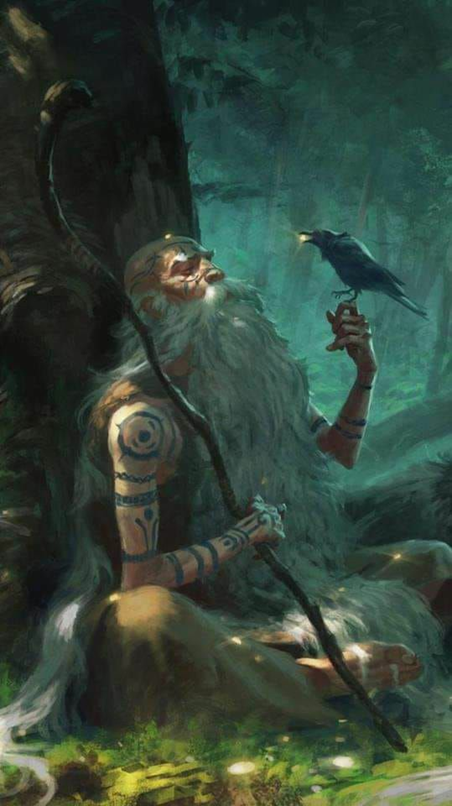
Deep within the Coille Forests live cloistered families who put kin above all. The Gales, Guardians of the Sparkstones, are a spiritual people with deep connection to the world around them and consider themselves to be protectors of the natural order of things, earning themselves a long and storied past. Having broken off from the First Empire of Man upon it's sundering at the hands of the Forces of Chaos, these peoples too this opportunity to forsake their masters to journey to the land of their calling, led by a legendary chieftain named Galeik. From the mythic events of Galeik were the ancient lands of the tribes reclaimed, and those that settled with Galeik would come to bear his name, to signal their lineage to the great warrior - The Gales. Now, the Empire of Man has reformed, and the Clans have entered a tense vassalage under their once-subjugators; this time under better terms, though some say such an arrangement should have never been sought after, told through the turning of the leaves.
Physiology
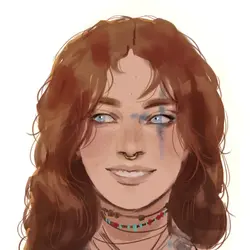
Naturalistic natures bleed over even to a Gale's physical appearance. Long hair with earthen colors is a most common sight; blacks reds and browns sit as the average trend, with occasional blond. Eye colors amongst Gales can vary, but shades of blue and green and multi-hued hazel are very common. Lighter hues are nearly always prevalent. They have a white skin tone, with a generally white European complexion. Gales trend on being shorter than the average human, at 5'7'' for men and 5'4'' for women, but are considerably bulkier due to their intense focus on natural lives. They have an average weight range of 150 to 170 pounds.
Fashion
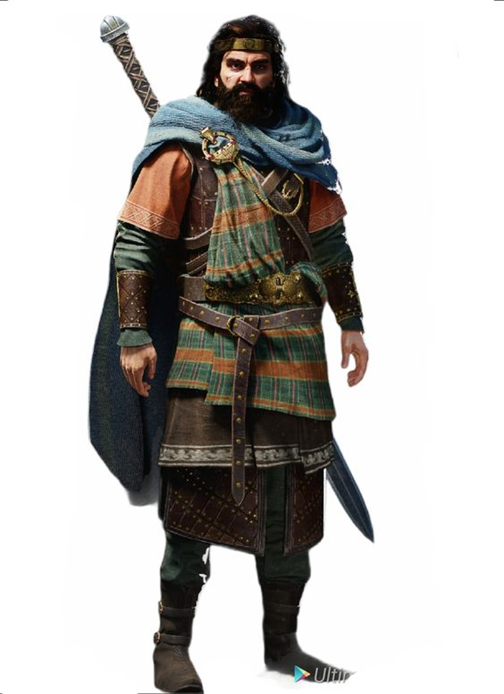
As is tradition, the clothes of the Gales represent the Earth they are protectors of the world order. Hues of green, brown and blue are frequent in all of their fashion. The makeup of their clothes are mostly tartan and cloth, as well as additional furs to provide more warmth in the winter months. They are premier users of loden wool, a thick, water resistant cloth that feels almost felted and feels somewhat coarse.
Wearing furs outside of the winter seasons or in non-frigid locales is seen as an abuse of nature’s resources for the sake of vanity, and thus the prizes of lesser, spiritually impure people. This also applies to metals as well; the only metals they adorn themselves with are trinkets of Jadis, a green alloy of Emperium taught to them by their once-allied Dwarven neighbors. Trinkets, weapons, circlets, even building supports are ideally made of the rare metal, and are considered one of the only metals that are non-exploitative by nature, and sees prolific use in Galenean culture. Particular relics may even be made of Haertwood if the Verdant Council is willing, and a tree soon to fall. Less-exorbitant occurrences may call for Wireleaf Pine as their Aphyllous material of choice for ornamental and functional armaments.
Values, Attitudes, Taboos, Morals, and Beliefs
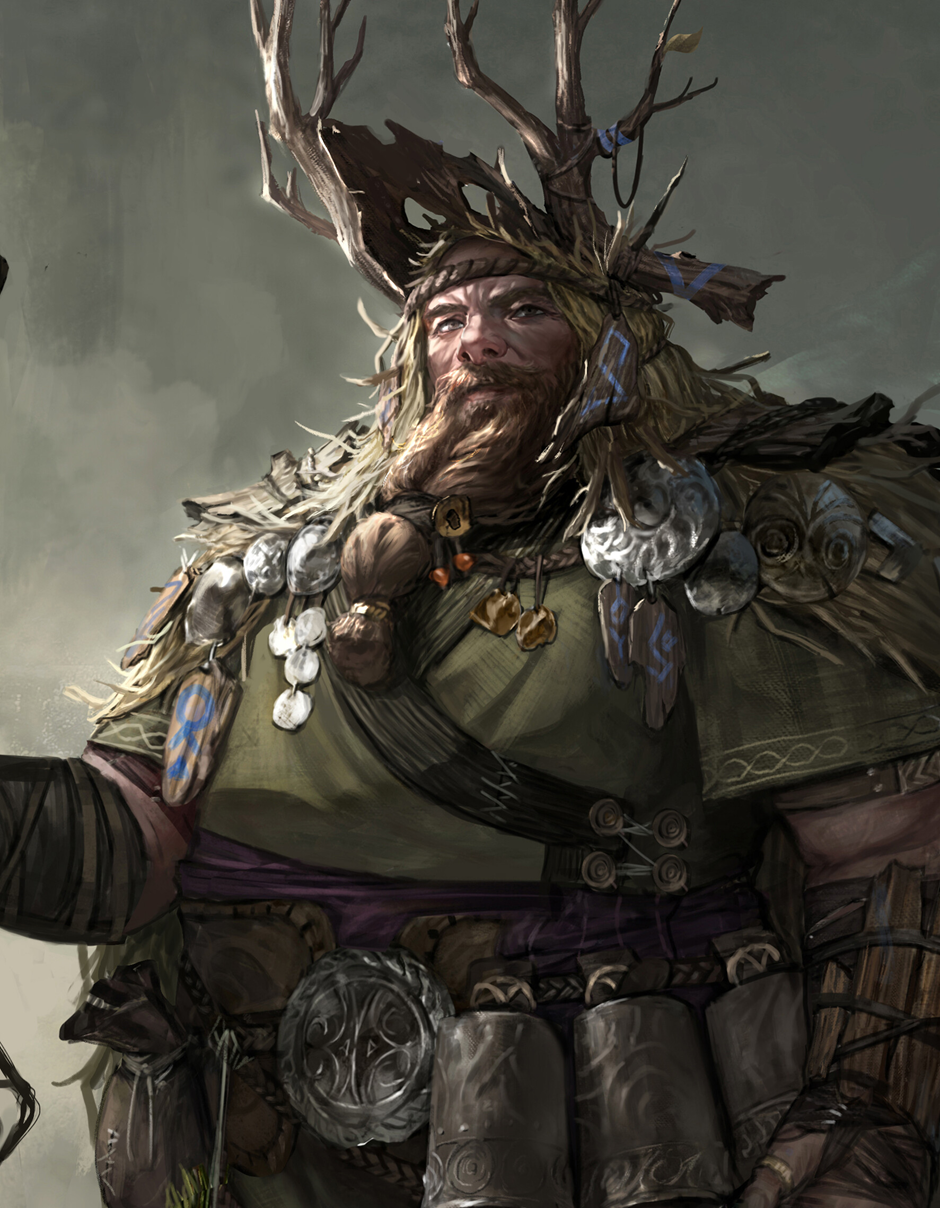
“Society prospers when elders sow seeds of trees in whose shade they shall never sit."
Humble, loyal and free; all describe the core of Galenean beliefs. To put it simply, a Gale loves their family above all, and the natural world follows right behind. Of all the mortals in the land, the Gales are the most humble lot; believing all should be treated equally, they do not typically exhibit superiority over those outside of their groves.
Gales are environmentalists. Through action and mind do they hold dear their respect for nature; second to this is their families. They enjoy quiet time in the woods, in harmony with nature. The forests are sacred to them and symbolize the heart of the earth and the adaptability of life. They see themselves as the forests' caretakers, and will go to great ends to ensure both thriving forest and withering meadow's health and safety.
Never so caught up in hubris like the Sun Elves who claim to be protectors of the entire modern world, the Gales view themselves simply protectors of nature, with a cultural focus prevalent on the forests they call home. This land is their holy land, and while they state a duty to protect all nature, no culturally ingrained message is so strong as their desire to protect family and home.

Beneath the rugged appearance of a Gale is a generally friendly disposition; boisterous laughter with expressive facial gestures is common when talking to friends. A peculiar mix of xenophobia and welcoming embrace permeates Galenean beliefs; Gale Clansfolk are entirely distrusting of outsiders at first appearances, but it does not necessarily take too long to break down this barrier, as the Gales have had good rapport with many foreign cultures over the centuries. Within their grand Groves however is a different story, as no outsider is supposed to be allowed access to these holy lands without prior special approval of a council, or even so high as the Verdant Council.
Their history of reluctantly engaging in defensive conflicts at the behest of the Empire of Man has instilled within them a profound wariness of foreigners, particularly their neighboring communities. Despite this cautious stance, they harbor a strong desire to interact with outsiders under favorable circumstances. Their inherently warm and welcoming disposition compels them to reach out to different peoples, yet they struggle with placing trust in them. A Gale's profound sense of loyalty makes them an unparalleled ally and companion, but gaining their trust requires a significant investment of time and effort.
As previously mentioned, the Gales possess a cultural ethos characterized by immense friendliness and hospitality, rendering them among the most generous and welcoming hosts one may encounter. Ever eager to share a drink or engage in a spirited yet amiable bout, they extend their hospitality not only to fellow Gales but also to individuals from diverse ethnic backgrounds.
Deeply rooted within Galenean mindset is that of cyclic patterns in life, which are rooted in natural world itself. Far be it from a Gale to brood and fester over a wrong or miserable situation for long; as spring is found anew in the Dominion of Prime Seed, so shall the fat of life return once this time of chaos passes. This goes as well for their moments of joy; a wise proverb from a Druid in an era when the roots were deep is as such: "Smile longer than the day, and the night comes out to play"
Gales are the opposite of planners. In all things are the Galenean Clans spontaneous in their lives. Should the wind change on a summers night, a whole  roving band of Gales may decide it is time to move to new lands and start fresh, or perhaps simply take a new path to their market that afternoon. This conflicts with their deep connection with their predecessors; while one aspect of their culture calls for them to keep the ways of the woods and the elders who parted the trees for the path ahead of them, another aspect calls for them to leave it all behind and chase the winds at their behest. Which aspect is more prevalent within a Gale's mindset is ever-changing over the years.
Uniquely in Galenean society, those of traditional and physical professions are given more respect and honor than those of more thought-centric roles such as nobles and kings. A Gale's ear is more keen to listen to the wisdom of a cobbler's words than the hollow decrees of a Magistrate. As such, the Galenean political structure is entirely inverted, barring the Verdant Council. While farmers do not rule, all workers who are not in "menial" labor classes are frequently reminded and cognizant of where they stand on the social ladder.
A Gale would consider greed to be one of the worst vices. They believe that one should only ever take what one needs and no more, seeing no value in material wealth such as gems and gold. This has been strained in times past, as their lands have not been plundered of it's natural resources, causing both internal and external efforts to produce great amounts of wealth at nature's expense.
Beside the natural world stands one of the strongest beliefs of the Gales: their Families. They find their identity to be tied to their Clans, and as such often dedicate much of their time and resources on behalf of their greater body. Whether by blood or by association, these groups are the cornerstone of the Gales, fostering an unyielding kinship and loyalty. Every member plays a vital part of the tapestry being woven, and together do they thrive. Elders, repositories of wisdom earned through the passage of years, guide them with their counsel, while the younger generation brings vigor and vitality, ensuring the continuity of their traditions. They feel they must remain strong, in order to protect their freedom, and the land of their kin.
Having fought hard for their freedom in ages past, the Gales are free at heart. This compliment to their environmental beliefs guides their moral compass; neither man nor beast should be enslaved, but rather work in harmony. No man should labor without seeing the fruits of their labor; nor oxen should be prevented to eat the grain it tills.

They are adamant against being ruled as well as others who allow themselves to be ruled, thinking them to be ignorant of their fate and pitied, going against the natural order of things. These values apply to the nobility as well, as Galenean people despise social ruling as much as governmental power.
Their staunch aversion to social class barriers has led to a very egalitarian culture and a culture that greatly values individual autonomy and freedom. This (ironically to outsiders) makes Galen both a very controlling people in their endeavor to ensure freedom. With their freedom to wander and explore the world, expressive art and clothes, Galenean culture is very strict on their people staying within this defined freedom. Those who step outside of these traditions are reprimanded in various fashions, with the highest form of punishment being Felled, a form of exile dictated from the Verdant Council themselves.
Deeply seated into Galenean culture are their traditional beliefs; ensuring the status quo and continuing the work that’s been done by the Clan’s lineage is of utmost importance. It is not unheard of for a Lumberjack within a Galenean Clan to have had his job reserved for him 5 generations in advance, using the tools and cutting the same lumber that his great ancestors have done for decades. The Clans also endeavor to take as little from the environment as they need, and take only what they need from the world. A Galenean huntswoman may leave the bones of her quarry buried in the woods as to respect the spirit of the creature slain. In their decision-making, the forest and the rest of the natural world must be considered, for they do not walk this realm alone. In times of famine, they preferred enduring hunger over further burdening the already strained land.
Instilled into their culture as a series of mantras, the following are some excerpts of Galenean proverbs and sayings that they often take to heart.
The sweat of the Serf is the crown of a king.
Give all for none.
The Clan's honor over yours.
As Dirt, So Dirt
Truth is the honor of the tribe.
Family

“Where does your tree take root?” - a common Galenean expression for asking where someone is from.
To the Gale, nothing is more important in this world than Family. Without it, they consider themselves to be bereft of their purpose, nearing the resemblance of those lawless, chaotic heathens which turn their back on blood. A Gale will do untold heroics and make countless sacrifices in the name of aid to a family member, regardless if they are a good member of the family. For to a Gale, one is not chosen to be in a family, and as such one should not make the decision to stop aiding family because of their attitude, beliefs or intentions towards another. To turn one's back on family, or to not provide for those in the family who have need, is to be worse than an unbeliever in the Talamh.
As the Gales combine their family with their political structure, most information about both can be found in their details on Government and Social Hierarchy.
Work & Trade
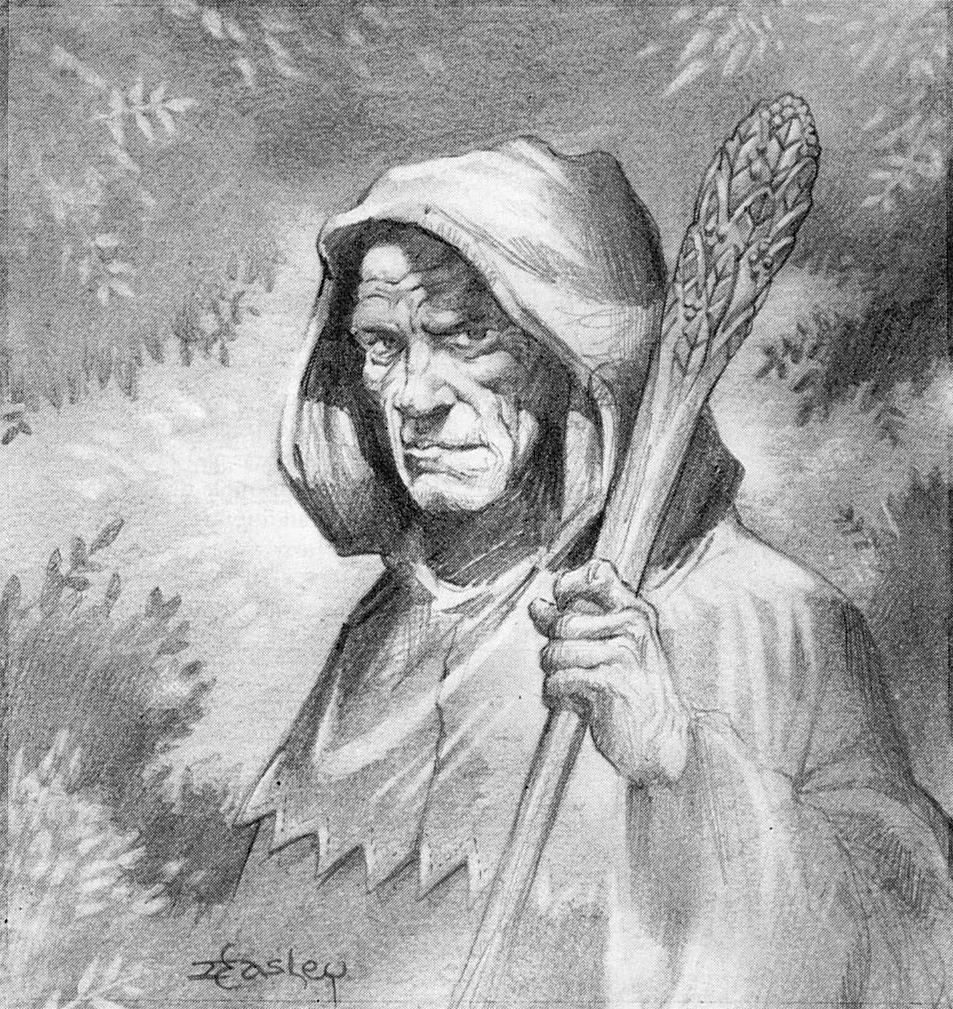
Galenean peoples have an affinity for anything naturalistic in terms of profession. Rangers, woodworkers, animal breeders and tenders, herders, farmers, ranchers, herbalists, alchemist, botanists, medical opportunities, fletchers, tanners, and more are frequently sights within their villages. They are highly efficient with their work, aiming to leave as little waste as possible in their lean processes. Galenean woodwork is some of the finest in the land, comparable only to the carvings of the elves of Elunestra.
Popular amongst Galenean villages are the Clan Boaster; a bard of sorts who's job is to sing the achievements of their people, in which they attempt to incite others to challenge, or even surmount the claims the Boaster is making. A typical tactic of Clan Boasters is to sing about people directly related to the audience, so they will be more likely driven to correcting their slightly-false story.
Jadis is the metal of choice for the Galenean people, said to be one of the few metals given freely by nature for them to use without (as much) fear of exploiting nature. Because of this, Jadis and it's resource Emperium are frequently seen in Galenean foundries, being forged into floral bucklers or verdant pauldrons.
Due to a unique development of their metallurgy, they do not use coal to make steel; while they do not believe coal to pollute the environment (such was not an idea in this day and age) they simply have developed an alternative. Steelmaking in Galenean societies involves mixing the crushed bones of the fallen into their iron, which they call Athgin, or Reborn Metal. Claimed to bear the spirit of those who's bones provided the components to make steel, these appear as other steel armaments do, though one may convinced by a Galenean smith otherwise. To a Gale, Athgin weapons are a way for those who have died to be reborn and carry on the good fight on the mortal plane.
As for selling their goods, Gales do not deal in coin. Such filthy methods of mercantilism is banal and exploitative of the world, and upsets the Talamh. Rather, they deal in bartering. This leads to interesting interactions with other nations, who have traded with each other for coin, but cannot use said coin with Gales. Great coffers of coin filled enough to provide for generations have been turned away from by Galenean Chieftains on matter of principle.
Religion

The religion of Galen is Ælís, and is is deeply tied to the natural world, and many of its rituals and beliefs revolve around the changing of the seasons and the cycles of birth, growth, death, and rebirth. The Gales believe in an unshakeable faith of the universal force - the Talamh, which traces back to when they were unified with their once-fellow Joagundric brethren peoples. They believe it is present in all things, living or not, as a sort of “universal soul”, and is meant to remain in its pure form. To live in harmony with nature is considered pure Talamh, whereas non-druidic magic, aberrations, exploitation of nature and each other and other things of similar stock are thus considered impure and corruptions of Talamh. It is through this universal force they believe is the means of righting all wrongs in the world, starting with themselves through living good lives in balance of all things. Sparkstones are also believed to equalise Talamh, acting as bridges for spirits to cross from this world to the next.
There are two governors of the Talamh, Siobhán and Niamhán, both of which are entirely subservient to Talamh in all manner and fashion. These two are gods in the Galenean faith, referred to as the Samsara. Both are aspects of Talamh, and neither can exist without the other; for if there is too much of either of the aspects which these gods represent, an imbalance arises, bringing a taint of the Talamh and unbalancing the cycle of life. Unlike many other religions on Volantis, the Samsara are believed to be amongst the world, living around the people of the world, rather than reigning on high in the heavens.
Siobhán is The Green Titan
She is depicted as a monumental figure entirely composed of the Earth itself, towering far higher than any mountain. It is said that the Green Titan’s size is equivalent to the amount of love she has for the world and those who inhabit it, as she is the feminine representation of Life. In times of crisis or trouble, people turn to Siobhán for comfort and guidance, believing that her light and beauty will help them overcome any obstacle. Her followers believe that as long as they hold onto their sense of wonder and appreciation for life, they will never truly be lost.
Niamhán is The Black Bowman
He is the masculine representation of Death. Rather than working against Siobhán, the Black Bowman is an agent of transformation and change rather than of pure decay and rot. Depicted as a shadowy figure with a hooded cloak and eyes that shine like the stars, it is said that Niamhán walks the earth, bringing peace to those who have passed on and guiding souls to their final resting place. He also is responsible for “loosing the arrow” into the hearts of those who run from death, which to the Gale is inescapable for all things. In times of loss or sorrow, people turn to Niamhán for comfort and guidance, believing that his wisdom and compassion will help them navigate the difficult journey of grief. Followers of Niamhán view death as a continuation of life in a different form, rather than as an end. To them, death is a natural part of the cycle of life and they embrace it as a time of transformation and renewal. They don't fear death, but rather view it as a time to be celebrated and remembered.
Unique only to the Gales and few other religions, the creation myth of the Talamh Mythos is nearly non-existent. Rather than contemplating how their gods came to be, the Gales believe that the Talamh always was, and needed no origin. The world began entirely shrouded in forests the world over, with no variation in the world at large. As mortals entered into the picture, the land changed with them, as their inherent Talamh altered the world to be as it was always intended to be for them, and to adherents of Ælís, prepared in advance for them by the Samsara.

Everything was, and would work in perfect harmony, with no need for guidance or divine beliefs or conflicts, had it not been for the unclean hearts of man, who began to push themselves onto the lands of others like those of the dwarves and elves, of which their Talamh was not in balance to be. Simply put, mankind's expansionism brought about imbalance to the world, and let the forces of Chaos enter the playing field. These gods care not for the Talamh, and oftentimes directly oppose it. As such, Galen is heavily against the forces of Chaos.
While all are able to reach spiritual Talamh within themselves, the Druids of Galen are the guides to aiding one on their journey. They rely on the strength and stability of Animus Liber throughout their culture, with a good portion of Galen being druidic in nature. Great importance is placed upon those who are druidic in official capacity, with Druids being both spiritual leaders and keepers of knowledge. They guide their kin into purity, and oftentimes live as hermits in a cloistered fashion deep wishing the sanctuary of the wilderness, where Talamh is to be the greatest, and one’s connection to it heightened. On the journey to balance, it is believed that those who attain the apotheosis of balance receive a gift from both Samsara Gods; the ability to commune with the Ancestors by Niamhán, and the awakening of greater Druidic powers by Siobhán. Galenean soldiers who go into battle frequently invoke the name of their Ancestors upon their path, so that they may walk in their footsteps.
Those of pure Talamh are believed to have their spirit linger as a nature spirit, watching over their future kin. Some remain bound to Sparkstones, other to some regions they valued greatly - Those impure, however, are recycled into the greater mass of Talamh, and receive a new attempt at life without the ability to commune with those that have come before them.
One of the more magical aspects of the faith of Galen as well as their culture itself is that of Sparkstones. Believed to be the resting place of many souls, these pillars of rock are erected in various locales, from the tops of mountains to surrounding the perimeter of a Clan’s village. Sparkstones are believed to be a means of which spirits can enter and return to the Earth in which they belong. This can only be done when a rock pillar has the appropriate carvings as deemed worthy by a Druid; upon completion, a ritual is conducted around the Sparkstone in varying fashion depending on  the intended type of soul; if the Sparkstone is a quite high stature, it is intended for human souls and is completed upon a bloodletting of those in attendance upon the soul of the stone. A more fantastical belief is that these stones contain the ability to ward off not just foul spirits but magick itself, with a variety of records giving differing accuracies to this effect.
Those of pure Talamh are believed to have their spirit linger as a nature spirit, watching over their future kin. Some remain bound to Sparkstones, other to some regions they valued greatly - Those impure, however, are recycled into the greater mass of Talamh, and receive a new attempt at life without the ability to commune with those that have come before them.
This environmentalist faith clashes with many other religions; namely the Empire of Man's Cynosurian Faith as well as the Joagundric beliefs of the Vita Vindar.
While they are legally mandated by the Empire to worship the Solar Pantheon and the Cynosurian Faith, such is nearly entirely ignored, as the Gales are not the most religious people in matters of the gods.
Agriculture & Cuisine

Gales know how to eat. With the bounty of nature readily at their disposal, extravagant feasts are prepared regularly for the clan, who prefer to eat communally. Haggis, roast meat over a spit, seafood chowders, porridge, barley breads, plenty of root vegetables, pottage, honey cakes, and of course copious amounts of ale, gruit and mead make a Galenean event merry. Managing animals like sheep, cows, pigs, donkeys and other traditionally rural livestock, the domesticated life of the forest dwellers is rich with diversity.
The Gales practice the art of Daisugi, where specific tree species they wish to keep plenty of will be trimmed in such a fashion that the Galenean harvestmen and women can collect lumber without depleting any number of trees. The trees that surround them include humid subtropical flora such as River Birch, Hackberry, Ginkgo, Bearded Cypress, as well as the more exotic Aphyllous materials like Haertwood and Wireleaf Pine. There is said that the fabled Arboreals, a race of trees that have existed far longer than civilization itself, inhabits primarily in the Coille Forests...
As part of their cultural exchange with nearby peoples, Apiary skills were received from Mer, and many apiary farms can be seen in the Coille forests growing a great wealth of golden goods.
When the gales are eating, they share much of their tableware. It is custom to have one singular drinking cup for those with the same drink, passing around a large chalice of water in an act of unity. Often, pots with food and hard bread akin to chips are centerpiece, allowing all to eat from it together.
Architecture & Locale

Galen is shrouded in forests, with most of it's settlements sequestered within forest at the base of the Spine of the Interior (also known as the Lauttersänger Mountains), of which their forests are named the Coille Forests, a series of rolling hills that slowly merge into a stoney mountain range.
A Gale's housing might be traditional medieval wooden housing, incorporating more earthy innovations. Wood, clay and thatch is prevalent, with stone well suited for more permanent buildings. For more lavish tastes, Jadis is incorporated into any scenario which metals and strong reinforcement is needed, whether it be nails or building trusses. Most noticeable to an outsider would be their seemingly random placement of buildings, but those with keen eyes will see that land development takes into account respect of natural formations; far be it from Galen to force nature into form. There often are great open spaces for communal environments. Rather, if a Druid is available to them, nature will be guided by their magicks into a new shape conducive for both man and nature to coexist in harmony without encroaching upon either party.
Great stone monuments abound, especially those of Sparkstones. Every Galenean settlement has at least one, often prominent at the core of the town, with multiple smaller ones often scattering throughout the village.
Government & Social Hierarchy

Galen since antiquity hasoperated under colossal family structures, known as Clans. These massive structures can comprise upwards of five hundred individuals, and all stem from one individual of great note. Once an individual has earned the right to form a clan from their Chieftain or the High Chieftain, all those that come after him/her bear his/her name, and are within his/her family. Clans are spearheaded by a patriarch or matriarch named the Clan Chief. Villages sometimes are entirely of a single clan, and thus they seek for spouses in neighboring villages in marriage festivals.
Chiefs who are also Druids may seek to affect Galenean people as a whole upon the Verdant Council. Clans which have Chiefs or High Chieftains upon the Verdant Council are the largest and most influential Clans within Galenean Culture, and are treated with utmost respect, with their word being nigh prophetic. Rather than bear the yoke of a potentially oppressive King or Queen, Galen deigns to spread the power to a council of Chiefs, all of which have equal voice, and all are required to be Druids, premier caretakers and exemplars of the Talamh.
Verdant Council Members are some of the most powerful Druids in Galenean society, as well as the most powerful politically and socially. However, to balance this, their votes upon matters are equal to those around them; as they represent their people, they must partake in labor just as their kin, rather than confine themselves to a posh life of lavish nobility cloistered in isolation. Each Verdant Councilmember tends to focus on different aspects of their people, from interior matters, to provisions to magickal matters to foreign affairs.
The Council meets every Dominion, with a Grand Council occurring every Chronicle, during the Dominion of Emberwyn. These meetings are meant as matters of great importance, where national matters are presented and decided upon in the same day, as well as any disputes amongst clans being resolve, but most of the time they end up as a time of celebration and grand feasting.
Uniquely in Galen's society, those of traditional and physical professions are given more respect and honor than those of more thought-centric roles such as nobles and kings. A Gale's ear is more keen to listen to the wisdom of a cobbler's words than the hollow decrees of a Magistrate. As such, the Galenean political structure is entirely inverted, barring the Verdant Council. While farmers do not rule, all workers who are not in "menial" labor classes are frequently reminded and cognizant of where they stand on the social ladder.
Of note are two special statuses in the social rankings of Galenean people. The first is that of Uprooted, detailed further in the section on Magick, and is a term used for those who have been permitted to learn other magicks besides Druidism, at the cost of their life with their people. The Second is to be Felled, as Galen's culture is very strict on their people staying within this defined freedom. Those who step outside of these traditions are reprimanded in various fashions, with the highest form of punishment being Felled, a form of exile dictated from the Verdant Council themselves. Acts that could incite such a punishment include killing a rare animal such as albino creatures, destruction of a Sparkstone, or starting a forest fire. There are no accounts of a Felled returning home.
Weapons & Military

Their naturalistic attire bleeds over into their military garbs as well, with wooden masks being used to cover the faces of each soldier in a Galenean army, as representation of their oneness with nature and acting on its behalf. A preference for the green Emperium alloy Jadis, soldiers employ the jade steel in both armour and weapons, adorned with claws, horns, fangs, antlers and furs that either they have kept in honour of the spirit of the beasts they have slain, or wear as inheritance from their ancestors. Jadis trends towards being reserved for those of higher military ranking; Druids nearly always bear Jadis armaments.
Gale weapons are what most would picture the average military of the time to bear; longswords, claymores, shields, clubs and the likes. Battle Axes and Bows are a common trope for them to be seen using. All of their equipment is frequently camouflaged, caked in muds and dirts concealed with dappled foliage.
Music & Art
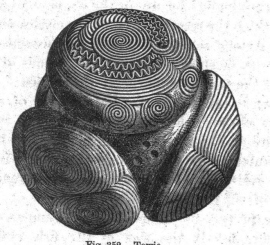
Music and dance are paramount to Galen's culture, with many compositions and arrangements being tunes replicant of natural phenomenon, such as bone flutes recreating the trill of various bird species, or long wooden horns that bellow like a bison. These nearly tribal sounds are coincided by the chanting of other participants, with booming baritone chants setting the base for fluttering chirps and chants of treble voices to dance above. Percussive instruments, especially drums, add to the typical Galenean musical scene, interjected with a bagpipe voice. Galenean festivals and celebrations include the cycle of life, such that a festival is held for both a birth and a death in celebration of the life and death of things. Some more instruments include the fiddle, tin whistle, flute, bodhrán (Irish drum), harp, uilleann pipes (Irish bagpipes), accordion, and concertina.
One of their most culturally important songs is the Song of the Green, a poem of their deliverance from Imperial oppression and enslavement in centuries past.
Artworks created by Galen's people feature derivations of the square artwork prevalent in Khazgan art from their cultural exchanges, in ways like Celtic knots, rectangles, long lines, and natural colors, preferring stone sculptures and wooden carvings at their mediums. An alloy unique to Galen is Galenean Gold, a mixture of gold and jadis that creates a green-gold metal with heft and strength.
And in all things, a good drink accompanies both those enjoying the arts as well as performers as they recreate the musical performances and artworks that have been predicated by generations of traditional methods.
Magick

As the Galenean people are deeply environmentalists, many of their people are Druids. Druidism is one of the few magical aspects of the world Galen advocates for, as any other magicks that can cause destruction and harm upon the natural order of things is thought to be highly taboo, and grounds for exile from a clan if a fellow clansmen is discovered to be a magick practitioner that is not Druidism. Most magicks which can be used combatively are frowned upon, and those which adhere to the Tradition of Chaos are abhorred. The Tradition of Thaumiturgical Arts is a debated subject for the Galen, as if one is able to convince them that said magick is not detrimental to the world, they will often claim any time spent learning other arts could be dedicated instead to the bounty of Druidism. They believe that Alchemy is part of Druidism and thus a Deific magick, not dissimilar to the Imperial belief, in that both view the recipes as notes left behind by their creator.
On highly rare occasions, often in times of dire circumstances for the longevity of a clan, a Clansmen may be elected as an Uprooted by the Verdant Council, in which they are permitted to learn any and all magics available to them in order to achieve whatever goal the Council deems worth breaking tradition. Those who are Uprooted are often shunned from other Gales, as it is thought that the mere presence of an Uprooted brings bad luck and misfortune, even if they are on a task from the Verdant Council.
Galen believes it's people derives religious power from nature and the world around them rather than from a religious tome. Though they worship divine beings, they claim their magick to not be Deific, and especially resent comments of their ancient rituals to simply be the work of the Enlightened Tradition. Alchemy is a common sight as with most cultures, with a focus on natural components and remedies.
As rare as Ophidian Magick and their people are, a majority of human-born Ophidians come from Galen. Though this is shunned publicly, this leads to Ophidian Magick not being frowned upon usually by Gales.
Some have spoken of stories in the Age when the leaves turned blue that Galenean woodsfolk were practitioners of an entirely unique magick, one that involved their art of Forest Bathing...
Others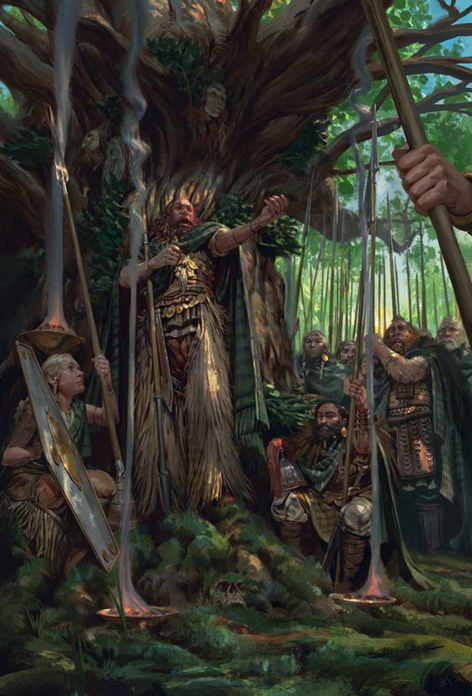
Many times have Galen Groves been soiled of trespasser feet; Many times have the Sparkstones burned bright to push foreign taint out.
Dwarves: Were it not for the dwarves' dreadful hate for trees, these two cultures would be some of the greatest allies in the land. When the dwarves can get over themselves, prosperous times between their peoples have been seen, with both groups greatly aiding the other, and even intermingling in cities. In times where the dwarves decide to embrace their hate for all things leafy however, relations fray. The Gales have no particularly unique view about the 3 different Underrealms, other than their preference for the Ironfists, being so close in geographic proximity and interacting with them the most.
Elves: Of all the races, Galen is most fond of the Elves, whom they call the Eos Sí. Though they differ on faith and ideology, their goals of being protectors of the natural world are in alignment. The zeal of the Sun Elves is admired by Galen's Clans, though it is not often for this admiration to be shattered upon dealing with the arrogant natures of this desert-dwellers, as Gales can not tolerate those who view themselves as loftier than another. The Moon Elves are great allies of the Gales in secret from the Empire, which the Moon Elves cannot say about many others. Frequently Galenean groves can be seen with Moon Elves living within, as no other culture so closely understands Galenean sentiments, while being on opposite sides of many a continental conflict. The Star Elves get along with most folks, and this is no exception to Gales.
Humans: To the Gales currently, the Empire of Man is viewed with a cautious friendship, with much skepticism. Having fought a plethora of wars at their behalf, as well as being invaded directly by the Empire, having returned to the Fold of Man upon better terms gives many Gales a sense of unease. How long will this reunion last, is unknown, but many claim it shall be short lived.
Volkar is the bane of Galen's existence, having been their ancestral enemies more than the Empire has. Racism and vulgarity abounds when the two cultures are in the same room. If either can find a way to hurt the other, they will go out of their way to do so.
Joagundr has differing religious views than Galen, but are the closest to understanding their stance on things. While the Gales feel more as nature's caretakers, the Joaguns belief none are so above nature as to safeguard it, but rather all are at it's mercy. In any matter, the two cultures can get along besides this religious difference.
Ōkami is rather unknown to the Gales, as is Culiacán, despite being close to them. Opinions are neutral on the Culiacáni peoples, but depending on whether a Gale is pro-Empire or anti-Empire changes their views on Ōkami, who are always anti-empire.
Conclave - Mer: The Conclave have not had much direct interaction with Gales, but what few times they have met have not been the most friendly of engagements. For the most part these days, Mer and Gale can respect each other, as both live in nature as their respective beliefs call them too.
Conclave - Ophidian: Gales are one of the few cultures that openly embrace the Ophidian Races. As the Clans often hold views of draconic beings being the pinnacle of nature, they respect Ophidians as being powerful embodiments of nature, and will frequently deal with them in cordial matters. This is much to the chagrin of the Empire of Man, however.
Naming Conventions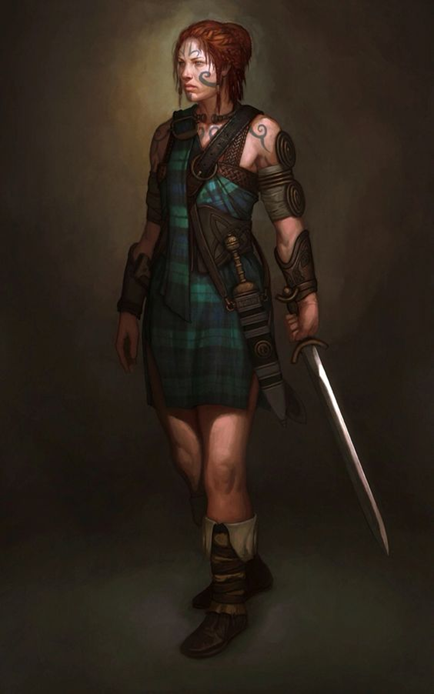
Uniquely for Galen, their naming schemes are patronymic or matronymic, which means their names take on a portion of their predecessors. This is most often seen in formal writings, or professional greetings, as most will use their base name in daily interactions. A Gale's first name is solitary, and unique to them, and it is what they most often go by.
For last names, a more elaborate naming convention is followed. Each last name bears a prefix. The prefix for men and women differ; for men, it is Cohm, and for women it is Caer. For example, a formal last name for a man might be Cohm[Father's/Mother's name] while a women it might be Caer[Father's/Mother's Name]. There is a prevalence for women to bear their mother's name more, and men their father's. For their middle name, they bear the banner of their Clan. A Gale of the clan of Draoí, who’s father was named Conall, might have the following name: Eideard Draoí CohmConall. Oftentimes the middle name will be dropped in favor of ease of reference.
Male Name Examples:
Aodh, Alfraid, Ailbeart, Alasdair, Aodhan, Bearnard, Baird, Baltair, Brian, Cathal, Ciaran, Ciar, Conall, Cormac, Donnchad, Dunncaid, Domhnall, Eoghan Eamon,, Eideard, Faolan, Fearghas, Goraidh, Griogair, Guthraigh, Huisdean, Horas, Iomhair, Iomhar, Iosag, Lachlann, Luthais, Malcolm, Maol-Iosa, Maol-Domhar, Murchadh, Niall, Oisean, Peadair, Padraig, Raghnall, Ruaraidh, Rioghad, Seoras, Seonaidh, Tearlach, Torcall, Ualan, Uisdean
Female Name Examples:
Ailios, Aoife, Anna, Bearsag, Beitris, Beathag, Caitriona, Ceana, Ciorsdan, Deirdre, Deonaidh, Doirin, Eilidh, Eibhlin, Eamhair, Fionna, Frangag, Floireans, Giorsal, Gormlaith, Isbell, Iseaball, Leitis, Luisaidh, Liosa, Maireadh, Marsaili, Maili, Olibhia, Peanaidh, Peigi, Raghnaid, Raonaid, Rut, Seasaidh, Siubhan, Sile, Tearlag, Teasag
Important Figures
High Chieftain Galeik, Chainbreaker: Founder of the Galenean people, emancipator of their fate, reclaimer of the homeland, and slayer of the Dragon Emperor Stein.
Chieftain Rioghad CohmAlasdair: Heroically battled the Volkan General Dragomir's forces during the Verdant Wars, in which Volkar aggressively invaded Galen's lands.
Sage Isbell CaerGuthraigh: A Felled who sacrificed her life into the Great Sparkstone of Dunbraidh, to prevent the expansion of Imperial enemies. Many powerful Imperial mages in the vicinity of this act lost their ability to cast magicks entirely. Though her sacrifice saved Galen in her time, those of the Verdant Council and record holders continue to instate she was never on Grove lands, lest her status of Felled be unenforced.
Ferninho CohmLoit, Treeborne: A remarkably powerful Druid who's powers could bend entire forests to his command. A cornerstone in the rebuilding efforts of the dreadful shattering of the Sparkstones and burning of many sacred groves. Renown for his tactical mind and ability to coordinate many fronts while being stationed elsewhere due to his connection with the land.
Seoras Bheithir CohmTadhg: A revolutionary member of the Verdant Council who became an Uprooted to learn dangerous and unique magicks in the incursions to the Austral Wastes at the behest of the Empire of Man. Their efforts were to return the Joagundric Ignomads to the fold of Man, and Seoras and his men were sent for the daunting task.
Giorsal CaerMaireadh: One of the finest woodworkers of the human race; a unique culture has been built around Giorsal's techniques, specifically known as Giorsalwood, a method of manufacturing wood products in natural fashions, similar to Bonsai Trees.
Legends & Myths

The Chainbreaking: During the Age of Legend's End, the Galenean people were founded by the civil war within the Empire of Man. It was during this time that High Chieftain Galeik founded the Clans of Galen upon the spilled blood of the Dragon Emperor Stein.
The Verdant Wars: When ideological beliefs could no longer be reconciled between the two diametrically opposing peoples, a bloody war ensued between Galen and Volkar, of which some claim the Empire of Man incited.
The Undying Soldier: A story that is more likely truth than a fable. This myth recounts a Druid turned Soldier, who became so soaked with life through nature that they could regenerate any wound and any blow, escaping death unending. They eventually brought upon themselves the ire of Niamhán himself, and their running from The Black Bowman met its end. Storytellers around campfires imbibed with a bit too much ale will make rumors up of the solider still roaming around to snatch unruly children, but this is entirely false.
The Everliving: Scant rumors amongst those associated with powerful Galenean Druids exist of trees far larger than any normal tree should grow to be; these mythical Arboreals are claimed to be of pure magick, as well as a maelstrom of many other mythical traits. They are hardly ever seen, but claimed to be all over the world, in various species. Perhaps they are guarded by sacred Groves?
The Root Rot: One of the most blightful scourges to sweep the lands, a curse claimed to have come from an unknown Chaos God of pestilent power which infected the hearts of trees all over Volantis, but mainly within the Gale's Forests. The infection was spread through the roots of the host tree, and did not have any symptoms until druidic magick was cast upon or near the infected flora. Bursting forth in a smothering pox, devilish winds of death and decay rushed out in an attempt to infect other individuals, in which they would begin rotting from the inside. Some outsiders claim that the Druids caused the Rot upon themselves...
Mystery Magick: Some have spoken of stories set in the Age when the leaves turned blue about Galenean woodfolk who were practitioners of an entirely unique magick, one that involved their art of Forest Bathing...
Felled Faith: The necklace of Sage Isbell CaerGuthraigh, a Felled who sacrificed her life into the Great Sparkstone of Dunbraidh, to prevent the expansion of Imperial enemies. Fabled to have the ability to empower druidic magicks, though those of the Verdant Council would find this item to be heretical.
Staff of Seoras: The powerful relic of the only Uprooted Verdant Council member, who led the Rime Incursions into the Austral Wastes. A steady rushing of freezing air whips in a rapturous blizzard around the staff in a spiral, existing as one of the few Galenean artifacts enchanted with non-druidic magicks.
Line of the Black Stags: For all they claim of the tyranny of the Imperial houses, even the Gales have had their fair share of tyrants. In ages past, a line of rulers amongst their clans known as the Black Stags rose to power not through the blessings of their elders or councils, but through blood and betrayal. Forsaking the Talamh, spirits and stones alike were bound to the desires of man, and not even the sacred nature of the earth was spared as foul Deathblooms sprouted across the Coille Forests.
Festivals & Holidays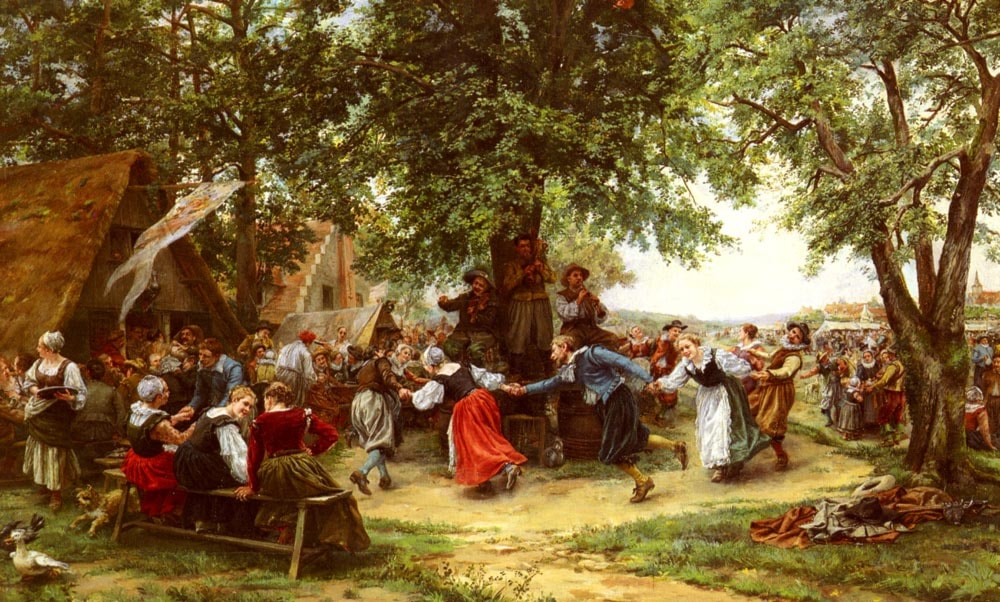
Talamhoot
During the Dominion of Eye's Mirth
A religious holiday in which all of Galen, from the lowest merchant to the most esteemed farmer, join together in a reconciliation of any grievances they have with their brothers and sisters, as well as with others. Druids take a focus during this event, and animals and beasts from all over the realm are brought to show and made docile to interact with Galen. Thanks is often given to the Samsara as cursory enablers of their worship to the Talamh.
Unification Day
During the Dominion of Prime Seed
Though the Empire greatly celebrates this day, it is a point of contention for many a Gale. This day of gathering marks the unification of many banners of man under the Empire, sworn through a set of oaths and allegiances amongst the Clans of Galen, the City-State of Culiacán and eventually the Ignomads of Joagundr united in the Fourth Age under one banner. To most Gales, it is a day of conquering, though to say so in public is taboo, and shunned. Those who celebrate this day are seen as lapdogs to the Empire, however.
Independance Day
During the Dominion of Soluary
Ironically celebrated upon the month of Solarius's reverence, this is a grand display of feasts and festive gatherings of which all Gales, regardless of status, are united in thanksgiving for their independence of the Second Empire of Man. This celebration is filled with controversy, as the Galenean people are currently ruled by the Holy Empire of Man, and much distinction has to be made to differentiate the political entities.
"Sparking"
During the Dominion of Dawnstone
A unique event that happens through the entire Chronicle, but most often occurs during the Dominion of Dawnstone. This is a time to remember family both living and passed on. Regardless of the distance, far-flung Gales will return to their Clan homes to gather around their central Sparkstones and chant their lineage in a grand remind of their power in unity.
History

Synopsis: Born of a Civil War within the Empire, the story of Galen begins in a time of deep unrest throughout all of the lands. During the Age of Destiny, a period of time ensued that the Empire of Man was governed by Dragon Emperors, rulers commanded by a shadow government of Ophidian council. The Empire of Man grew to such a strength that it surpassed the might of the Mer, Elves and Dwarves. The entire lands of Volantis was theirs to claim, and this power was harshly enforced, as the Emperors ruled with iron fist. Oppression ran rampant beneath all who were united under the Empire's banner, and no longer could man enjoy the bounty of nature and soak in it's beauty.
This would not do. Murmurs turned into statements shunned turned into declarations hastened turned into actions demanded turned into deeds done. Before long, a civil war was in full effect, with the ending result being the severance of many modern cultures of man being born in the ashes of the Dragon Emperor reign, the last Dragon Emperor Stein being slain at the hands of Galeik the Chainbreaker, and the olden lands reclaimed to be theirs forever, free.
Thus did the Second Empire of Man fall, and the Clans of Galen rise. Not very long after, the Empire of Man was reformed, now the Holy Empire of Man, and an offer presented before Galen to rejoin the Empire upon new grounds. However, in this short amount of time had Galenean culture flourished, blossoming in the bosom of the forests near the Empire, and thus were not so willing to rejoin their once-oppressor's grasp. The Verdant Council at the time, convinced of the Empire's new structure and intentions, entered unto a taciturn vassaldom between the two polities. Before long however, this agreement would not sit well with Galen, who desired full freedom.
Before the conflict boiled over, Galen fought in many wars and efforts as part of their newfound vassaldom; Against Joagundr in the Rime Incursions to return their foreign brethren to the fold, against Volkar in their initial skirmishes (whom they would later directly wage war in the Verdant Wars) as well as the Great War, and other efforts. Worn and tired from centuries of being the lapdog of the Empire, Galen was incited to break free once more of their oppressors, viewing themselves the victim of their own making once again. However, this time the Empire of Man was to invade the Gales forcibly, and subjugated them entirely, making them a vassal of the Holy Empire of Man. Though Galen had help from the Moon Elves and the Ōkami, the Holy Empire's aid from the Sun Elven Solarate was of too much force to bear.
Though the conflict was bloody and dire, the current environment as vassaldom is a rather positive relationship between the Empire and Clans of Galen. Many have forgotten their bloody past with the Empire and other dark deeds of Gales before them such as the Line of the Black Stag, and live relatively isolated lives from them. While they are legally mandated by the Empire to worship the Solar Pantheon and the Cynosurian Faith, such is nearly entirely ignored, as the Gales are not the most religious people in matters of the gods.

Last edited: 3 months ago