
The Ignomads of Joagundr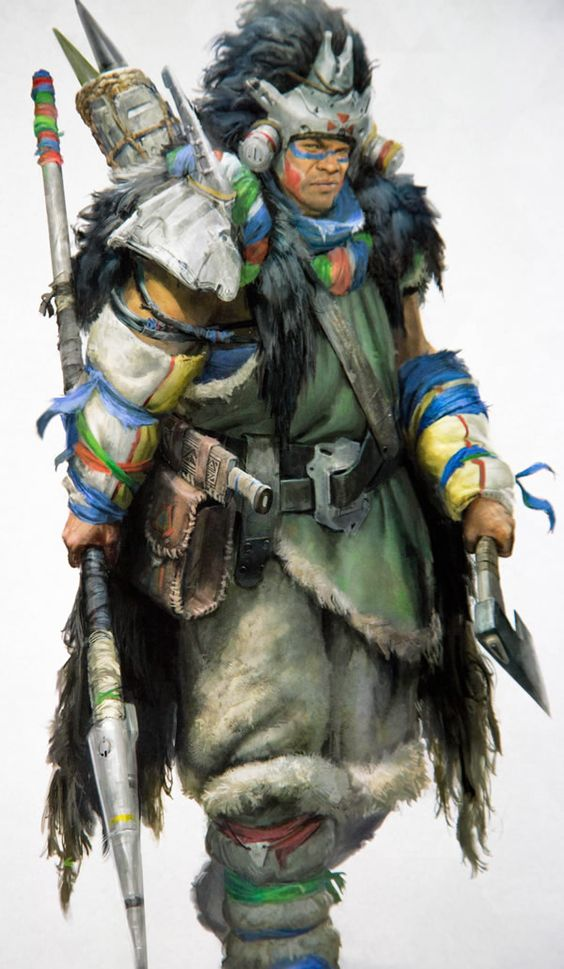
"Survive. Prevail. We are Joagundr. What else matters?"
Synopsis
Seat of Power: Decentralized, semblance of a capital at Qilalunaq, Austral Wastes (Known to them as Toklo)
Part of: Conglomerate of Ōkami (legally)
People Name: Joaguns/Joagun
Adjective: Joagundric (A Joagundric spear)
Religion: Vita Vindär
Language: Qtun, Joagun Sarword (Inuktut English)
Introduction

Hailing from the Austral Wastes, or the Sacred Lands of Toklo, the Ignomads of Joagundr are a group of spiritual humans that find success even in the harshest of circumstances. Their story began as one of Imperial colonialism, with the Empire of Man's hubris deigning for a feeble expeditionary crew to be sent forth into the coldest reaches of Volantis. What they found was nothing but a frozen, slow death; or so it was believed.
Today they are one of the most scientifically advanced cultures in the lands, though all is framed through the lens of their tribal ways. Lacking the political intrigue and strife that is defining of the other cultures in the core of Volantis, the Joaguns found no challenge but the stark white that coats their land. While others may find the low temperatures and deadly wildlife as enemies, the denizens of Toklo find the land to be an ally despite the harsh conditions. The Joaguns go so far as to revere the biting winds of the frigid wastes, believing it to be the soul of all things that flows within and through all beings. Uniquely, this reverence for their situation, as well as little to no opponents in their land, led to the mix of ideology we see today.
Physiology
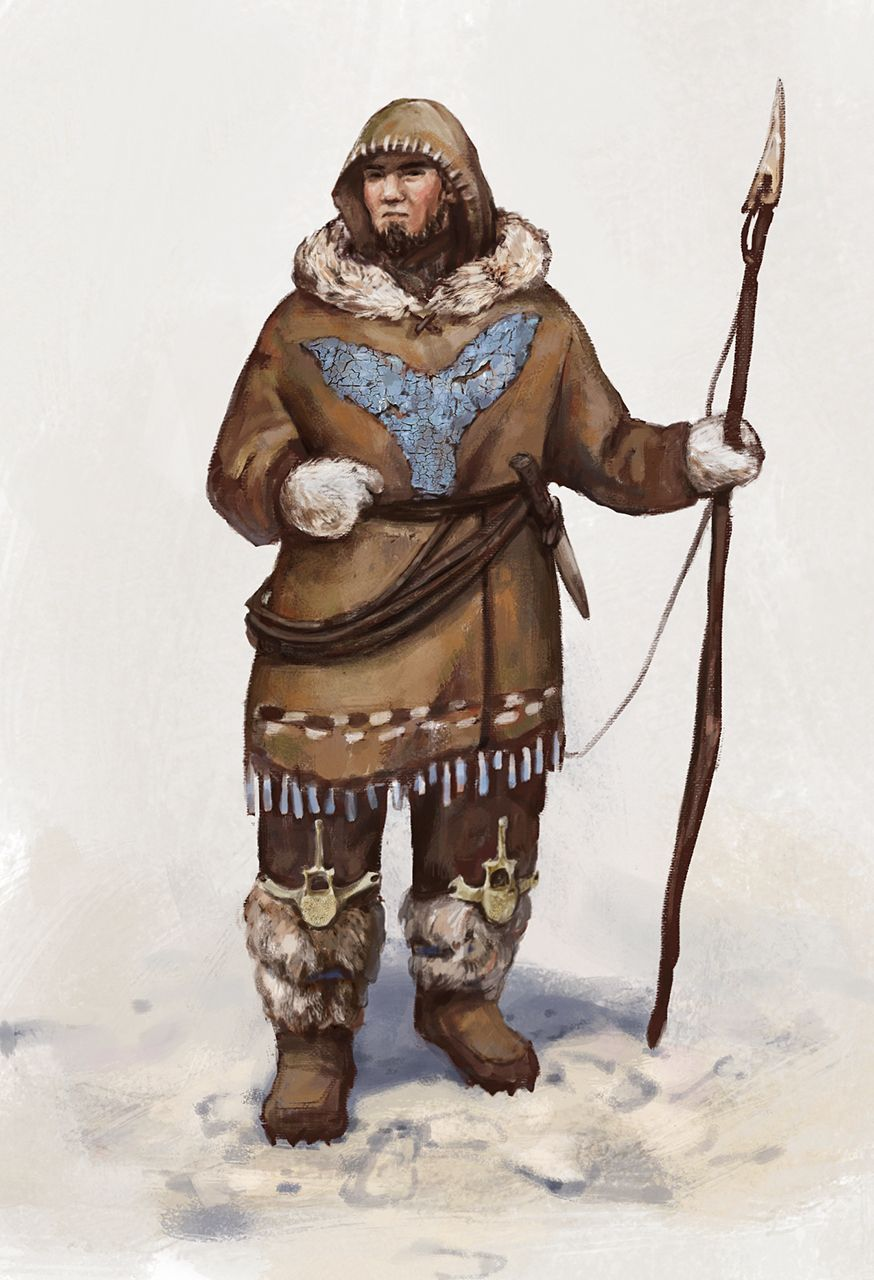
Larger than the average human, the Joaguns are born for adversity, and their bodies exist as proof. Large and bulky with shorter limbs, broad noses and high cheekbones are characteristic of Joagundric appearances. Dark hair and brown skin is a common sight, with black to dark brown being the most common color seen in their hair. Eye colors trend on being more browns and blues than other colors, with darker hues of blue, green and hazel mixtures being seen. A unique presence for central heterochromia is seen, as well as a noticeably more oval eye shape. Their average heights range from 160 to 180, and heights spanning from 5'8'' to 6' as the average Joagun. Facial hair is a very common sight amongst Joaguns, as is to be expected in the freezing climate.
Fashion
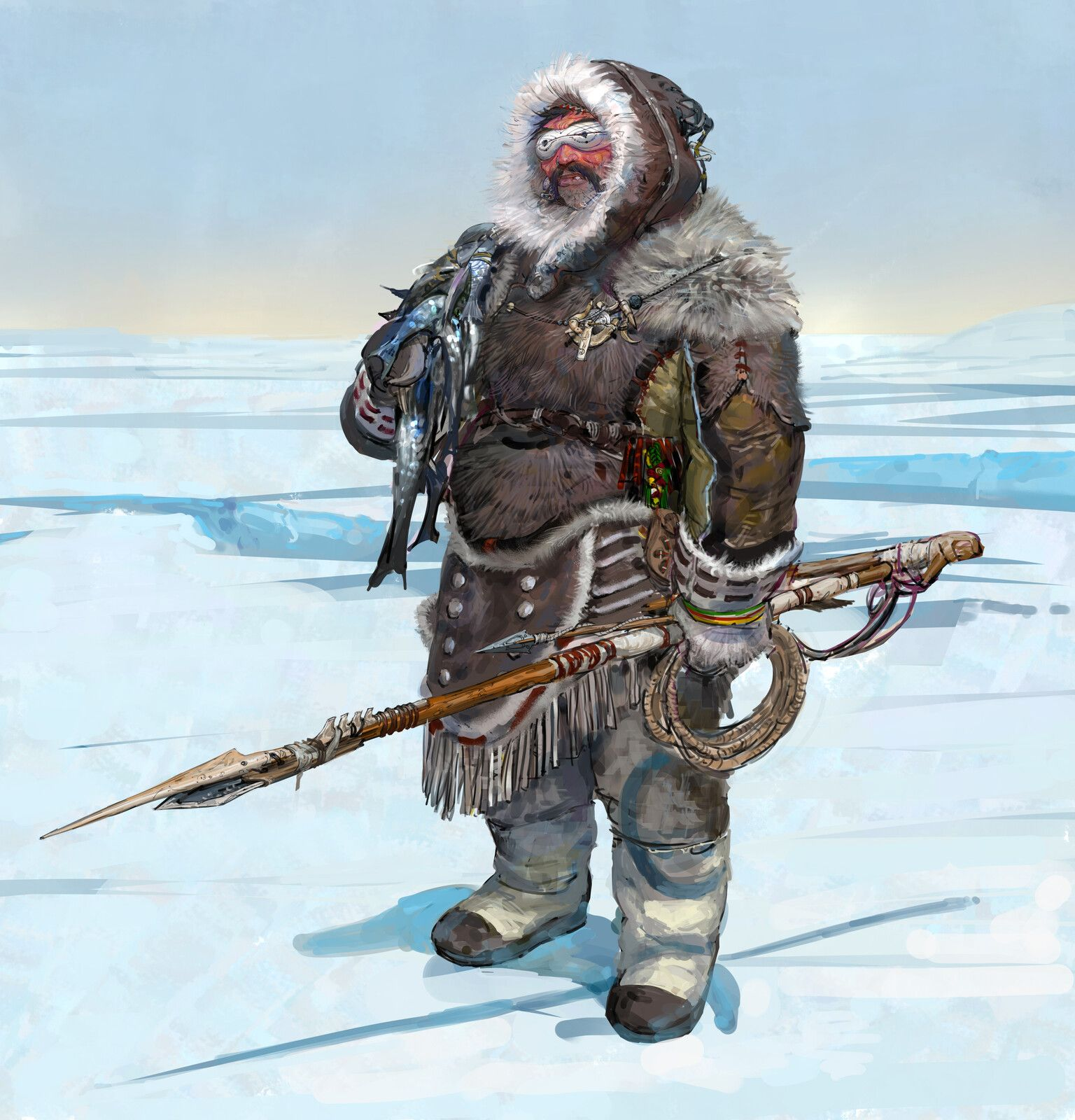
Joagundric fashion is functional, and adaptable. Much thought and effort has gone into assuaging the pains of living in an inhospitable climate, and much of this research has gone into their clothes. They wear heavy overlapping clothes donned with hoods and coifs padded with fur and made of leathers and skins. Advanced stitching techniques enhance their durability and endurance to the elements. Underneath these thick layers are thinner moisture-wicking materials that provide insulation to keep the wearer warm and dry. Thick kamik boots protect their feet with special padding to ward off frostbite, while being quite lightweight for their degree of protection. Colors of brown are prominently displayed, as well as light blue secondaries, with an assortment of complex dyes being used, typically bright reds, yellows and greens in sparse amounts.
Even their accessories exhibit practical functionality, with most being tools of some sort. A staple of nearly every Joagudr is the Qallun, or the Utility Belt. Qallun hold a solution to nearly any challenge one can face, from skinning a Ridgefin to icepicks to telescopes to measurement devices to ritual offerings as the Vita Vindär picks up around them and demands tribute. A unique form of goggles are common for Joagun out in the lands to wear, a protection fashioned by Noaidi (Technological Shamans) to protect against both the reflection of the sun upon the ice as well as the biting ice that claws at any exposed skin. Small compasses are sometimes seen, though most Joaguns can discern the direction of the poles by intuition.
Key upon the Qallun/Utility Belt are the Iluqtaq, or the Scrolls. Simply put, these are ornamental scrolls adorned to Joagundric clothing as a point of show. It is through these that their scientific acumen is flaunted and displayed; discoveries, skills, developments or ongoing research efforts are all common sights to see on a Qallun, with each having unique looks accordingly. To a Joagun, these Iluqtaq are considered endearing, and a large symbol of status.
If any decoration is to adorn a Joagun's attire, it will be in the form of lavish embroidery. Expensive threads and wires of rich hues are used in sparing amounts acquired from exports outside of their lands. Common motifs for these include exploration, discovery, innovation, and the interconnectedness of nature and technology.
Freezeflame Emperium finds its way into many trinkets, jewelry and doo-dads of the Joaguns, due to its ability to retain material properties in even the most frigid of climates. For the most esteemed Joagundric Noaidi, the legendary metal Coldbalt is reserved, with crowns, research implements, buttons and belt buckles and more being forged by this chilling metal. Either metal's ability to retain the cold for various amounts of time is essential for the faithful Joagun traveling abroad, as a cold reminder of home.
Values, Attitudes, Taboos, Morals, and Beliefs
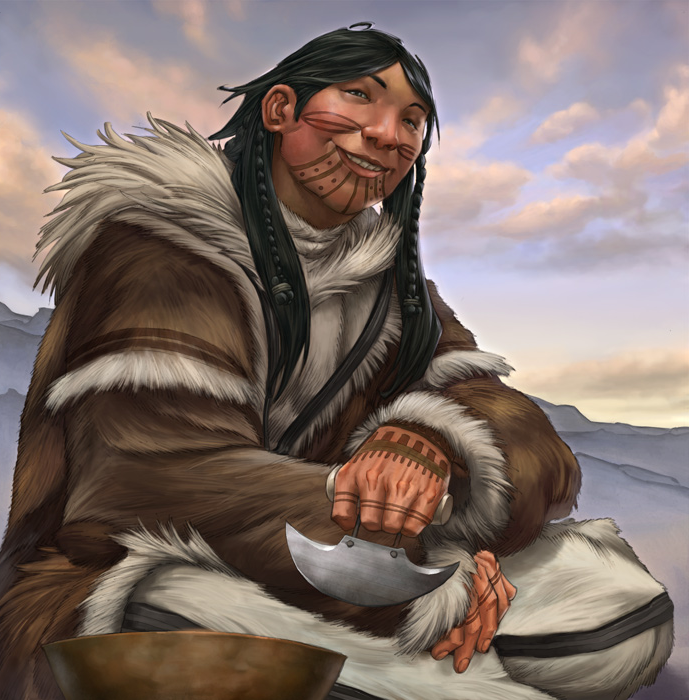
A meritocracy culture of fierce warriors and devout shamans, these nomadic people are ones of involuntary isolationism; those who sought refuge in the Austral Wastes of Toklo found only chilling northern winds that blew down from the frigid peaks lining their territories, and a prevailing scarcity of resources. Before long, the Joaguns became embodiments of the land they called home; impartial, and cold, devout followers of the Vita Vindär, or the White Winds that flow down from their mountains and fill the world. Above all is the desire for meeting challenges head on, with Joaguns preferring death rather than refusing a challenge on the basis of it being too difficult.
The Joaguns follow the ways of Ice and Fire; a symbolic representation of the nature they believe exists in all mortals as well as nature. Explained in detail in their faith, a summary is that the ways of Fire are those of passion, excess and action, whereas the ways of Ice are those of wisdom, cold calculation and the reality of the world. With too much of either one becomes unbalanced, and the White Winds do not flow through you as they should.
Joaguns, from the moment of their birth, emerge as warriors in a realm where resilience in the face of adversity reigns supreme. With an unwavering dedication to safeguarding their heritage and standing apart from external influences, these solitary souls are often perceived as tribal, uncouth, and brash by the inhabitants of mainland Volantis. Yet, the uninitiated fail to comprehend the profound influence of the biting winds that sculpt their existence.
This rough demeanor and stern outlook on life creates a jarring juxtaposition with the other vital half of a Joagun; their love for all things technological and information. One may be taken aback to see what would believe to be an ignorant tribal woman garbed in tanned animal hide while she presents a dissertation on the state of Crybeak migration paths stemming from the effects of Imperial Magicks affecting the Vita Vindär's flow in the region. With a heavy mix of technological thriving as well as a retention of tribal ways, the Joaguns have formed into a unique crystallization of an older time, with both halves of their culture being born from their isolation.
Joaguns harbor a deep-seated wariness toward anything unfamiliar or foreign. Although they are open to embracing novel concepts when presented, they interpret them through the prism of their ancestral customs. For instance, the revelation of a newly unearthed magic from distant realms would be perceived as an innovative manipulation of the Vita Vindär. Additionally, Joaguns possess an insatiable thirst for knowledge, no matter its manifestations. Visitors to Toklo might perceive the Ignomads as impolite, unrefined, or even indifferent to their presence. However, Joaguns individuals embody a no-nonsense demeanor, eschewing frivolity and excess in favor of pragmatism and substance.

Fiercely protective of their cultural heritage and way of life, they hold their community in deep affection. A profound sense of camaraderie, forged through shared adversity, binds their villages together more strongly than most other cultures. Those who deviate from tradition face severe consequences, as strict punishments are meted out. Their repressive social system often ensures nobody ever commits an evil act in the first place, with the heavy-handed social stigma against such being a weight few can bear. Though they exist outside the bounds of conventional law, they adhere to their own set of regulations. On rare occasions, individuals are cast out to endure the frigid solitude of the frost—an outcome considered more dreadful than death itself. A public beheading, on the other hand, offers the small mercy of warmth in one's final moments.
They also believe that their struggle against life suffices them, and they harbor no inclination to engage in conflict with other cultures or factions. While a Joagun does not flinch away from defending their values with sharp wit and strong muscle against those who would slander the Sacred Lands, they do not necessarily perceive other cultures as adversaries. Nevertheless, Joaguns maintain a deep-seated xenophobia, viewing those not indigenous to Toklo as lacking in fortitude, devoid of high concentrations of the life force that courses through their own veins—the Vita Vindär—and incapable of comprehending their customs and principles. Yet, through demonstrations of resilience and resilience alone, be it emotional or physical, an outsider may earn the admiration of a Joaguns.
Their gender norms are remarkably fluid; while many societies permit men and women to undertake diverse roles based on their aptitude with minimal societal repercussion, in Joagundric society, the slight misallocation of skills holds significantly less weight than collective contribution, as any lapse in cooperation could spell the demise of the entire tribe. Referred to as jacks-of-all-trades, Joagundric individuals are renowned for their adaptability and versatility. Both men and women engage in arduous tasks, with no muscle spared in the communal effort. It is not uncommon to find a man conducting scientific inquiries on the movements of the Vita Vindär and its impact on elk migration in the morning, only to transition to stew preparation by evening. This egalitarian ethos, known as bestämden in Qtun, forms a cornerstone of their meritocratic society, wherein respect and authority are accorded to those who demonstrate prowess and accomplishment.
Family
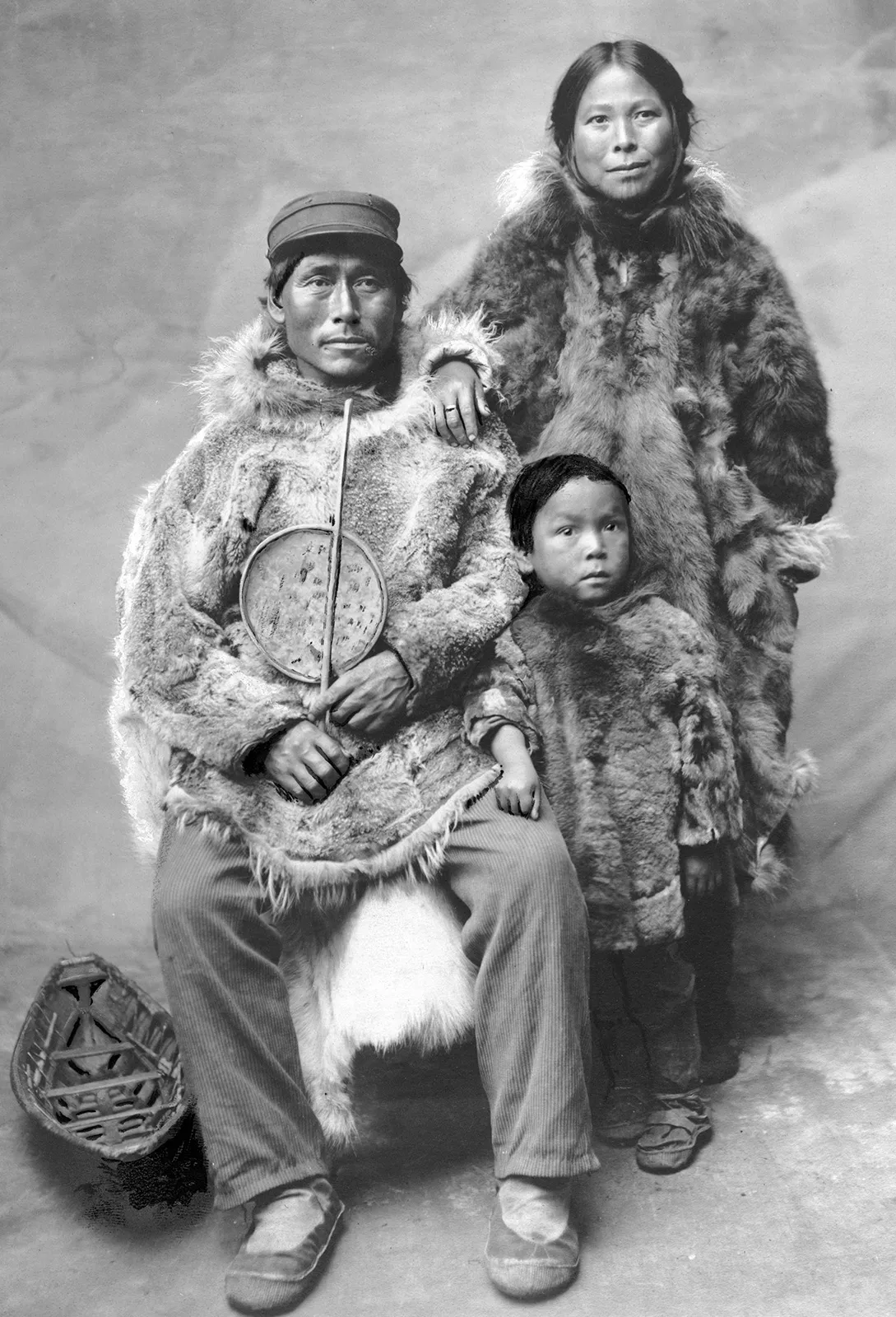
To the Joaguns, a family is measured by shared common interests as well as blood. Family members are often spread far and wide throughout various locations and moving bands throughout Toklo and beyond, while their loyalty must remain with their Klanaitu. Joagundric peoples are free to live with other families on scientific endeavors if the need arises. Oftentimes, family members are treated with disdain for leaving the family without a good reason, such as mercantile or scientific endeavors. This leads to a highly decentralized system of power for Joagundr as a whole, with power remaining rather insulated, just as their furs insulate them from the biting winds.
Inherited from their interactions with Ōkami, the Joaguns follow matriarchal practices. They are a society led by women both in their very fractured government as well as in technological innovation. Unique from other cultures within Volantis, the Joaguns practice arranged marriages where matriarchs pair up individuals of differing clans to each other.
The structure of a family is one in which either a single male or female (trending towards female) figure is in charge of an entire extended family, called a Klanaitu. Villages may have only 1 Klanaitu if it is small, or upwards of 4 if it is a large one. This leader of the Klanaitu, called a Nalunuk, is often trained at birth by the existing leadership (who choose their successor based on age and blood relation) on how to run and administer an entire family effectively and rather pragmatically, as well as how to solve disputes. This dictatorship of the family provides quick decision making, at the expense of old ideas generally having more sway in their community as opposed to new ones.
Leading a village is a mix of the Nalunuk of Klanaitus, and what Joaguns call Noaidi (Noai singular), which are their Shamans. Noaidi, beyond being guides of the Vita Vindär, give insight to both scientific debates and familial matters. It is often such that a Nalunuk will not make a decision on a matter concerning his Klanaitu without the contemplation and approval of a Noaidi, although not legally required, as no greater council of Noaidi exists.
In cases where the townsfolk find unacceptable bias in the groomed leader, or ineptitude threatening the safety of the family, they are able to challenge the Nalunuk for their position. Each Klanaitu does this in a different manner, but all challenges to leadership require both a test of skill in survival instincts such as hunting, as well as scholastic aptitude in academia. The Noaidi of the tribe, (and in worst cases, Noaidi from outside of the tribe) act as the judges, and make the final announcement on who has won the contest.
Work & Trade

Honed by thousands of years of surviving and thriving in harsh situations, a good portion of Joaguns are natural hunters, and it is a feature that is commonplace throughout their culture. From clothes, their faith, dishes, house construction, and social dictations, hunting and tribal attributes in general remain steadfast in Joagundric traditions. After a hunt, a Joagun may take the blood of the slain quarry, and mix it with a pigment (usually white) and draw upon their skin as a testament of victory, as well as taking in what the creature knew for themselves, with white paint signifying the hunter taking on the Vita Vindär that flowed through the creature. Wooden beams in houses are often substituted for great bones if they are available, and hides make up their door curtains frequently. Joagundric youth are required to hunt by their lonesome in the frigid lands when they are deemed ready, expected to return home with their quarry, or not at all. On their return, they are an adult, and a fully functional member of the village.
In conjunction with the tribal and hunting roots that pervade Joagundric culture, scholarship and the love of the sciences is equally pervasive in all aspects of their culture. Mixed with the bones dangling from a dress might be a scroll holding the hunting patterns of a snow fox when the watching
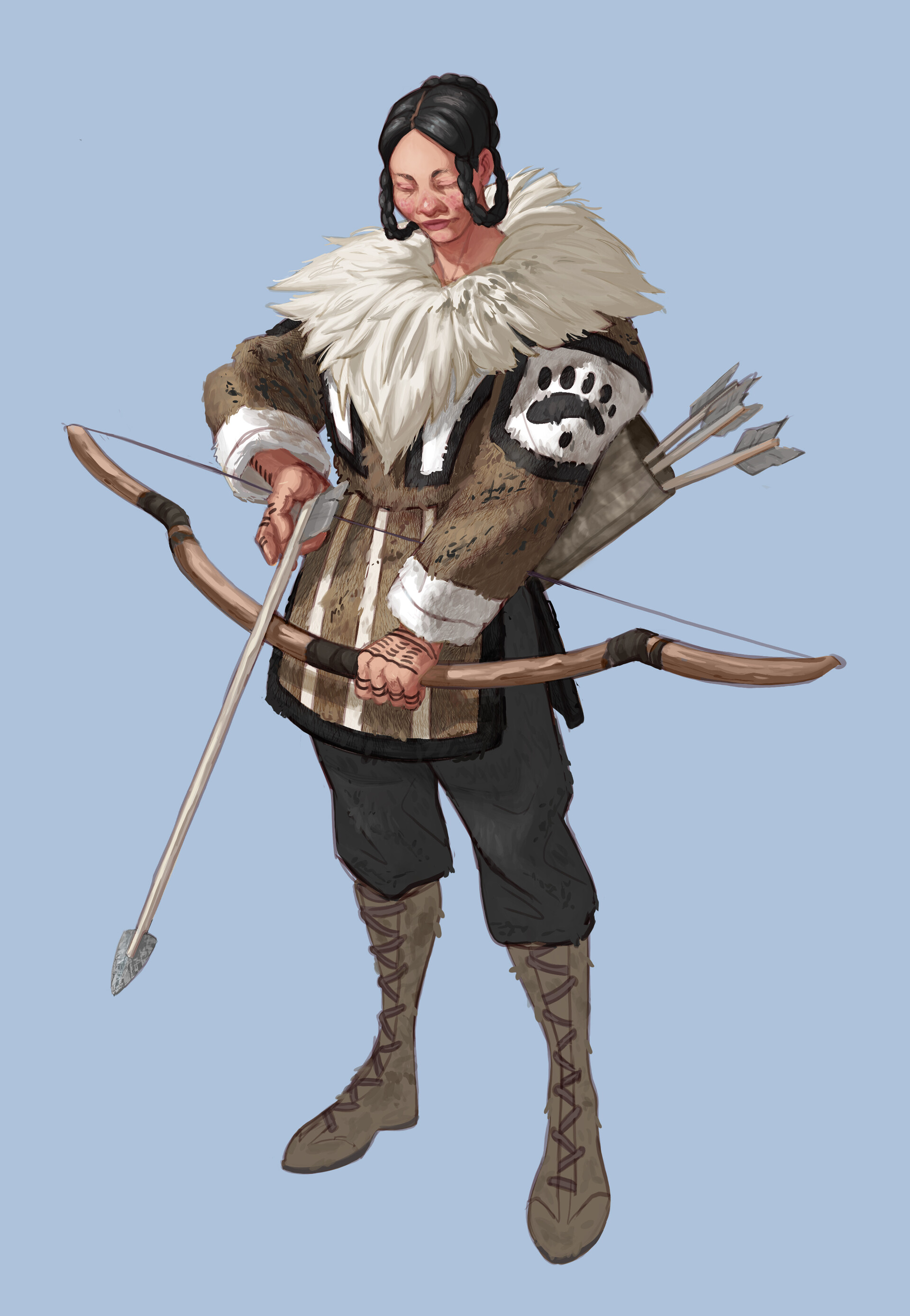
moon is waning, for example. Similar to how an adolescent enters into adulthood by their first successful solo hunt, they must also present a scientific study of their own to the village Nalanuk. With their culture being decentralized, collaborative science is a momentous occasion in the village. If an alliance is formed between villages, an envoy scientist will come from each village to the others, trading knowledge for the betterment of each; rudimentary projectile physics devised from the dripping of icicles on cavern walls, rudimentary mathematics and algebra in the paths of migrating boar, and more. Furthermore, if one of their own villager scientists were to come up with a new theory or grand show of skill, and it passed the rigorous testing done by the shamans, or Noaidi, a feast was to be held honoring the knowledge and advancement of the scientist in question, and they were to be awarded an Iluqtaq, a type of scroll adorned to their Qallun/Utility Belt for show.
This combination of attitudes in the Joagundric culture, tribalism and scientific inquiry, has led to a dualistic identity that is well known to outsiders: that of intrepid and wild scholars. Oftentimes Joaguns see the world in their lens of opposition, such as defining modern takes and those of traditional, or subjective and objective. Joagundric tribes are a polarizing thing, with relationships defined by membership in their families, village, or scientific group. Scientific knowledge is often used to reinforce the tribe's beliefs and values, rather than to challenge or expand them. Just as willing to study the movements of the frigid glacier downdrafts for the sake of current systems as they are going on a pilgrimage seeking insight from the Elden Brothers on the proper actions for their village, a Joagun is willing to dive headfirst into the unknown, whether it be science or the wilderness, with their personal values just as inflexible as mathematics itself.
Of particular note, their crafting includes a focus on incorporating mundane materials such as bones, teeth, driftwood, fish scales and ivory into their works alongside more advance materials such as crude composites, metals, fibers, wires, chains and fabrics. A common staple for Ignomads are their kayaks constructed out of Coldracks and sealskins. Most Joaguns happen to be expert navigators, as well as outstanding fishers and anglers. It is said a Joagundric Noaidi could fish a Southern Shelf Trout out of a solid block of calved iceberg, and such may very well be true. Whether myth or truth, fish symbolism is prevalent in their society due to their exposure to it as a means of trade and sustenance. They have a particular affinity for Coldbalt, with Joagundric Noaidi of renown often being some of the few who could refine the material. Some amount of Freezeflame Emperium has been learned and used from tutelage from the Rimebeards nearby. Peculiarly, Joagundr happens to be the only land to see any resemblance of sightings of the fabled Relic Metal as well as Gamaaea Glass.
Religion
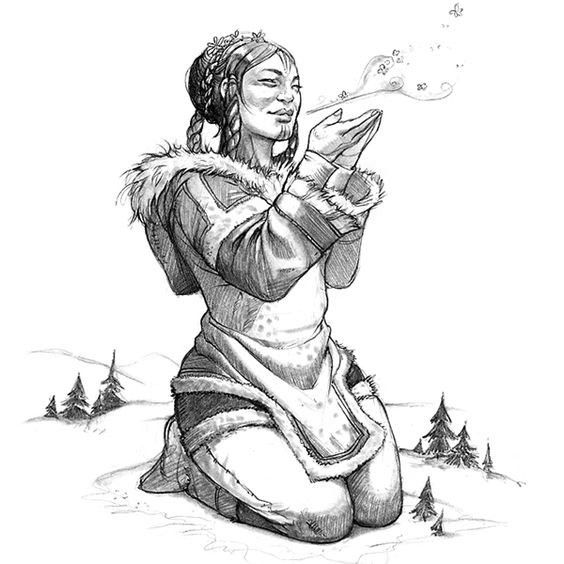
"We are not the first here, nor will we be the last."
From the pure white peaks of Erimus’s far north flys down the Vita Vindär, or White Winds. Within all things flows this White Wind, as the wind itself is alive, indicative of the goodness and liveliness of the world. In times of dire straits and woeful occurrences, the Vita Vindär fades from the world, and in times of great success and perseverance, the White Wind flows strong through all. Controlling the Vita Vindär are the two gods of Joagundric faith, the Elden Brothers.
To the Joaguns, the universe was an empty void containing nothing but the Vita Vindär. No star, planet, or earth was to be seen, for only pure White Winds filled the inky black. After an immeasurable amount of time, a portion of the White Winds began to warm, and then melt, and then boil. Then, there was Fire, known as Värmelden the Elden Salamander. He heated the White Winds, reshaping them, but to no end, for they dissipated into steam and dispersed with no gain of His. With this Heat, Cold shrank away from him. It fled from the Heat, reaching deeper into the Universe until it was so far away from the Heat that it turned into Ice, coalescing into sentient form which was to be Kyleum-Loyce the Elden Owl. Kyleum-Loyce embodied all that Värmelden was not; where there was life in Värmelden, there was death in Kyleum-Loyce, light and dark. But in this absolute cold, the White Winds could not flow, for they remained eternally frozen in place, unmoving, and unnatural. The two newborn Gods began to crash their manipulations of the White Winds against each other, creating great bouts of matter from their clashing. In this, the mortal sphere of Animus Liber was formed, first an icy ball of frozen matter. With time, it was thawed, with the Sun being created to aid Värmelden, with the lands of Erimus being the only place where the powers of Värmelden could not thaw.
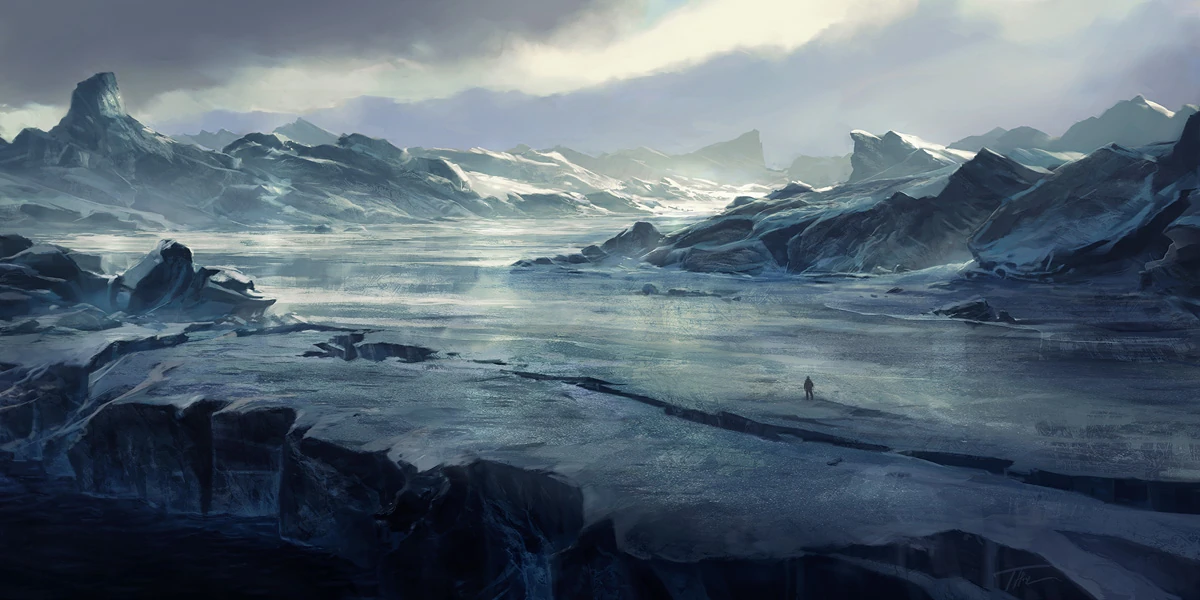
And as such were the Brothers born and all creation made. Neither brother truly hated one another, for they found the struggle against one another to be fulfilling, and an intentional fight giving meaning to the universe at large. Before long, their struggle had created an entire world, filled with flora and fauna. But their clashing of the White Winds could not garner anything more than what was already created, and their eternal clashing was to brutish of a brush to paint finer works. Had it not been for the enveloping loneliness that the two Brothers felt alone in the cold vastness of space, man would never have been made, but it was the warmth of Värmelden which thawed the icy heart of Kyleum-Loyce, with both God Brothers ceasing their eternal brawl for the sake of creating a grand work. The result of their refined weaving of the Vita Vindär was the birth of the first of Mankind. Born of balance in both Ice and Fire with the White Winds flowing through them, the first man walked the earth, and both Brothers saw that their work was well.
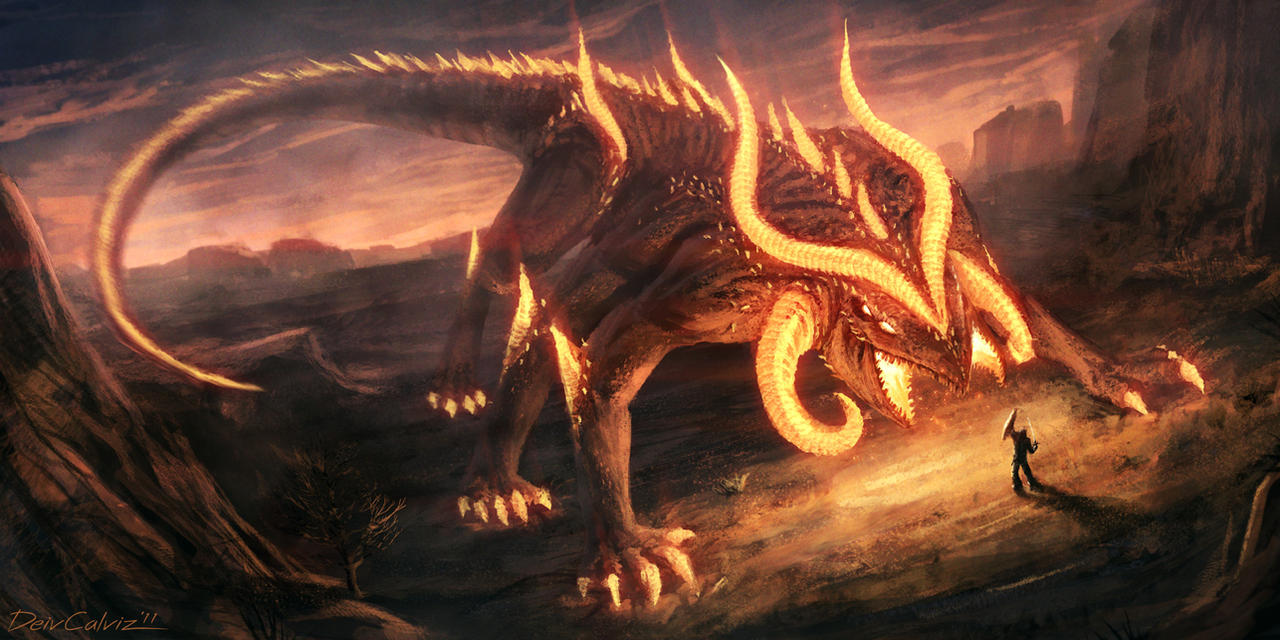 But not all was to stay well, for with the freedom of mortality mankind had, and the balance that was struck in their formation, there would be those who tipped in either excess. Into the excess of what Ice and Fire represent did the original humans move into, forming factions that diametrically opposed each other. And not long after, there was war amongst the Brother’s creations. Both Elden Brothers were struck with sadness, but Värmelden most of all, for it was he who convinced Kyleum-Loyce to aid him. His godly heart was filled with anguish, and the fire within him flared, inciting divine judgment upon the lands, burning away his creation with cleansing fire. Kyleum-Loyce saw the actions of his brother, whom he had never personally been at true odds with, and flew down to the Earth, to see what his brother had wrought. A great swath of the world had been turned back into a primordial state of fire and magma, with the divine form of the Elden Salamander ransacking their creation, and most importantly: the Vita Vindär no longer blew where Värmelden tread.
An apocalyptic battle ensued, far dire than ever fought in the heavens above between the two Brothers, with the world as their arena. Ravines were dug where Gods tumbled and thrown down, deserts scorched by Värmelden’s divine heat, and mountains frozen by Kyleum-Loyce’s celestial chill. The Vita Vindär was with Kyleum-Loyce however, and Värmelden was struck down in his passionate fervor by icy talons. This victory was not without cost, as in the fight against Värmelden, Kyleum-Loyce had caused irreparable damage and death to the people of Ice and Fire, just as Värmelden did. Stricken by the realization that He had fallen into the same crime as His Brother Värmelden, even with good intentions, Kyleum-Loyce stood alone above the world in frozen introspection. On that day did Kyleum-Loyce deign to ascend above the mortal world with the beaten body of Värmelden, returning to the heavens to continue their divine fight for all eternity, and no longer enter the realm of Man unless such a time returned to protect their creation. Värmelden on the other hand, had been hurt not just physically but emotionally, for his Brother had taken up arms against him, and soiled all Värmelden had cared for by his defense of Humanity. He vowed to fight his Brother for as long as it took to eradicate Humans, so that he could regain the friendship they had once before Humans had driven them apart.
And so it is today, such that Värmelden the Elden Salamander is locked in deep combat with Kyleum-Loyce the Elden Owl in the heavens above, with the sun bearing down by Värmelden’s will and the frigid chill of the White Wind coming down from Toklo on the frigid blasts of Kyleum-Loyce’s white wings.
This is not the first cataclysmic battle of the brothers; in fact, Värmelden is believed to have destroyed this world we live in before, possibly even a number of times. The Elden Salamander has overpowered his brother in their everlong battle, and the world has crumbled to ash before his firey wrath. They rebuild the world again, attempting to get things right, but each time Värmelden is stirred to wrath at creation and rages to destroy it. Those that hold faith in the Elden Brothers are not sure how many times this world of ours has been destroyed, but they are sure of the whispers they hear in the Vita Vindär, as they step out into the ashes of the world before.
The Joaguns worship both Elden Brothers, and teach that both are necessary in a perpetual balance. This takes on a metaphysical meaning for the people, as their actions can embody both Gods. To be separated from things, cold, apathetic, unyielding and scientific are to emulate Kyleum-Loyce, and to be brutal, proud, powerful, passionate, loving and tribal are to emulate Värmelden, but both are needed in balance. Should either be out of balance and quell the Vita Vindär, the world would be scorched into a molten wasteland or frozen in an inhospitable icy place depending on which excess is done, and reborn anew.
Unique to all other notable religions of Volantis, those who worship the Vita Vindär and respect the Elden Brothers do not worship out of search of gain or happiness or other noble reasons. The White Winds and it's two keepers are worshiped to prevent their wrath from bearing down upon the faithful. The wilderness cannot be tamed or collaborated with, but only appeased and deferred. The wilds are dangerous and deadly, where one's faith will not save them, but their skill and ability to adapt to the situation at hand. This is in stark contrast to their distance cousins the Gales who also

worship nature, but believe themselves to be shepherds and caretakers of the world, guardians. Joaguns believe themselves much wiser than to be so ignorant to think Nature needs the help of mortals. Their prayers take on the nature of begging and pleading with the Elden Brother's war to not take them away, as no man can conquer Nature.
In reverence to the Brothers and the Vita Vindär, Joaguns carry wind instruments with them and windcatchers on their homes, to sound when the White Winds flows through their lands. Noaidi may take long pilgrimages up the white peaks of Toklo where the Vita Vindär propagate themselves, blown down from on high by Kyleum-Loyce from the sky above. Joagundric peoples are expected to live their life in balance, emulating the eternal struggle of the Brothers born of the Vita Vindär; where there is too much comfort, weak men are created, and where there is too much strife, no advancement can be made.
On the subject of the afterlife, each Joagun is believed to be taken to 3 locations, depending on what they practiced in life. The first is the plane of Kyleum-Loyce; if they led a very cold, unfriendly, uncaring life, they will forever fight off freezing in place and never knowing the warmth of another again. The second is the plane of Värmelden, a realm of molten stone and fire where no water or chill exists, where one is sent to if they had lived a life of overindulgence, passion, tribalism and anger. Forever parched, the inhabitants of Värmelden’s realm are subjected to forever running on their feet, for standing still means their feet melting. Lastly, if the life of the Joagundr is one of balance, where they respect both tribalism and science, love one another but maintain their ideals, and more, they are found in the great white plane of Fornhemroth, where the heroes of old all rejoice in the abundant embrace of Vita Vindär forevermore. Endless research potentials and advancements built upon each other rather than being lost upon one's passing drives this glorious afterlife to the forefront of the faithful follower of the Vita Vindär's mind.
Of note, due to their long isolation from the rest of humans, the Joaguns do not worship the sun and moon, and do not even incorporate such into their faith.
Agriculture & Cuisine

Agriculture in inhospitable lands is one of the largest challenges to survival, second to not freezing. Fortunately for the average Joagun, a long history of techniques have provided innovations for farming in even the worst of climates. Igloos are not used for living in but rather greenhouses of sorts, keeping in heat and preventing permafrost from seeping into the ground and killing their crops. Hydroponic solutions and a unique way of distilling salt water gives the peoples of Joagundr a method to farm year-round. A unique type of saltwater seaweed grows in the Austral Wastes, of which is farmed heavily (and traded with neighboring Ōkami.)
Coldracks are one of the most notable Joagun pieces of agricultural success, as well as militarily. These resemble reindeer but have larger horns which are made of various minerals, being far harder than the typical bone or keratin. This led to Joaguns domesticating these creatures as mounts to be used in both domestic and military venues, popularizing the phrase "Reindeer Riding Bowmen" when talking about Joaguns on occasion. Coldracks were critical in securing the lands of Toklo from Imperial invaders in the Wasteful War, with their mobility entirely dominating the South.
Joagundric cuisine tends to be rather meaty and fatty to be as energy dense as possible. Classic staples include seal, whale, fish, and caribou, prepared with unique culinary techniques and flavor combinations. Austral char, trout, salmon, and whitefish are commonly consumed. In addition to fish, seafood such as clams, mussels, and shrimp are also enjoyed when available.
Pemmican is a high-energy food made from dried meat (often caribou or reindeer/Coldrack), animal fat, and berries. It was traditionally used as a portable and long-lasting source of nutrition during hunting trips and travel.
Fry bread, also known as bannock, is a type of bread made from flour, water, and sometimes baking powder. It is fried in oil or fat and can be eaten plain or with toppings such as butter, jam, or honey.
Akutaq is a traditional Joagundric dessert made from a mixture of whipped fat (usually from seals, caribou, or fish), berries, and sometimes sugar. It has a creamy texture and is often enjoyed as a special treat during celebrations. Key to the preparation of Akutaq is the inclusion of a piece of ice hollowed into the shape of a ring with a copper wire through the middle. The purpose of this has been lost to time, with modern culture claiming it to be a physical representation of balance.
Architecture & Locale
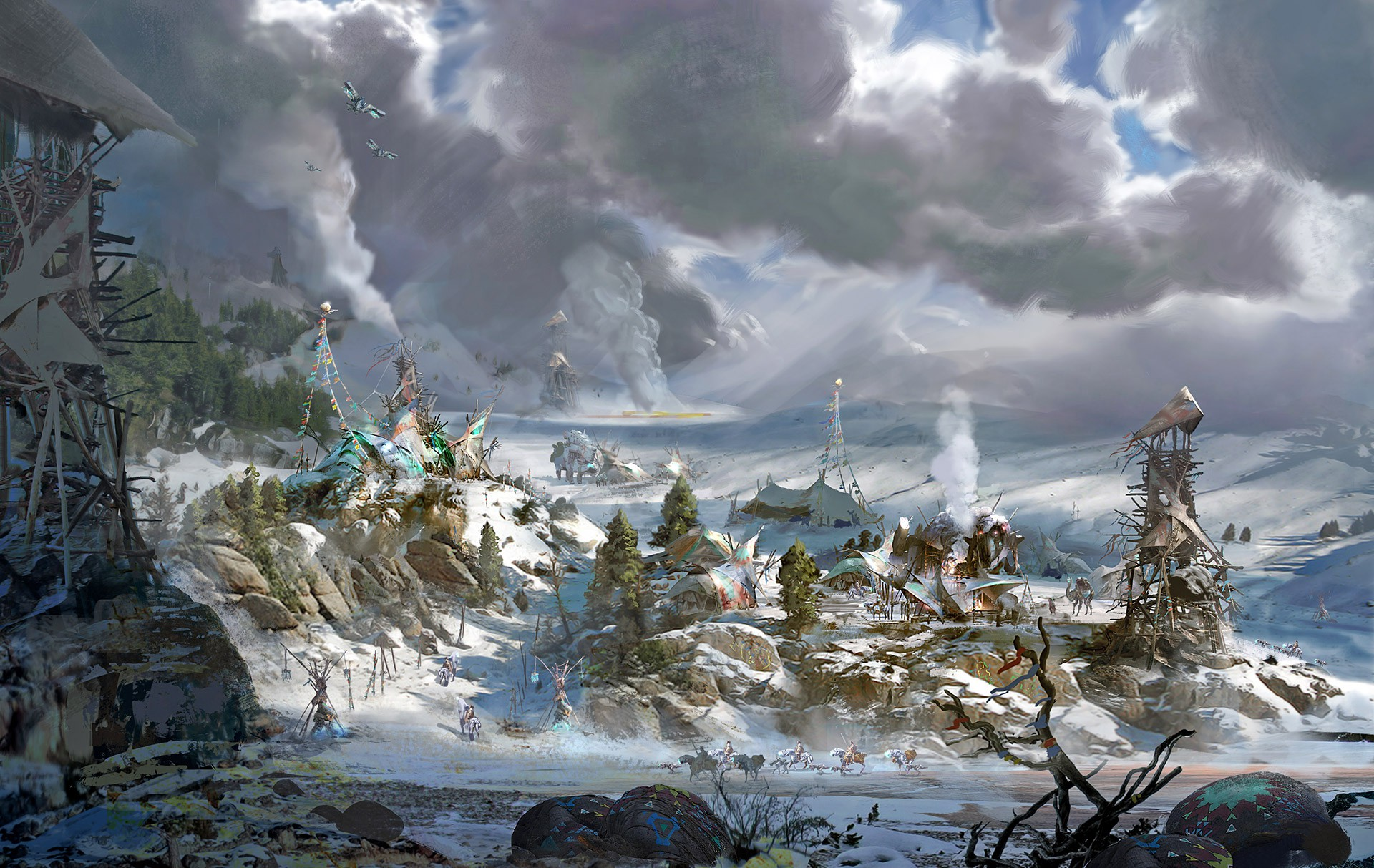
Far south, beyond the Lauttersänger Mountains and past the chilly seclude of the Conglomerate of Ōkami's lands, the Ignomads of Joagundr make their claim in the frozen lands called the Austral Wastes, or Toklo to them. Ignomads construct their lives in these harsh climates as per tradition and due to their faith, and rarely leave unless for research purposes. Their mix of impermanent cloth and leather teepees mask the more advanced timber and cut ice research facilities in more permanent locations. They build entire towns, but do not stay in them long, with Ignomads frequently cycling between a number of sites to do their various duties. This makes them nomadic on an individual level, but not as a whole, as rarely does an entire settlement pack up and vacate their established work. As with most cultures in extreme environs, Freezeflame Emperium can be seen sparingly in Joagundr encampments and research centers, though the pyrotechnical requirements to forge metal in blistering winds makes most metal a scarcity. They make due with establishing villages primarily around geothermal vents, using the mineral-rich waters there for a variety of purposes, as well as the heat to keep their spirits up in the biting cold.
Government & Social Hierarchy

Simply put, the Ignomads have no form of central government. Most settlements/Klanaitu simply answer to their Nalunuk, or their Noaidi. What unites Joaguns under one banner is their research and family ties. Oftentimes a Klanaitu will be tied to a research center deep within the mountains of Toklo. The largest of these, and the closest thing to a capital the Ignomads have, is located at the base of an awe-inspiring hanging glacier, with their city being known as Qilalunaq, set within a grand cirque. Here lies the religious seat of the Vita Vindär, where the most esteemed of Noaidi and other researchers of the faith congregate to listen to the crevassing occurring within the great mass of ice. Resounding through the ice, these reverberations are believed to be a means of communing with Kyleum-Loyce; should the glacier move at all however, this is interpreted as a call to change one's ways before things worsen.
Furthermore, Joaguns practice high social mobility. This usually happens in the form of an exam, both scholarly and typically accompanied with a hunt of some form. Should one pass the strenuous tasks laid before them, the Joagun is rewarded with newfound social power. In kind, exams are sometimes thrown at citizens to trip them up and demote them in an attempt to shake up the political scene.
Weapons & Military
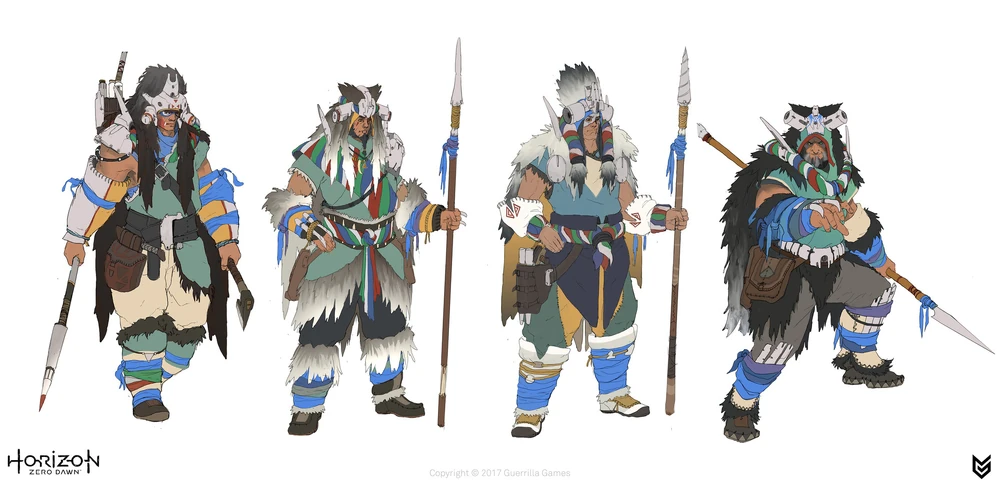
While numerous, they had always lacked the population density of their contemporaries to threaten much of anyone on the global stage, left more or less to their own devices. Joaguns, for their part, were more than happy with this arrangement. When a village or Klanaitu goes to war, often they will use modular versions of their daily tools; harpoons and spears refashioned with switches and shafts to be weapons of war, quilted clothing inserted with metal or bone plates at precise locations of typical impact, or boiled leather to defer the blade of the enemy, and large kamik snow shoes that provide traction upon snow and ice are refashioned with salvaged technology and imbued with the White Wind to enable swift movement through the Austral Wastes. Compound bows were first invented by the Joagundr, and remain a staple to this day with the Reindeer Riding Bowmen.
With their ability to move quickly through the snow, Joaguns frequently have the advantage of intel on their enemies, and this carries over into the rare occasion a Joagun is fighting within the Interior. A good rule of thumb for those unfortunate enough to face against a fierce Joagun is to assume they know more about you than you know about yourself. Numerous innovations arm their combat, including lamellar armor made out of layered bone plates, as well as a thick armored cloak that, when under projectile fire, acts as armor for the Joagundric fighter to simply turn their back to the barrage and be protected.
Coldbalt, while reserved primarily for the most astounding and achieving of Noaidi, finds its place within the armaments of many a Joagundric hero or general. Fables surround many Klanaitu who still hold heirlooms of Coldbalt; whispers of spears able to freeze a man in his tracks, or to freeze even the flames of Värmelden. For those who are more humble in pockets, Freezeflame Emperium suffices for their expensive armaments.
Accolades of combat are celebrated just like those of the mind. Adorning the Qallun, or the Utility Belt of a Joagun can be seen both Iluqtaq, or the Scrolls which are awarded for achievements of the mind, but also square ivory coins reserved for military achievements, called Tukhaliuk.
Music & Art
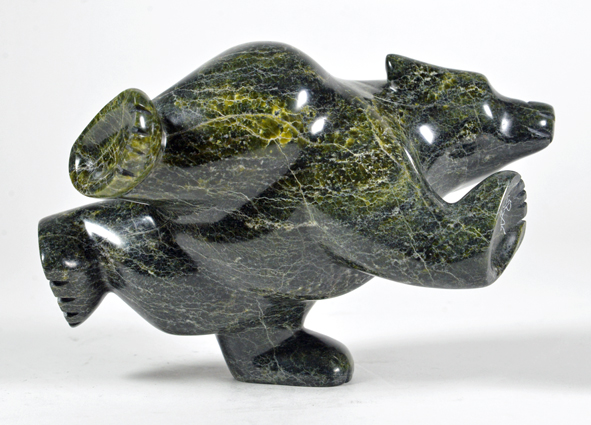
Art and music are not exempt from the mixing of culture aspects that define Joagundr, and often have tribal art with modern skills or techniques, or vice-versa. Sculptures of wood and stone carved in abstract and thoughtful shapes, or complex and geometric paintings comprised of antler and bone bits make up some examples of Joagundric art. There’s a tangible obsession with beauty in the form of geometry, with everything from their buildings to the types of plants they use in bouquets all being related to some sort of geometric theorem or scientific intrigue.
Their music employs a very measured stanza structure, with a beat ever-present in their songs. Within these stanzas are oral music with bone instruments like flutes, or whistles. Iconic is the rack flute, crafted from the antlers of a Coldrack into a multi-chamber flute with an ethereal spirit to it as it echoes over the white expanse. As they are a semi-nomadic group, Joaguns pass down their traditions through song instead of stories. Words can be manipulated, and the meaning can change, while a song is always the same.
Magick

An Ignomad has a very strong opinion of magicks within the realm of Animus Liber. To them, magick is a force, nature itself which can only be manipulated, not controlled. They do not believe that magick comes from any other source than the Vita Vindär, with all Dominions being various ways of manipulating the White Winds. Their belief is reinforced by the magickal nature of their faith; supernatural icestorms and hyperactive volcanoes have been seen in their history, leading Joaguns to the truth (their truth) that magick simply leaks out of the world on wings of White Winds.
While they are keen on magick as a tool, the Joaguns do not have a cultural magick like some races and peoples do. Using various magicks to their own ends, the Ignomads find them all to be tools and facets of the White Winds, and nothing more. Uniquely, their connection to the Vita Vindär provides them with foresight and the ability to discern things in far away lands or knowledge locked tight that no other mortal can attain; at least, that's what the Noaidi claim...
Preferring the things that are more "real" and discoverable, an Ignomad will gravitate to any magick that they can dissect and learn, frequently meaning those of Thaumiturgy. Thaumcraft and Thaumiturgical Arts are all game for Joagun to learn and be supported by their culture, even if such is not exactly the most tasteful elsewhere. A Joagun who is a master of Sanguinity, steeped in the arts of Sarkic Arts is not shunned for learning taboo magick, but rather embraced; something that has helped them get along with their fellow morally gray Ōkamese neighbors. Some Joaguns have become notable practitioners of Ophidian Drakelore, under the following of the ways of Värmelden...
As for non-thaumiturgical magick such as Deific/Theurgy, Ignomads find such to be extremely vulgar and debasing of the Magister to learn. Regardless of any learning or advancement potentials, an Ignomad will likely be entirely opposed to the idea of sacrificing one's faith in what is real, to that of a God who determines what is and is not true. This applies for magicks in the Enlightened and Umbral dominion equally. Though not actively aggressive against Deific users, most Joaguns would actively turn their noses up at the sight of a Paladin or Deathsinger, finding them to be "lesser, mind-controlled beings who have sacrificed the pursuit of self-learning in exchange for the pre-existing thoughts of a greater being" as some would put it. Nevertheless, as with all things, there are exceptions to this rule, and Deific magicks are on quite rare occasion seen by overly ambitious Noaidi who overstep their cultural boundaries in the pursuit of knowledge.
Others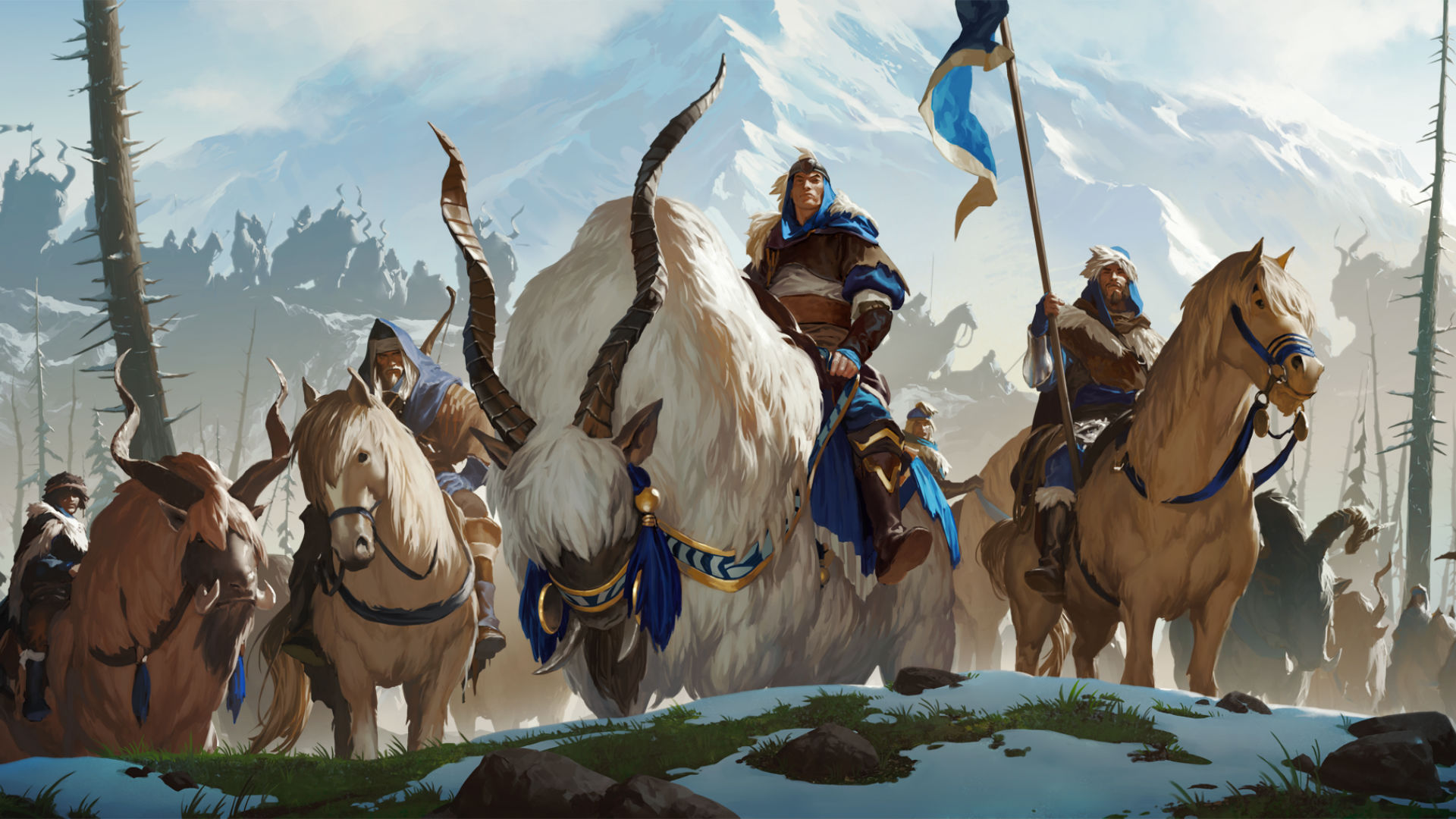
"The Joagundr do not leave their Sacred Lands often; others do not survive the journey into Toklo."
Dwarves: Joaguns view the dwarves in a rather unique fashion, tinted by their faith. They believe the Rimebeards were Joaguns who went to the Toklo mountains in an attempt to follow the ways of Kyleum-Loyce and were granted their wish, soaking in the White Wind's magic and turned short. A similar fate happened to those who sought the ways of Fire, heading deep into the Interior's Veil and turning into the Glassaxes, left behind during the Diaspora. No opinion is held about the Ironhands, if they are ever seen at all by Joaguns. Good relations are especially held by Rimebeards, who teach and trade various things with Joagundr, providing meats and hides in exchange for knowledge, tinkering, gems and skills.
Elves: Uniquely, Joaguns have had little to no interaction with any of the elven races other than the Star Elves. The Sun Elves are geographically across the entire continent of Volantis, and as such are often surprised to see either exist. Moon Elves are in a similar boat, being across a grand divide of water, and interacting little. The Star Elves have a rather friendly relationship with Joagundr, with both being a traveling culture with an affinity for research and knowledge. Toklo research efforts can occasionally be found with Star Elven structures where the study of the movements of celestial bodies are done in concert with Joagundric Noaidi.
Humans: Having once been part of the Empire of Man in the 3rd Age, the monumental gulf of time isolated from the Empire's influence has separated Joagundr from beliefs and opinions of many things the world has to offer, creating a unique dynamic of opinions on the various cultures of Man. Ever since the discovery that the Joagundric Forgotten Expedition had not fallen to the bite of chilling winds, the Empire of Man has attempted to bring Joagundr back into the fold of its embrace. This has not gone well, mainly due to the distance and the inhospitable climate for war efforts. Regardless, the Empire claims Joagundr as their own legally, though Joagundr completely disregards this claim. The Gales were used as the main forces to invade Toklo during the Wasteful War, and many Joaguns resent them for it, though time has healed wounds, and words have been exchanged of misguided faith. On the matter of faith, Joaguns do not follow any imitation of Cynosurian Faith, and exclude the Sun and Moon from their pantheon, much to the disdain of the Empire. No opinion is held of Culiacán, though their easy lives are viewed as ignorant. The Volks are viewed fondly by Joaguns, which led to their quasi-vassaldom under the Conglomerate of Ōkami; mostly a formality, but one they regard more than the Empire's attempt.
Conclave - Mer: Similar to their rate of encounters with the elves, Joaguns have had hardly any interactions with the Mer people. Those that have done so, do not hold much love for the Conclave, though not as vehemently opposed against them as some peoples might be. In ages past, the two peoples had conflict over the great Joagundric Diaspora within the Interior, but many wounds heal with time. They are on neutral ground, but when their kind are fond of joagundric Noaidi, speaking much about the Vita Vindär, and their World Spirit.
Conclave - Ophidian: As the Ophidian races hate the cold, and Joaguns live within the coldest climates of Volantis, it would not be far fetched to say neither group know of each other's existences. Some Noaidi may tell stories of Cultists of Värmelden who sacrificed their entire existences to the Ways of Fire...
Naming Conventions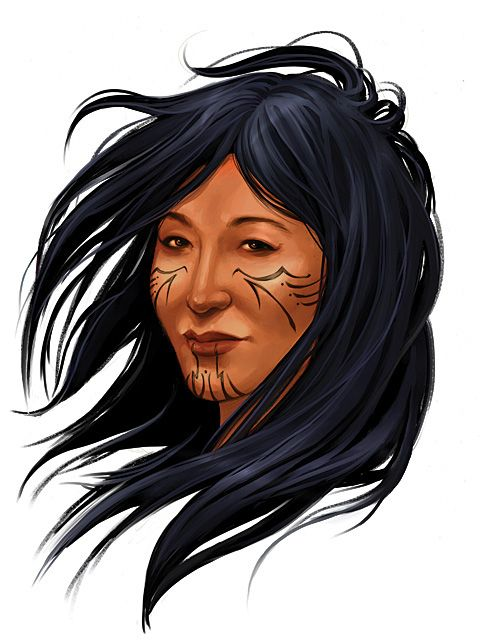
Joaguns have traditional, modern Volantis naming schemes, with a first, middle and last name. However, their last and first names are cultural, and based in Qtun Sarword, while their middle names are in Imperial Sarword. This can be rather humorous for introductions, as the two names are entirely different from each other, and one might think they are being comical; Joaguns do not take kindly to jokes about their names. To an Ignomad, their middle names symbolize their new identity in their advanced, modern world they find themselves, with their first and last names keeping their traditional roots. A Joagun will often go by either their first or middle name, whichever they like best.
Male Name Examples:
Nukkaq John Igluvik, Nanook Michael Pukak, Kallik Henry Nukilik, Akaak Stuart Tupilak, Kiviuq Gustav Atanarjuat, Sukaaluk Arnold Nanuq, Tulugaq Ernest Qaanaaq, Tulimak Hermann Tununak
Female Name Examples:
Kiana Anna Tununak, Ivalu Ann Siora, Qannik Sophia Sivulliq, Aninga Mary Qimmiq, Innaq Mia Iqaluit, Kiana Stephanie Tununak, Ivalu Isabella Siora, Nanurjuk Ava Iluliaq, Atkaalik Catherine Nanuq, Malina Amelia Kivioq, Qajaq Evelynn Siksik, Sivuqaq Harper Pukak
Important Figures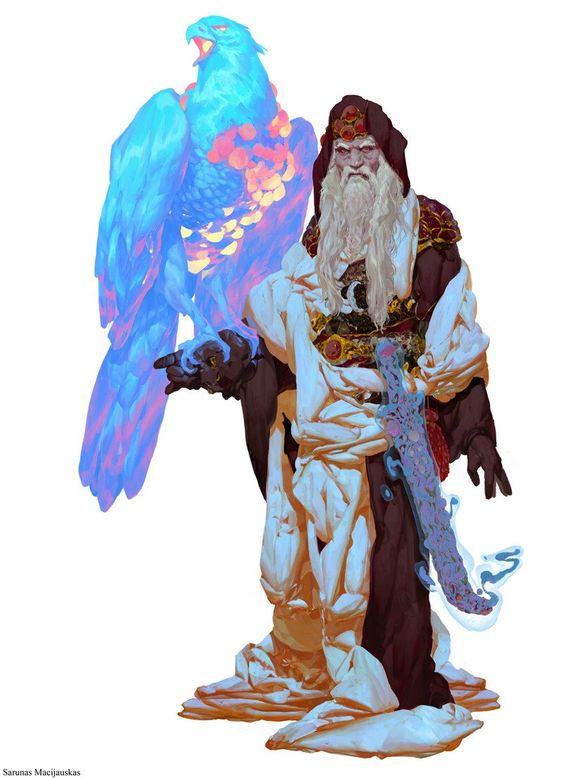
Master Tarn: Sage of Kyleum-Loyce, one of the only Noaidi claimed to have spoken to the Elden Brothers directly. His wise words and powerful control over the Vita Vindär led to unprecedented diplomatic relations between the research centers scattered around Toklo who, at the time during the 4th era, were leaning far into the Cold of Kyleum-Loyce rather than the balance of the White Winds. Master Tarn was claimed to have the ability to predict the future by secluding himself upon the peak of a mountain, in which his familiar in the shape of a blue horned owl would fly far off into the skies above, bringing back discernment and wisdom. Master Tarn has saved the lands of Toklo many times over, as well as the lands of Volantis as a whole.
Noaidi Pijun: A renown scientist who discovered the Aetheric Resonator, a highly used commodity of today for mages of all Dominions. Created as a way for other magicks to be distilled back into their original form of the White Winds, Pijun ended up creating a way to imbue nearly any Dominion of Magick into the device, as a battery of sorts when other means are not available. Pijun considered the object a failure, though, and the object was modified irreversibly in some unknown fashion to the state it is in today. Remembered for her rather timid demeanor despite her bulky physique, which is noted to have brought much confusion when dealing with her initial development of the device.
Brother Guaq: A renown astrologer who collaborated with the Star Elves to chart the star's paths, with the peaks of Toklo providing an unprecedented clarity in astral vision that no other location in Volantis could boast. Guaq's discoveries helped established a standardized constellation chart amongst the peoples of the land, aiding in communication, as well as a more clandestine purpose...
Lady Moraine: The woman who settled Toklo and broke the ice for the first time. Not directly selected by the Empire as leader of the Forgotten Expedition, Lady Moraine proved her worth on the journey to the frozen lands, and was elected the new leader of the people when the old leader retreated back to the Interior.
Ata "Henry" Nalunuk: Leader who fought a civil war on the basis of returning to the old ways of Ice and Fire early in the lifetime of Joagundr Ignomad nation. Many Joaguns of modern times regard Ata's victory as a blight upon their history, and an example of steeping too far into the ways of Fire and excess.
Nalunuk Drorlaut: Directly inspired by the ways of Ata, Drorlaut was a warlord known as "The Dragon Scourge" who, upon being inspired by the recent pilgrimage throughout Volantis to the Veil, decided to fully give into the ways of Värmelden and became an Ophidian, and a rather powerful wielder of the Drakelore. With this newfound power, Drorlaut immediately besieged the nearby lands of Kamirisei and pushed far into the Interior, battering the walls of any and all he came across.
Legends & Myths

Lady Moraine's Pick: The very icepick that founded the Ignomads of Joagundr, sunk into the unyielding ice of Toklo in the 3rd Age.
Farsight: While they are keen on magick as a tool, Joaguns do not have a cultural magick like some races and peoples do. Using various magicks to their own ends, the Ignomads find them all to be tools and facets of the White Winds, and nothing more. Uniquely, their connection to the Vita Vindär provides them with foresight and the ability to discern things in far away lands or knowledge locked tight that no other mortal can attain; at least, that's what the Noaidi claim...
Fang of Iiz'zu-spaan: A mythological relic of great importance to many cultures, this fang-fashioned longsword is claimed to have been given to Nalunuk Drorlaut by an Archdrake which held deep harbor within the mountains of Toklo, exchanged for his followings of the ways of Fire. Much blood was shed in the name of both Värmelden and Iiz'zu-spaan. It often is symbolized by Joagundr as a representation of the ways of Fire, and by the Ophidian as a simply valuable relic of their Archdrakes.
The Holy Stags: In a time frozen to the world, Joaguns were rumored to ride upon mounts mechanical, far more advanced than any clockwork contraption or modern magickal marvel. These slowly died out over time, with only sparing remnants of these advanced creations remaining scattered in the sheets of snow.
Spirit-Pyre: A peculiar lantern with ports of Gamaaea Glass containing a blessed Jarkahada's Tear enchanted with powerful magicks of supposed White Wind origin. This sacred lantern emits a massive radius of warming heat which can abate even the most biting of winds. Said to be a parting gift to a Joagundric Noaidi far from home while traveling through the lands of Divan.
Issumpirta: Issumpirta, or Eternal Blizzard, is a migratory ice storm of epic proportions which slowly moves throughout Toklo. Many myths surround it's conception, such as being the result of an overreaching Nalunuk, or perhaps a divine reprimand by Kyleum-Loyce Himself. Either way, much research has been put into place to determine the path of Issumpirta, so that Joaguns may avoid its chilling grasp.
Archaic History: Peculiarly, Joagundr happens to be the only land to see any resemblance of sightings of the fabled Relic Metal as well as Gamaaea Glass...
Festivals & Holidays
Discovery Bacchanal
During the Dominion of Stormharrow
As a measure of balance between the ways of Ice and Fire, Joaguns choose to celebrate the Volantian Equinox as representative of equal parts Fire and Ice. Here do they mix joyful comradery and celebration of fine drink and meat with the advent of new innovations such as new nets to catch the speeding Sickle Seal through crevassed snow. Great beasts conquered in the snow are adorned with thesis papers regarding the mineral composition of a newly discovered cornice. It the largest festival Joagundr holds, and is often held within Klanaitu, with an exceptionally large one being held in the Ignomad semblance of a capital at Qilalunaq. Many outsiders attempt daring treks deep into the Sacred Lands of Toklo to view this spectacle, though not many prevail.
Piscatorial Soirée
During the Dominion of Luminary
A day of pure revelry, with no concern for scholarly pursuits or restraints, revolving around fishing. On this day are all of one's passions pursued, journeys begun, begrudging rivalries fought in the snow, kegs of ale uncorked and even Noaidi and Nalunuks wasted with deep draughts of wine. This is often done in smaller groups such as friends and family, and often by frozen rivers or lakes that one can conduct ice fishing upon. The foolish antics of this day are entirely disregarded the next day by all Joaguns, and it is taboo to speak of them.
White Day
During the Dominion of Dawnstone
A more traditional holiday from the inception of Joagundr, White Day is a celebration of the Vita Vindär. Joaguns bring out an abundance of devices and contraptions smoothed and cut in such a fashion that the winds that blow down from the peaks of Toklo are amplified into various pitches and songs, resonating through the land in droning compositions supposedly written by the Elden Brothers.
Frostwork Examination
During the Dominion of Icewind
In kind with the Joagundric scheme of holidays following their faith, a week-long exam during the coldest days of the Chronicle is provisioned for any within the Sacred Lands of Toklo. Ranging from questions regarding natural and magickal science, history, survival skills and mathematics, some Joaguns study all Chronicle to perform well on the Frostwork, as it will determine one's potential social status; Frostwork Examination Iluqtaqs, or Scrolls, are sometimes required for any position of Office or research within a Joagundric Klanaitu.
History
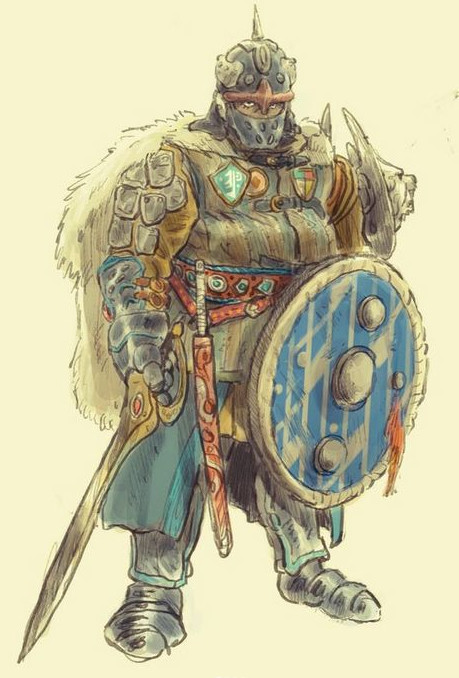
Their story began as one of Imperial colonialism, with the First Empire of Man's hubris deigning for a feeble expeditionary crew to be sent forth into the coldest reaches of Volantis in the 3rd Age. What they found was nothing but a frozen, slow death; or so it was believed. Centuries later when the First Empire of Man fractured under the blade of the Doombringer during the Chaos Incursion, refugees in search of any area but the lands of their once-home were desperate enough to travel into snow-laden lands. There they found that the initial expedition had not failed, but prospered, though the original settlers had not advanced technologically or socially. This made the Forgotten Expedition the oldest, but least advanced group of humans. They lived in still tribal and nomadic ways, and the cultural shock of new members to their groups with new knowledge was a large one.
When the investigative effort returned to the Interior with news, a full-scale attempt at reintegration was sought, taking many years of planning and development. When the time was right, they returned south, only to find that Joagundr had advanced centuries ahead in technology. Such was the new information that Joagundr was enlightened to such a point that gradual change from their tribal ways to this new knowledge would be too much of a change; instead, they decided to simply incorporate these ways into their own ones, making a unique juxtaposition of scientific advancement surrounded by tribal means of survival and world-outlook.
Many theories abound on how they were enlightened so suddenly, but the strongest happens to be one of pure coincidence. The enlightenment of Joagundr coincides roughly with the time in which the fabled Stone Golem People left the Empire of Man; it is believed that their information was acquired by Joagundr. By means of friendly trade is uncertain, as the Empire had not known of Joagundr to inform them of the friendly alliance between the two races, and as such the exchange of information was likely by force. Either way, the Stone Golem People are widely regarded as a simple myth, and Joagundr had advanced many centuries forward, one way or another.
Following this enlightenment in the 4th age, the Joagundric people blossomed in isolation, developing their new technologies and way of life in a frozen utopia of advancement and survival. Having amicable interactions with the Rimebeards who preceded even their settlements of the land, Ōkami was the next to see the secret people of Toklo. Their exchanges went rather well, as both cultures put a precedent on knowledge, with Ōkami astounded by the ability for such tribal people to have advanced so far with sticks and skins and stones for scientific tools. The Second Empire of Man had been born now at this time early in the 4th Age, and upon finding out about Joagundr, desired to return them to the fold, by force if needed. Joagundr would bow to no one, however.
The Wasteful Wars commenced in full soon after, with Imperial Invaders consisting mainly of Gales attempting to push deep into the inhospitable Austral Wastes. With the domination of the Reindeer Riding Bowmen atop Coldracks and compound bows, the south was secured and the Wasteful Wars came to a conclusion. However, the Empire of Man claims on paper that the Ignomads are theirs and a part of the Empire, but Joagundr pays them no mind.
Later into the 4th Age, Joagundr begins to enter the northern part of Volantis on more pleasing terms, with tentative trade being brought to their doorstep for any chance at their fabled technology. A religious movement began to surge within the Joagundric faith, and the adherents of the Vita Vindär decided that it was time for the entire Ignomad nation to make a grand migration to the Interior's Veil, a ring of pyroclastic heat and ash-laden volcanos where they would attune themselves to the ways of Heat once more.
Furthermore, they take part in the Great War of Volantis, siding with the Moon Elves and Volks in the Veilbound Alliance. Though much blood stained the pure white snow against the Imperials, Dwarves and Sun Elves, Joagundr suffered the least from the war, and managed to still stay in good terms with the local Rimebeards of whom were on opposing sides of the war. Currently, Joagundr sits still within the vassalage of the Conglomerate, despite Imperial claims.
Further knowledge to be learned in-game in books or events

Written in very small part by TLR in days of yore
Last edited: 7 months ago