
The Empire of Man
"Does the light of the Son not eclipse the glitter of any jewel of man?"
Synopsis
Seat of Power: Exandria, Lauttersänger Plains, Interior
Part of: Empire of Man
People Name: Imperials/Imperial
Adjective: Imperial (An Imperial sword)
Religion: Cynosurian Faith
Language: Imperial Sarword (German English)
Introduction

There exists no greater power on Volantis than the Empire of Man. Mighty in numbers and extensive in reach, this superpower rules more provinces and nations than any other race, polity or culture. Theirs is a history written in steel, expansionism and religious fervor, and Imperial effects are seen throughout the entirety of Volantis. No mortal of Volantis has not heard of or seen the people of the Empire. With vast legions of soldiers at its command and a formidable war machine fueled by the resources of conquered lands, the Empire has carved out an empire unrivaled in its magnitude and ambition.
It is not only through the might of its armies that the empire asserts its dominance. The power of the Empire of Man is also rooted in its fervent adherence to a rigid religious doctrine, one that preaches the supremacy of humanity and the divine mandate expand and protect the realms. This religious fervor serves as both a rallying cry for the empire's subjects and a justification for its relentless pursuit of conquest.
Yet, for all its power and grandeur, the Empire of Man is not without its challengers. Whether through open rebellion or covert resistance, opposition stands strong from the Moon Elves, the Volks, the Ōkamis and oftentimes the Joaguns. As the Empire's influence continues to spread, so too does the flame of rebellion, threatening to engulf the world in a conflagration of war and chaos.
For now, the Empire of Man stands as the undisputed master of Volantis, its legions ready to crush any who would dare to oppose its divine mandate. As long as the empire's banners fly high and its armies march forth, none can deny that theirs is a power that has saved the lands a plethora of times. May the Son cast His light upon all.
Physiology

Composing the vast majority of humans on Volantis, one may describe Imperials as average in all regards. They stand at around 5'8" for men and 5'5" for women, and weigh in averages near 160 lbs for the men and 140 lbs for the women. They have all manner of hair colors and hues for eyes, from brown to black to blond hair with rare sightings of red, to eyes being brown and blue and grey and green. Their physical builds are also varied, though all Imperials tend to be white in skin complexion. A variance on hair styles is seen throughout the land of the Empire, with those in the lands of the capital choosing to have more groomed appearances.
Fashion
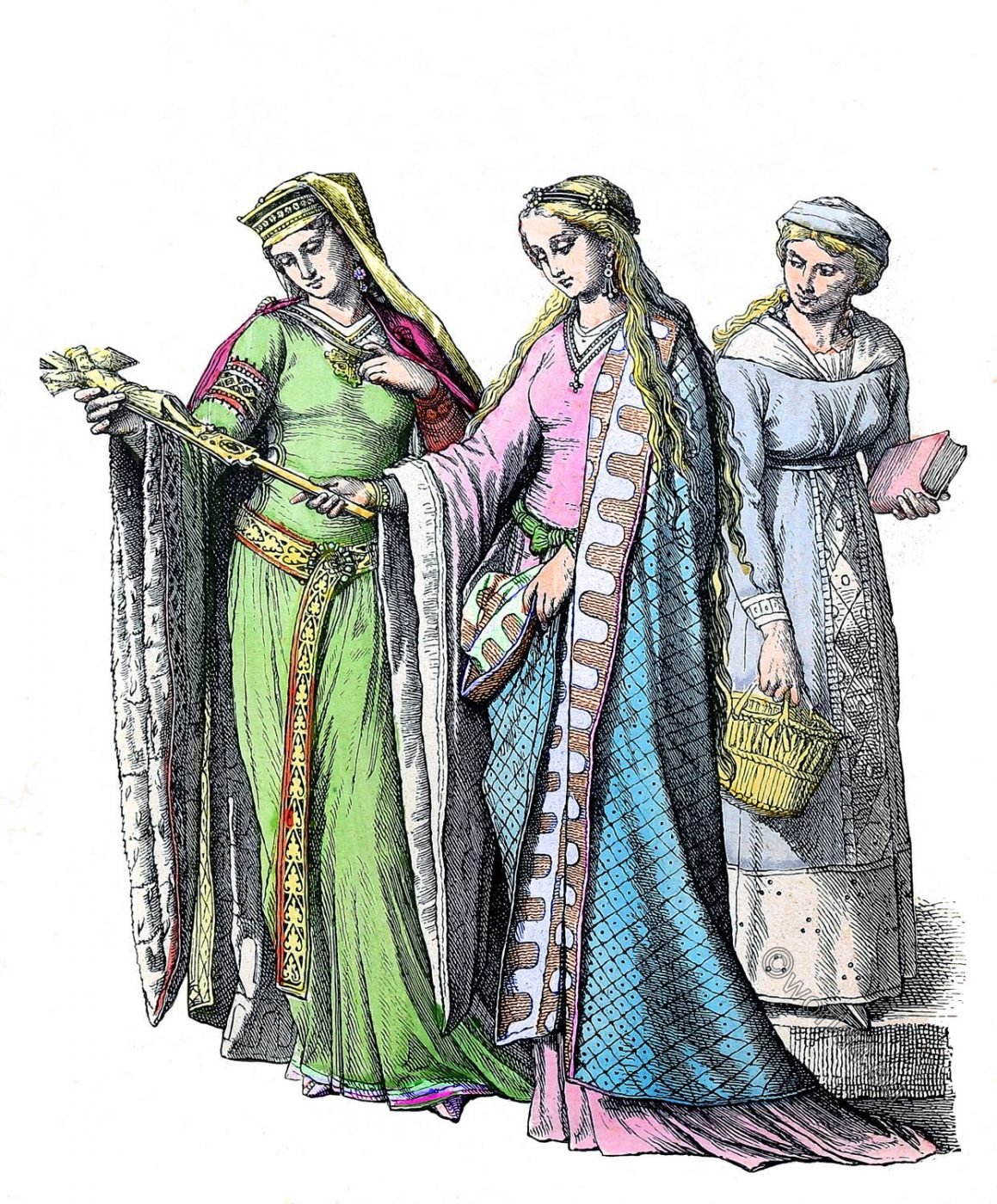
Fashion and expressionism has a pull on all within the Empire, though some can afford more expressionistic attire than others. Those within the lands of the capital of Exandria often have more luxurious clothing made of rich fabrics for their nobles and aristocrats. Velvet, silk, brocade and plush furs imported from far off lands is a must-have. Men wearing elaborate tunics with fitted sleeves as they enter the local tavern, adorned with intricate embroidery and fur trimmings is not unheard of. Women don elegant gowns with flowing skirts, cinched at the waist with ornate belts. Both men and women accessorize with jewelry made of gold, silver, and precious gems.
Peasants and commoners dressed more simply and make up the majority of the Empire, favoring practical clothing suited to their daily tasks. Men typically wear tunics made of coarse wool/noil or linen, paired with trousers and leather boots. Women donned long dresses or skirts with blouses, often made of homespun fabric and adorned with modest embellishments such as embroidery or simple trim.
In colder months, people of all social classes rely on outerwear to keep themselves warm. Cloaks and mantles made of corduroy wool or fur are common if one can be afforded, providing protection against the chill winds of Volantis' winters. Nobles often wear lavish fur-lined cloaks trimmed with ermine or sable, while peasants make do with more modest woolen cloaks.
Headwear varies depending on social status and occasion. Nobles wear elaborate hats and headdresses adorned with feathers, jewels, and veils, signaling their rank and status. Peasants typically wear simpler head coverings such as woolen caps, coifs or scarves, practical for keeping warm and shielding from the elements.
Shoes and boots are essential for traversing Volantis' diverse terrain. Nobles favor stylish leather boots embellished with buckles and straps, while peasants wear more utilitarian footwear such as sturdy leather shoes or wooden clogs. In rural areas, people often go barefoot or wear simple sandals during warmer months.
Colors of note for their attire include red and blue, secondary white, and a tertiary color for the nobles often being gold or yellow. If commoners are seen with gold in their clothing (not the color yellow, however) they find it very taboo. Emperium is a staple invented by the Imperial Blacksmiths of the 3rd Age and still sees great use in belt buckles, shoe straps, pins and buttons and other metallic clothing and fashion statements.
Values, Attitudes, Taboos, Morals, and Beliefs

"The world is our birthright."
Expansive as it is, the cultural details of the Empire of Man is split in a variety of ways with the many nations under it in the countryside, but those within the lands of the Lauttersänger Plains tend to be more aligned in sensibilities and beliefs.
Those in the Interior are lovers of Law. The Law must be enforced, else they will end up like the savages in Volkar, chaotic and unruly with no one to guarantee their next day's bread. The Law will be enforced, for the Law itself will work towards its continuance. Imperials desire a consistency of life and to set standards to lives ones life. "How can a mortal live sanely if one must worry of murder, or being given less recompense than what your daily toil was worth?" an Imperial would say.
The Empire has a strong love for the traditional values. Authority has a large amount of respect placed upon interactions in the Empire, with military authority often bearing a good deal of respect. Duty to one's family, lord, King and country are paramount, with personal desires and ambitions often subordinated to the greater good of society. Justice is upheld as a noble ideal, with fairness, equity, and the rule of law considered essential for maintaining order and harmony. Temperance and self-restraint in all things, whether in matters of food, drink, or behavior, are valued as virtues of moderation and discipline. Compassion towards the less fortunate, including the poor, sick, and downtrodden, is encouraged as an expression of Cynosurian charity and empathy in efforts of their piety which they hold dear.

The taboos of the realm of the Interior are extensive. Heresy is slapped on the label of anything that is not Cynosurian, with full conviction. Treason against the crown or betrayal of one's oaths of allegiance are viewed as unforgivable crimes, warranting swift and severe punishment. Infidelity and adultery are condemned as moral transgressions, threatening the sanctity of marriage and the stability of the social order. Disrespect towards one's superiors or elders, whether through word or deed, is regarded as a breach of decorum and a challenge to authority. One of the more grievous wounds one can inflict upon the Empire is that of sedition and rebellion against the established order, whether systemic or cultural, and are seen as acts of treason that undermine the stability and security of the realm.
Imperials are quite xenophobic. Suspicion and distrust of outsiders, particularly those from foreign lands or different cultures, are common attitudes, fueled by fear of invasion, espionage, and subversion. A rigid social hierarchy is accepted as natural and desirable, with each individual expected to know and accept their place within the social order. This hierarchy is underpinned with a martial ethos that permeates society, with valor in battle and military prowess celebrated as noble virtues worthy of admiration. Purity of bloodlines and social status is emphasized, with marriages often arranged to preserve noble lineage and consolidate power. While birthright plays a significant role in determining social status, meritocracy also holds sway, with individuals able to rise through the ranks based on talent, service, and loyalty to the crown.
Volantis and the mortal realm of Animus Liber at large is seen as a cosmic battleground. One where the forces of Good and Evil, Law and Chaos, Gods and Demons battle and wage war through Man. It is up to every individual to choose their path; will they embody the Divine Law of Artex, or will they succumb to the paganist ways of Chaos and allow the demonic forces to grow their power in this world. All can of course find salvation in the Cynosurian Faith, for the Son of Man is forgiving, for a time.
Questioning authority is a huge taboo in the Empire. As all authority represents Law, anything that opposes the seamless orders of a Lawbringer is viewed as possibly contrarian and difficult. Rebellion is not surprisingly frowned upon, but in such a degree as if it were a disease; mere mention of dissent and rebellion in the Interior is treated like the plague, with Lawbringers, Templars and Paladins the cure.
Imperials also have a strong belief in their importance in the world. This is a different sort of self-importance than the Sun Elves exhibit; where the members of the Unitary Solarate view themselves as protectors of the world and above the world to guide it to a better place, the Empire has always thought of itself as the inheritors of the lands of Volantis.
This belief of a Divine Inheritance has led many wars against other nations both far and wide. It is said that over the entire tenure of the Mortal Realms, the Empire has waged war against every nation at least once in their chauvinism. This has led to a strong martial presence within their lands, with a good portion of the populace having some sort of combat training, even if it is not militaristic. Farmers will participate in their local militias, boys in the field will keep a cudgel with them for both wild beasts and roaming foe. When times of war are called, it is not just the military force that is called upon, but all men, whether banker or battalion leader.
Uniquely, gold is viewed with some religious aspect, as it mimics the color of the sun and the radiance of their Son of Man.
Family

As with most humans, family is essential to the order of the Empire. Representative of the example set before them from their Solar Pantheon, most Imperial families consist of a mother and a father, with the father at the head of the family unit. They average at 2 children, all of which frequently live with their families at a late age, cementing their nuclear family tendencies. Often a mother or father will train their children up in the trade that they are in, such as a young girl becoming a blacksmith like her mother. Children are expected to honor and obey their parents and show deference to their wisdom and authority. It is said that the ties of blood can bind stronger than Emperium, with great effort being required to sever the ties of a family bond. Many bear a sense of duty to protect those they love, sometimes extending to those who share no ties of blood. Children typically stay with their parents usually until they are of the age to make their own fate. Even still, upon leaving they will hold their family ties for the rest of their lives, providing aid to one another for decades to come.
Work & Trade

The jobs and trade within the Empire is highly varied, as the entire continent ends up supplying goods or purchasing goods from their hands. A heavy focus on agrarian lifestyle is required to feed the numerous peoples of the Empire, and as such large swaths of land are tended to by farmers of all sorts.
Typical jobs include blacksmiths both weapon and armor, silversmiths, carpenters, joiners, herbalists, chefs, butchers, soldiers, farmers, herders, fishermen, executioners, gravediggers, beekeepers, locksmiths, huntsmen, malters and brewers, millers, writers, clergymen, miners, foremen, minters, painters, pharmacists, schoolteachers, tanners, innkeepers, and more.
In larger cities, Guilds can form, unionizing the work of many workers into either a security of money, a voucher of quality, or a standardization of work. In the more magickal regions, an Imperial mage can be seen, though such is rare and must be a Licensed Magister. Magisters of all sorts can be found in the Empire, but only a select number of magicks are allowed as official trades, because of the great risk magick brings. Adventurers from the Realm of Man will often make long travel to the Empire so they can sell their goods to a number of extensive mercantile operations.
Emperium, the unique metal of the Empire, was invented in the 2nd age to combat a long storied winged foe in the Age of Scales. Now, with steelmaking more known, Emperium is still often chosen for it's availability and low cost of production. Armaments of this metal are usually made from Imperial smiths.
Religion

With religion already being a complex topic in the lands of Volantis, with numerous pantheons, Gods, deities, demons and devils, no religion is as complex and convoluted as the faith of the Empire of Man. Known as the Cynosurian Faith, this religion has multiple denominations under it, all with various beliefs and moral codes they adhere to about both the nature of the world as well as the Gods they worship.
The basis of most beliefs in the Cynosurian Faith is as such:
Seated upon high in the great Spiral Sun is what believers in the Cynosurian Faith believe to be Artex, the Overgod. Seated above all other Gods does Artex reign upon his Overthrone, central within the Burning Palace, which mortals view as the Spiral Sun. His office was once that of his Father's Solarius. Before Artex did Solarius rule upon the Overthrone with his beloved Luminara. His court resided with him on this sanctuary of Order, each living on the spiral vestiges of His Radiance. These gods include:
Solarius - Overgod, Lord of Order, Sunlight, Loyalty, Action and Judgement
Luminara - Wife of Solarius, Lord of Protection, Leadership, Authority, Fire, Compassion, Love, Guidance and Planning
Artex - Son of Solarius and Luminara, who once walked amongst man as Emperor to lead them to their greatest heights. Sometimes called God Emperor. He is the embodiment of all that is good in this world, with the will to fight for what is right. He now has taken his Father's place and now sits upon the Overthrone according to the House of the Risen Son.
These three Gods are the core of the Cynosurian faith, though more exist in their pantheon. These are not currently directly worshiped by the core body of humans, and may be worshiped by other human cultures. These are gone into further detail on their respective cultural faiths, but of note are:
Twins Estranged - A Brother and Sister, of who's identity varies wildly depending on which culture's faith is being discussed. They are the children of Luminara and Solarius, prophesied to return to the fold on a foretold day.
Gods outside of the Pantheon are most often viewed as heretical, paganism, or outright demonic and evil. These are listed as such:
The Witch in the Moon - Deviless of Magick and Deception. The only remaining God of Chaos permitted outside of the Fundament.
The Chaos Gods - All Gods associated with Chaos. These are believed to be a hard opposition to the Solar Pantheon. Human faith origins vary wildly depending on the culture. A common Chaos God includes Peruyn, the Volkan God of Storms.
The main house of belief, the Church of the Risen Son, holds the majority of believers in the Cynosurian Faith, and their beliefs are so: Artex, the God Emperor, Son of Man and Son of God, is the only object of their worship. Filled with the Father's Light, Artex was born of Man as holy, and rose to become the God Emperor of Mankind during his mortal life. At the end of his life, he rose to the Spiral Sun and now watches over what his Father used to do; ascending upon the Overthrone, it is now Artex who rules Law and Justice and Action. It have fallen upon the Son to upkeep and hold against the tides of Chaos and Evil in the world and beyond it in the outer realms.
The Father and the Mother, Solarius and Luminara, play very passive roles in the minds of the Church of the Risen Son. For all intents and purposes, they are but an afterthought in the glory of the Son. Rather than praising the Sun, the adherents praise the Son, the Child of Man for his ability to carry out his Father's divine Law. Many attributes often given to Solarius are instead attributed to Artex, such as His Radiance, His Sunlight, His power, love, justice, action and loyalty. The Father is instead simply a provider of the Son's power for his great life on earth who acts as his Envoy as Solarius sits back and watches the world unfold, even giving up his Overthrone for the Son to sit upon and rule.
All other denominations in the Cynosurian Faith keep the majority of the beliefs of the Church of the Risen Son, but with very critical and key elements being viewed subtly different, changing the entire stance and meaning of their faith.
Rayisim: Those who follow the denomination of Rayisim believe that Artex IS the Sun, and he and Solarius are one. Artex ascended and either took the mantle of The God of Order, or became as such, bringing the world under subject to His divine Law. This differs from the Church of the Risen Son by the fact that Rayist do not believe that Solarius did not birth Artex, but rather Artex was always Solarius, who came to Volantis to bring the Empire into great heights.
The Radiant: These faithful follow the exact faith of the Sun Elves, which states that Solarius is the head focus of worship, and that Artex is not a god, nor a demigod, and should not be worshipped. However, they do believe that Artex was divinely appointed by Solarius to rule as his chosen representative in the Mortal Realms.
Minor fringe denominations exist, but are not widespread. One more intriguing belief is that Artex is entirely unrelated to the Sun, and that all associations with their Lord and the Sun are simply the product of elven brainwashing when the Sun Elves enlightened Man in the 3rd Age.
This faith is enforced upon all human peoples under the Empire's power. It is Henotheistic, meaning the humans usually acknowledge the existence of other worshipped gods, but in the case of the Solar Temple mandate adherence to only their gods. The Cynosurian Faith believes that all other gods, if they are of the Order alignment, answer to Artex and are subject to the authority of the Overthrone.
The ruling church body, that of the Church of the Risen Son, includes the Emperor in its governing body. The Cynosurian Faith answers to the Church of the Risen Son, with a Prime Lawyer holding the leading office in the faith. The leaders of the smaller religions in the various nations under the Empire of Man's control have a small say on their council, granting them partial autonomy. The Emperor at the time's legitimacy is always tied to this Prime Lawyer and the central religion of the Church of the Risen Son.
 Cynosurians focus more on the happenings of the world around them now than they do the creation of their world. They do know however that Solarius the Father existed far before the world, Artex, Luminara or any other gods. In traditional fashion was the world created, but not the sun, for before the world hung high the sun in the sky. A great divine happenings occurred by the God of Wisdom and Creation to forge the world upon his Divine Anvil, only to find it soon populated by a demonic host of baleful Gods of Chaos. This creator God turned his face from the world and the land was beset with a tumultuous time in which nature was ruled by beast, not man.
Solarius, in his ever-bright wisdom, saw the wickedness of the untamed world both below and above, and sought to rectify. Appalled by the disgusting works of Chaos, he gathered a host of other Gods to bring down their treachery, blessed by the great God of Wisdom in his actions. The Gods of Chaos were cast out of Heaven, down into Hell by the valorous God of the Sun. Luminara was a premier fighter of the gods and thus did Solarius take her burning hand in divine marriage over her actions. The Witch in the Moon, a premier combatant in the schemes of Chaos, was not cast down because the Sun God made an offer: Serve me or face eternal damnation. The Empire claims she chose to serve him, and thus was created a palace, the moon. This marked a turning of the world from the ways of Chaos to the ways of Order, ruled by the Father's Law.
When those of the Cynosurian Faith meet their end, they believe that those of good moral character and adherence to the faith are rewarded with the prize of being able to ascend to a specific spiral vestige on the Sun near His Radiance. This is a veritable heaven, a realm of boundless light and warmth, where the Sun's benevolent rays envelop the souls of the departed in a perpetual embrace. In this celestial paradise, there is no darkness, no suffering, only the blissful glow of the Sun illuminating every corner of existence. Souls are believed to be in constant communion with the Solar Pantheon, basking in their wisdom and benevolence. Here, they find fulfillment and purpose, their existence intertwined with the cosmic energies that flow from the Sun.
Those who do not adhere to the faith however, are sent to 2 places. The first, for those that live moral lives but do not adhere to the tennants of the Cynosurian Faith, or worship another pantheon, end up at a sort of purgatory, located on the Moon. Here they exist in a limbo, a land of Chaos which is still blessed by the Light of Artex. Souls undergo a process of cleansing and renewal before ascending to the radiant realm of the Sun. The Moon is envisioned as a dim and mysterious realm, shrouded in the blue glow of the Moon's ethereal light. Here, souls confront their past deeds and undergo spiritual trials, seeking redemption and absolution before they can ascend to the luminous heights of the Sun's realm.
If the mortal neither lived a moral life nor worshipped the Cynosurian Faith, they are cast into Hell, or the Fundament, where they are met with their False Gods and gnashing Idols, cursed to a life of indenture work and eternal servitude in the pure chaos of Hell.
Further Readings: The Holy Teachings of the Cynosurian Faith
Agriculture & Cuisine

"In the Interior, property ownership is not complete with a retinue of livestock."
Cows are considered more valuable than arable land, for without land you can at least feed yourself with milk. These cattle graze in the fields and meadows around the village, and during the winter are kept inside the house, sometimes even sharing the same room with people and serving as a source of heat. Sheep are kept by both serfs and the upper class for their wool, with Fleurets, the very diverse cousin of Sheep, are kept by more ranchers for their soft wool and adorable expressions. Those that were entirely poor will make do with a goat for milk and cheese. Pigs are left to roam and forage outside of land and off into the woods all year long, fed off of acorns and beechnuts. Poultry includes chicken in abundance, with geese and duck being exotic. Horses are highly valuable, with only the nobility being able to afford them. Destriers, or a knight's warhorse, are some of the finest horses one could find.
Surrounding these villages is a mix of blooming flowers and grasses and trees. Beech, fir and mixed oak are the most common trees, with oak being most ideal for fences and structures for water usage like mills, and beech for creating charcoal. Alchemical herbs are abundant in the foothills of Lauttersänger. Apples, pears, plums, berries, and root vegetables like turnips, carrots, and onions are grown locally and consumed fresh or preserved through drying or pickling. Common crops included wheat, barley, rye, oats, and vegetables such as cabbage, turnips, onions, and carrots. Stews, meats of all sorts including venison, salted roasts, cheeses, salts and more are all common staples in these lands.
Architecture & Locale

Nestled in the foothills of the Lauttersänger Mountain Range, the Lauttersänger Plains houses a rather picturesque scene. Numerous river valleys cut through the landscape as the rainfall rumbles down the tall Lauttersängers, with bustling towns and stony castles shadowed in it's mighty rise against the sky. Vast plains peel out from beneath their might, gradually sloping from the foothills of the towering mountains. These plains are fertile and well-suited for agriculture, providing the Empire with abundant food resources. Meandering from the foothills do the rivers move from valley to stream, their waters vital for irrigation, transportation, and trade. The valleys they form are lush and verdant, bustling with life both animal and man as they are dotted with villages and farmlands. Beyond the plains, the landscape transitions into forested hills and slopes, rich in timber, game, and other natural resources. These forests are home to diverse wildlife and provide opportunities for hunting and foraging.
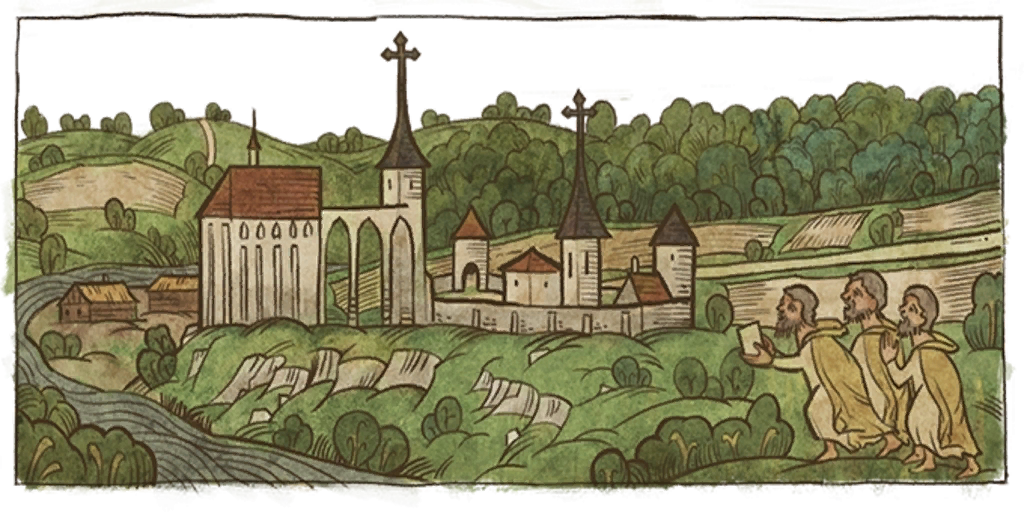
Imperial architecture features whitewashed walls, timber-framed buildings, and steeply pitched roofs. Dominating the landscape are imposing castles and fortresses strategically positioned atop hills and cliffs, offering panoramic views of the surrounding plains and mountains. These strongholds serve as seats of power for noble families and military outposts for defense. Bustling market towns dot the plains, their streets lined with timber-framed houses, market squares, and guildhalls. Colorful facades adorned with ornate carvings and frescoes add to the charm of these vibrant centers of commerce. Villages are clustered around churches or fortified manor houses, their layout reflecting the hierarchical social structure of the Empire. Cobblestone streets wind through clusters of half-timbered cottages, while communal wells and gathering places provide focal points for community life. Churches and monasteries are prominent landmarks in the Empire, with towering spires and intricate stone carvings showcasing the skill of craftsmen. Scattered across the plains are sprawling rural estates owned by wealthy landowners, surrounded by fields, orchards, and vineyards. Manor houses, barns, and outbuildings form the heart of these estates, where the aristocracy resides in luxury and comfort.
Of note for Imperial architecture, a unique mythos surrounds the placement of bronze sheet plate circles around the base of the walls, symbolic of the searing steps of Artex as he was when a mere Man. This does not bring joy in the hearts of the Sun Elves, however.
Government & Social Hierarchy
"The law, in its majestic equality, forbids the rich as well as the poor to sleep under bridges, to beg in the streets, and to steal bread."
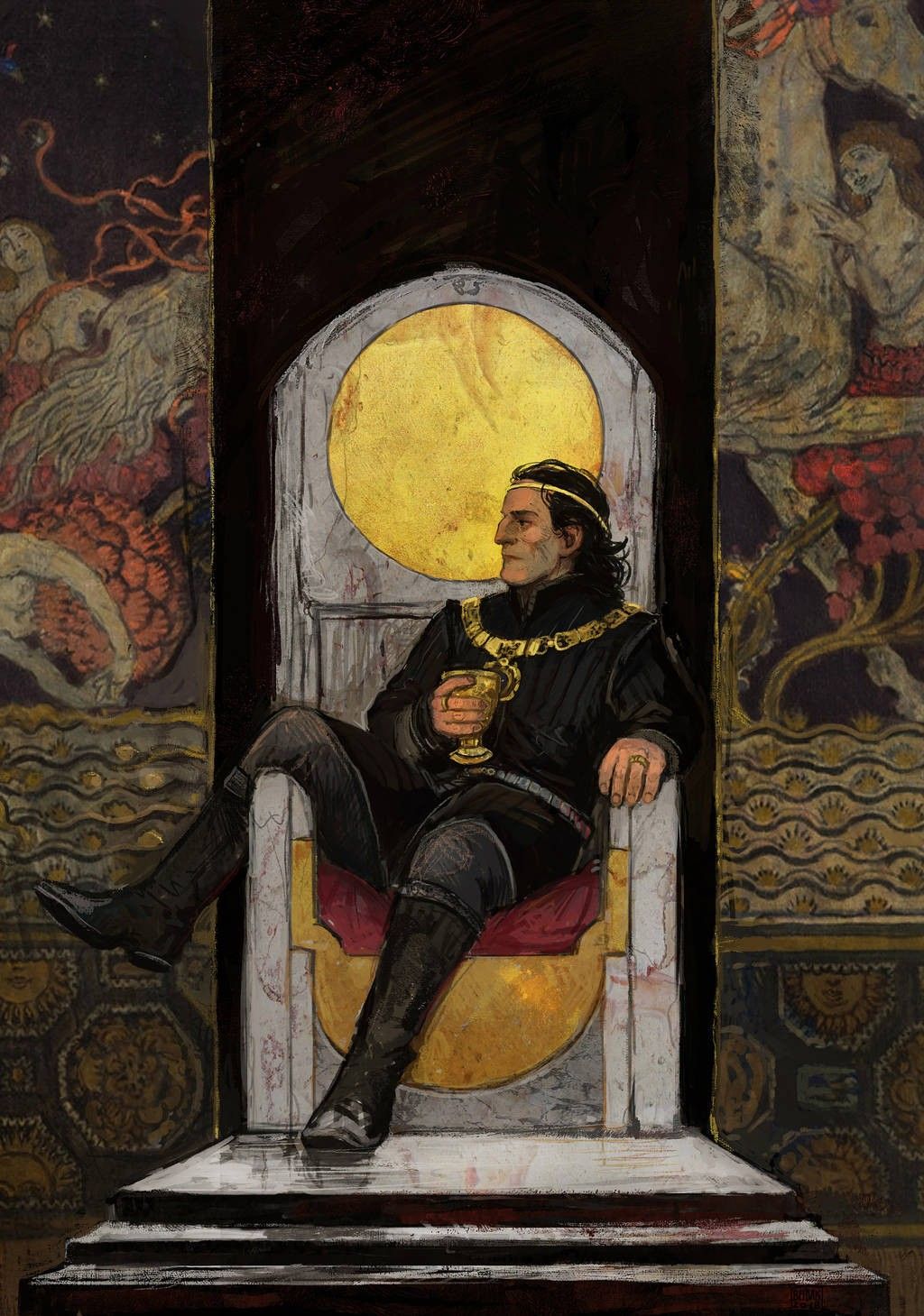
Many say the only fashion an Empire is able to span the entire continent of Volantis is through blood and extortion. Centralized in the shining capital that is Exandria, the Emperor of Man rules a rather decentralized government in the form of a theocratic monarchy. Rather than dictating all matters from their bronze throne, the Emperor and his Elector Counts (whom vote to elect the Emperor) allow all the nations under the Empire's graces to govern themselves with a certain degree of autonomy. All who have been conquered by the unyielding Imperial armies were allowed to stay ruling with their same officials and politicians so long as they payed their taxes, swore fealty to the Emperor, and worshiped the Solar Pantheon in addition to their personal faiths.
 The law that all must follow, whether within the walls of Exandria or far in the outer reaches of Port Marabella, comes from the Divine Law of the Father Solarius. Therefore, the Imperials often are fully convinced that it is by divine right that what they do is permitted. The Empire also imposes cultural practice to conquered places to unify them, to varying degree. But all in all, the people conquered of the Empire turn a blind eye because things are truly better since the Empire formed. In exchange for their customs and cultural heritage and beliefs, they are given jobs, the economy is better, the thief in the night suffers consequences for his actions. They care less about where their tax money is going and moreso if bread is going on their table.
The various rulers of the Realms under the Empire, from Chieftains to Kriloo Kings, are all allowed their status if they accept the sovereignty of the Emperor of Man. Some do so for bribes, some do so for protection, and others truly worship Artex. Fiefdoms are numerous, as nobles become vassals of the Empire and it's lower nations.
All of this said, to summarize that the numerous rulers of their respective provinces and nations are assembled upon the Royal Assembly once a Dominion, serving as the administrative center of the Empire as a whole. The fate of Volantis as a whole has many a time been changed by fickle minds on the Assembly. Below this Royal Assembly exists the Three Estates. These 3 houses of voting bodies are the Clergy first, then the Nobles, and then the Commoners, with each having their own interests and prerogatives.
The ruling church body, that of the Church of the Risen Son, includes the Emperor in its governing body. The Cynosurian Faith answers to the Church of the Risen Son, with a Prime Lawyer holding the leading office in the faith. The leaders of the smaller religions in the various nations under the Empire of Man's control have a small say on the Assembly, granting them partial autonomy. The Emperor at the time's legitimacy is always tied to this Prime Lawyer and the central religion of the Church of the Risen Son.
Religious wars have happened in the past with the Empire, as the church is a dominant political force, albeit divided. Thousands have died over whether or not Artex is truly the Son of Solarius, if Artex and Adalmin are the same, or whether Artex is truly divine. Thousands more will likely die in this never-ending battle of theocratic ideology.
As for the matters of social and political power, it is pertinent for imperials to keep up with the happenings of both their local and foreign affairs. Minor lords must manage the happenings of their local church and whether or not enough focus has been devoted towards worship of Artex versus abating the powers of evil. Others may have to focus on what the neighboring lords are scheming, always attempting to stay one step ahead. Amidst all of this posturing, social niceties have to be practiced, especially for those closer to the capital. Those of noble blood are expected to be of noble bearing; those of higher status must eat higher meals, and so on. With the Empire being the most populous group in Volantis, what is popular today may change in a year, or even in a month.
Weapons & Military

"Death to the heretic! Death to the nonbeliever!"
The weapons of the Empire are the most common armaments seen in Volantis, making them a staple of warfare. Swords were the primary weapon of warfare, used by knights, nobles, and foot soldiers alike. They came in various shapes and sizes, including broadswords, arming swords, and longswords, designed for cutting, thrusting, and parrying. Spears and polearms were the choice of mounted cavalry upon destriers or even those in military formations. Maces, axes, warhammers, bows and crowsbows and the rare arbalest are all powerful weapons of war seen on both foot infantry and horseback combatants.
 As for armor, plate armor is reserved only for those who can afford such. Though Emperium cuts the cost of plate armor down, it does not last as long. However, middling Noblemen who go to war can often been seen wearing Emperium armor, though those of more higher status can afford a full steel armor of plate and mail. The majority of other combatants wear coif paddings on their head along with open helmets, chainmail and gambeson for their body, and other leather and cloth and thin metal armaments.
The military organization consists of Men-at-Arms, professional soldiers who make up the core of Imperial soldiers. They are well-trained, disciplined, and equipped with armor and weapons provided by their lords. Below them sit peasant levies, which are raised during times of war to supplement the professional forces. Levy troops are often armed with simple weapons such as spears, bows, and farm implements, and lack the training and equipment of professional soldiers. Above these troops are the Knights and Nobles, those who have fought many battles and are able to live to tell the tale. They are often outfitted with their own personal Destrier and lance, and were trained in both leading cavalry and single combat. Above them all are the Paladins and Templars; holy knights of Artex, blessed by The Father's Light and filled with holy vindication to lead entire armies at the behest of the Emperor of Man. They often are generals, expert tacticians, or exceptional roaming swords for hire of no compare.
A unique practice of the Empire's military is to invoke the Rufung Ritual. This is an open challenge towards the foes before them, by depriving them of their divine protection. An Imperial Paladin will formally offer the protection of the foreign deity under the Solar Pantheon, ensuring a new cult will form in Exandria for them. Should this request be rejected (and as it happens, it often is), the opposing deities are said to do battle with Artex and his Heavenly Host.
Emperium is the metal of choice for nearly all metal armaments, though more noble status begets the use of proper steel. The most elite leaders, from officers to generals, will employ the rare usage of Molzen, a fiery metal capable of explosive damage, and Templars and Paladins will choose to use their holy armaments blessed by their own enchanters.
Music & Art

Music and singing are notably liturgical, though also associated with everyday activities. Religious chants or musical forms in formal Imperial Sarword without any instrumentation as chorales is a common ambiance set when entering a church. Instrumentation includes lute, hurdy-gurdy, flute, bagpipes, drums, and various stringed instruments like the violin and dulcimer. Rich patrons often commissioned music, but otherwise music arose mostly from improvisation and musical works were learned off by heart and spread by oral transmission.
Religious art is alive and well in the Empire, with churches, cathedrals, and monasteries adorned with frescoes, murals, and stained glass windows depicting scenes from the Cynosurian Faith, the lives of saints, and Solar symbolism. Iconography plays a central role in conveying religious messages and inspiring devotion among the faithful.
Imperial scribes and illuminators produce exquisite illuminated manuscripts, embellished with intricate calligraphy, miniature paintings, and decorative motifs. These manuscripts are commissioned by the clergy, nobility, and wealthy patrons, serving as repositories of knowledge, literature, and religious texts. Woodcarving and sculpture are frequently seen as well, with artisans creating elaborate altarpieces, spiral structures, and religious statues for churches and private devotional spaces. Imperial craftsmen also excel in textile arts, producing intricately woven tapestries, embroidered vestments, and decorative textiles for ecclesiastical and secular use.
Magick

"Suffer not a witch to live."
Magick is a touchy subject in the Empire, as they are aware of the truly dangerous and chaotic nature magick brings with it. As strong adherents to Law, anything chaotic is unwelcome in the walls of Imperial land, and that includes magick as well. Magisters are looked down upon, unless they are of the approved Traditions of magick.
The approved Traditions of Magick happen to include those which stem from devotion from Artex, who beseeches his Father for His Divine Light, filling the faithful with not only faith and direction, but for the most pious he provides power and magick. The two Traditions of magick this encompasses is Templars and Paladins. Imperial Templars act as the sword of the empire, sent on the most daring and dangerous tasks, while the Paladins tend to stay within the cities and towns of the Empire, leading and directing. Templars tend to be male, and Paladins, female.
Besides Paladins and Templars, a few other Magicks are approved. A non-exhaustive list includes Alchemy, Clockwork Contraptions, Druidism, Arcane Magick, Artificery, and Runeforging and Astral Sorcery depending on the current status of the Dwarven and Elven relationships, respectively. All mages, regardless of power, status, skill and renown, are required to be registered through the Community of the High-Minded on behalf of the Elven Authority. The Community distributes licenses to Magisters to allow people to know who around them are practicing the dangerous arts.
If a magick is not in an approved Tradition of Magick, such as the Umbral dark arts, those who practice such magick are considered heretical, and should be dealt with in the appropriate manner. The Empire makes sure to lump Volkar's Stormcallers into the Tradition of Umbral Magicks as well, labelling the barbarians also as heretics.
Others
"Every nation has opinions of the Empire, but it is in their favor to be at least known by the Empire, even if it is in disdain."
Dwarves: The Dwarves have a fickle relationship with Man. Currently allied with the Empire, the Underkingdom of Khazgarim has both fought alongside the Empire, as well as against Imperial invaders. Imperials often are aware of the unsteady alliance between Dwarf and Man, but both sides ignore the tension for their current affairs. This mainly applies to the Ironfists; the Rimebeards of the deep Southern Wastes are not a common sight for Imperial eyes, other than the sparse aid given to Joagundr in ages past during the Wasteful Wars. The Glassaxes often do a great deal of trade with the Empire, though their opposing religious beliefs often put the two groups at odds.
Elves: No tighter alliance exists in this realm than the one between the Sun Elves and the Imperials. Having enlightened Mankind as far back as into the end of the 2nd Age, the Age of Scales, the Sun Elves still remain as one of the few places that the Empire has not waged war against. Serving as a guiding hand as well as the source of their faith, the Unitary Solarate has saved the Empire on numerous occasions, though some may claim their aid to be overbearing.
The Moon Elves are though to be some of the most chaotic and dangerous elves in the land, hidden on the other side of the Lauttersängers. Practitioners of various dangerous magicks as it if were a common trade, and hardly ever leaving their secluded misty glades, the most any Imperial has to say about Elves of Elunestra are that they are lucky Solarius allowed The Witch in the Moon to remain in the Firmament and not be cast down into Fundament with the rest of the Chaos Gods. Moon Elves do not care much for this, of course.
Star elves are often seen either in their own towns on the Lauttersängers, or within Imperial settlements, if not far beyond. As usual, the Star Elves get along quite well with all, and this most certainly includes the Imperials. Xenophobic as the Empire is though, even the amiable Star Elves can face prejudice and prosecution.
Humans: The Clans of Galen, settled as neighbors to the plains the Empire calls home, are some of the strongest allies of the Empire, though their history together has not been as pure as the leaf of an Ancient Arboreal. This friendship can be tinged with skepticism, as only recently have the Galenean Clans been vassalized once again by this iteration of the Empire of Man, albeit on better terms than prior before. It is the hope of many Imperials that good relations can be fostered between their peoples, and the various invasions into the Coille Forests, as well as sending Gales to invade various lands, can be set behind them.
The Ignomads of Joagundr are so far remote and disconnected from the Empire, despite numerous attempts at fixing this issue, that most Imperials have never seen an Ignomad. Many stories are told though, of the distant barbarians who steal technology and dredge it from the ocean to waste it on hunting and fishing, rejecting the Cynosurian Faith entirely, only to worship a glorified owl and salamander. Currently, the Joagundric Ignomads have a very old document, supposedly signed by one of their Nalunuk, or Leaders. Most Joaguns ignore this. Instead, they honor the Conglomerate's Union between them and the Moon Elves and Ōkami.
Culiacán was crafted by the Empire to serve as their shining jewel of a trade hub between many peoples, and as such are treated decently. Culias as a whole though are viewed as childish and unfitting of the blessings they have been granted, and their great status as the premier trade hub of the Sapphire Bay. They are known for their rebellious nature and their numerous pirates which take advantage of the seas, brewing ire within Imperial Lords.
A succinct summary of the views of the Empire on Volks is as such: "And strangest of all; they are able to endure hunger, cold, or any kind of hardship by plunging into the swamps, where they exist for many days with only their heads above water. They are the most ignorant people I have ever conquered. They cannot be taught to read and are the ugliest and most stupid race I ever saw."
Ōkami has, and has always been, the forever rival of the Empire. Not chaotic, nor unlawful, Ōkami simply has been in lockstep with the Empire's advancements and political power on a number of important decades in Volantian history. The Conglomerate of Ōkami (formally including Volkar, and sometimes Joagundr), alongside the frequent pairing of the Moon Elves, often cements the divide of the continent politically, leading to a more sour view than simple rivals, but festering into a more deep set hate at times. When the Dragon Emperors ruled however, the two peoples were more kindly to each other, a respect fostered between them.
Conclave - Mer: Evil. Chaotic. Unlawful. All describe the opinion of the Empire on the Conclave, both Mer and Ophidian. Great many wars of retribution and destruction have been waged deep into Arumvex's Folly unprovoked due to past wrongs. Many Imperials may think that the Mer have no place in this world of Law, and treat the other race poorly.
Conclave - Ophidian: Demonized and revered, the Ophidian, specifically the Dragonborn, are often watched with a careful eye by Imperials. Said to be the result of the forces of Chaos needing shock troops in the 2nd Age, Age of Scales, the Ophidian are not treated as people, but mythical beasts, one which could both provide great aid and knowledge, as well as turn on you and reduce you to cinders. Some Imperials lean towards a greater degree of reverence however, calling back to the tenure of the Dragon Emperors, and the great heights their empire rose to at the blessing of the Ophidian.
Naming Conventions
The Empire of Man have traditional names, meaning that their naming scheme is seen as traditional by most. They follow a basic First Last name scheme, with titles and accomplishments being added on in various manners. Sometimes, if a father and a son have the same name, the last name will be dropped and will be replaced with the number of repeats in the line, such as Martin the Fourth, or Martin IV.
Male Name Examples:
Tomas Novak, Jacob Svoboda, Peter Novotny, Lucas Dvorak, Martin Cerny, John Prochazka, David Kucera, Michael Marek, Paul Kral, Joseph Stastny, John Hajek, Adalbert Maly, George Urban, Adam Navratil, Paul Pospisil, Philip Barta, George Mach, Thomas Prokop, Martin Vlcek, Mark Cerny, Lucas Konecny, John Marek, Lucas Ruzicka, Peter Holub, Thomas Dolezal, Jacob Kadlec, Michael Vesely, George Horak, Martin Matejka, Ulbricht Koch
Female Name Examples:
Teresa Novak, Julia Svoboda, Petra Novotny, Lucy Dvorak, Martina Cerny, Jane Prochazka, Davida Kucera, Michelle Marek, Paula Kral, Josephine Flaskha, Jane Bartova, Adalberta Tichy, Georgina Vanek, Ada Zeman, Paula Vlcek, Philippa Ruzicka, Georgina Pospisil, Thomasina Mach, Martina Prokop, Marketa Navratil, Lucy Holub, Joanna Dolezal, Lucy Kadlec, Petra Vesely, Thomasina Horak, Jacoba Matejka, Michaela Svec, Georgia Cermak, Martina Suchy, Teresa Pech
Important Figures
Adalmin Licht, The First Man: In a time before history, even before the Age of Scales had concluded and mankind was civilized, a golden, perfect man was created, and with the help of the Stone Golems and the Sun Elves, led them out of their tribal ways. It is from Adalmin that the 3 core lineages of Imperial importance trace back too, and to be a direct descendant of the First Man nearly guarantees one a chance at the Throne. Believed to have been reincarnated as Artex, and later ascended to godhood.
General Vindicator: A towering machination of both man and metal, General Vindicator was a Soulwrought, a mechanical being powered with a real soul forged in the lands of Ōkami. More powerful than a simple Automaton, General Vindicator had been a military leader of the armies of the Empire before dying, swearing his service to not end in mere death. He was feared by all, regardless if they were Imperial or not, and was known for his charisma.
Dragon Emperor Mockob: Numerous were the line of Dragon Emperors in the 3rd Age, with many doing impressive deeds both tyrannical and powerful, but Dragon Emperor Mockob's name endures for his draconic intellect, and his love for appearing before his people for them to gaze upon his new Dragonborn form. Where many other Emperors chose to rule in the shadows for fear of the public opinion of their new forms, Mockob cared naught for ill will, feeling more than capable to handle it.
Sir Radzig the Noble: A long lived Nobleman and Knight who was known for his long white hair, Sir Radzig was said to have the mannerisms of a calm fellow but the fighting heart of a lion. He joined the Templar Lionhearts as the only non-Magister within their ranks, and is known for his questing battles deep within the outskirts of Imperial lands.
Katarina Vlchek: The shining example set for all Paladins everywhere within the Torches, Paladin Vlchek was a woman of piercing blue eyes and a confident disposition and natural leadership. She known for her participation in the unification of a handful of border provinces ruled by disgruntled Lords, whom she placated and united under one banner to put an end to a budding civil war.
Prime Lawyer Jaro Husák: Founder of the Reformation, Jaro Husák was an at the time radical heretic against Rayism, the most numerous denomination of Cynosurians in the early days of the Empire. His actions are credited with the eventual formation of the Church of the Risen Son, and some claim Jaro to be it's founder, though the general acceptance is that Artex founded the church himself before ascending.
Dragonrider Rowan Heartbind: Claimed to have rode upon an Ophidian mount to aid the Conclave in their fight against the God of Dragons Arumvex in an age before mankind had civilization, during the Age of Scales.
Emperor Artex Licht: The Ego Emperor. Greatest of all the Emperors of Man, reigned during the Triunal Alliance between Man, Dwarf, and Elf within their united city of Janna. Such was Artex's influence and beloved nature in spite of his generally cruel ways that the Cynosurian faith believes him to be the Son of Solarius their Overgod, sent down from the heavens as the reincarnation of Adalmin, the First Man, to lead them into an unprecedented golden age.
Reilo Hardwin: An enigmatic man who's goal was to establish colleges and schools as far as Mankind could touch. Through his efforts in the latter half of the Age of Legend were the populous of man educated in the ways of the world, with the Star Elves lending aid in offering of their knowledge. Many schools are still standing to this day, with a few directly named after him.
The Wandering Vagrant: An extraordinarily powerful magickian capable of learning more Traditions of magicks than any other, as well as being far more proficient in them than those who specialized in just one. Most notable of this wizard's skills were his masterful skills at an unknown Tradition of magick said to have been lost to time. No nation could claim the wizard as their own, for he would only appear in times of great need to stop catastrophe, impart wisdom, and then vanish on the claim to apprehend some unseen threat. Many whispers still stand of this being an unnamed god of magick, though no proof has been garnered...
Emperor Wellins: Herod Wellins was the Emperor during the Chaos Incursion of the Age of Destiny, though his participation in the battles were not of great significance.
Legends & Myths

The Stone Golems: An exceptionally old myth, that claims in the beginnings of the lifespan of Man, even before the Ophidian Wars, these lumbering, expressionless creatures waged war, and then became friends with Man. What followed were the employment of human armies alongside these great beings, which some surviving ancient texts credit the Stone Golems to saving Mankind from extinction. It is unknown what happened to these beings, as only one has ever been seen since these ancient wars.
The Slumbering Giant: Mankind knows that they were not the first beings to exist in the world. However, with the discovery of an untold trove of indecipherable items made out of Relic Metal in the Age of Destiny, all in a massive underground tunnel system that seemed to be the outline of a body, more questions stand to find out if there were beings before even the dwarves and elves...
The Trinary Alliance: A period in time where, following the end of the Ophidian Wars, Man, Elf and Dwarf all lives as one within a marvelous capital at the seat of the Interior. It was here that the Empire of Man was to be first conceptualized, but would not be born until much later in the story of man.
The 12th Battalion: An exceptionally powerful and talented group of mixed magickians from all Dominions of magick, who's efforts were to be the vanguard against the final defense from the Doombringer's Chaos Incursion. All but 2 fell in battle, with both vanishing shortly after the war. The Vault of Fallen Heros lays in the Empire's land where this battalion is buried, along with many others who's lives were lost during this time.
The Dragon Emperors: A line of Emperors who turned out to be governed by an Archdrake, these powerful rulers brought much destruction upon the Empire's neighbors, as well as itself. Some say that they were the greatest rulers of Volantis, and that their ways should be emulated once more.
Impermanence Laws: Once upon a time, the governing body of the Empire could enforce what are known as Impermanence Laws with little to no voting required, under the guise of solving a pressing matter that did not allow the time of the slow moving court, or simply because they were testing a legislative doctrine. The common rebuttal the Lawmen would give is that if one didn't like it, the Impermanence Laws wouldn't be around forever; if it doesn't they'll abolish it. Needless to say, a great deal of corruption ensued.
It is said that one of the notable Impermanence Laws regarded that of Warpwrights, teleporters of incredible rarity. It mandated that all of these rare Magisters must turn themselves in and be registered. The hushed story is that a Warpwright "accidentally" teleported in on a local king having an affair. Of course, no one did. One man did turn himself in however, supposedly trying to see what their secrets were and if he would learn something if he acted like one. He was hung in the square for the king to see. Warpwrights were from then on a secretive organization.
The Accepting Cynosurians: Once upon a time in the early days of the Empire, the faith used to allow the worship of other gods, before their conversion into the Cynosurian Faith and the sole worship of The Coruscated. The Ego Emperor Artex rose to power and declared all faiths that were not Cynosurian would be heretical, and only those who were following the worship of himself would be recognized in the noble courts.
Dragon's Collar: Wildly believed to simply be a novelty and holding no magickal power, this collar of Drägurum is scribed with Wyrmlore glyphs said to be able to control a Dragon should one survive attempting to put it around one's neck. Unfortunately it is split in half by the actions of it's user, Rowan Heartbind, upon his final ride with his final ride.
Master Spelltome of Exandria: As is custom of all Arcane Tomes, one must read out of a spellbook to cast magick, lest you suffer the curse of forgetfulness. However, rather than having all Magisters secluded with their own private works and accomplishments, the wise minds of Exandria's Arcadia, the college for arcane academia, constructed a master tome holding all the known spells of the Magisters in the Empire. It sat upon a grand pedestal within the walls of Arcadia, and Magisters of all kinds, from wizards and witches to druids and alchemists all gathered daily to study from the tome and prepare their spells for the day. The college is known for it's remarkably short life, and the book has been relocated from the slithering mass of ooze that once was the college.
Paladin Vlchek's Amulet: Supremely valuable to the Paladin Torches, the shining example of their order wore a golden amulet enchanted with pure fire which is said to be able to imbue Paladins who wear it with a mere portion of her conviction, enough to drive one to great deeds.
The Mantle of Ego: The mortal crown of the Ego Emperor Artex, claimed to be forged of pure Ardent by dwarven hands, and enchanted with cut gemstones arrayed in a chromatic rainbow filled with elvish magicks. No longer needing such meager trophies once he ascended to his Father's place as Overgod, Artex left behind this relic for the following Emperors to bear. It is fabled that any who looked upon Artex with his crown donned were compelled to listen to his every word, and any who would dare don the crown would be stricken with madness, unworthy.
Warbanner of the 12th Battalion: An exceptionally powerful and talented group of mixed magickians from all Dominions of magick, this served as their banner to be flown during their famous assault against the Doombringer in the Chaos Incursions. It flies now in the Vault of Fallen Heros.
Justiciar's Memorandum: A one handed mace (depending on the story teller) which glows with a golden light at it's core, this holy artifact is enchanted by not Templar or Paladin Magicks, but is believed to be from Luminara the Everburning herself, Wife of Solarius the Father. Her holy light is imbued within the mace, and is a reminder to all that the Law is already within the world, and any who do not follow it have not an excuse for their actions.
Festivals & Holidays
Vigil of Fallen Heros
During the Dominion of Hoarpall
A celebration of the life and sacrifice of the noble heros who laid down their lives during the Cataclysm of the 3rd Age: Age of Legend to fight off the scourge of Chaos. Some cultures use this opportunity to pay respect to fallen relatives as well, a remembrance of all who came before, shown frequently in the form of gifts or walking vigil processions, to imitate the mobilization of war.
Unification Day
During the Dominion of Prime Seed
This day of gathering marks the unification of many banners of man under the Empire. In a wonderful set of oaths and allegiances, the peoples of the Clans of Galen, the City-State of Culiacán and eventually the Ignomads of Joagundr united in the Fourth Age under one banner, one people. On this day of celebration people gather and give thanks for their dependence and reliance upon the warmth of the Empire.
Day of Wiles
During the Dominion of Stormharrow
On this day, a great commotion is incited, with bards and jesters the across the lands creating grand displays of buffoonery and art in an effort to shake off the winter wiles. Dancing and other absurdities commence with folks of all status and class, and sometimes entire dancing bands form spontaneously within cities and villages. This event has been the focus of many reforms, and outright banned many times before for inciting chaos in the lands. This event coincides with the last frost and beginning of the early planting season.
Flue's Day
During the Dominion of Vernalfrond
An exciting day where straw and wood mockeries of dragons and other Ophidian creatures are created and destroyed, to celebrate victory many centuries ago in the 2nd Age: Age of Scales. This is the oldest known celebration in the lands (Believed to be 2000+ years old), and is held by all. Children frequently wear horns (real or crafted) and run around villages roaring at adults for sport, who are expected to either play dead, or chase the children off.
Son's Day
During the Dominion of Soluary
On the longest day of the year, the Summer Solstice, the Cynosurian Faith's god Artex, The Son of Man is celebrated in all of his radiant glory. To He who sits upon the Overthrone are burnt offerings brought, to be deemed as pleasing and assuaging to his senses. Vows are renewed, faiths strengthened, and all windows opened to allow light into homes, with many of the rich wearing extravagant sun-themed attired such as gilded necklaces and pendants, or even headdresses of gold as fashionable praise to He who has Risen.
Passion Day
During the Dominion of Luminary
Following a month after the celebrations of Sun's Day, Passion Day is in honor of Luminara the Everburning, Mother of Artex and Wife of Solarius, whom Solarius fought all of the Chaos Gods to make his Betrothed. Marriage vows are officiated or rededicated on this day, adolescent's romances and passions pursued, and those who have family gather to enjoy the comradery of fellowship. Alms are sometimes given to give relief to those who do not have, and honor given to those who give.
Garrowin's Gallup
During the Dominion of Somerset
This holiday is in celebration of the legendary Monster Hunter Garrowin, who tamed the feral lands in ages of yore for the safety of the Empire's expansion. Today it coincides with the harvesting of crops this time of year, with Hunters upon steeds and mounts of various sizes competing in both number and size of game and/or monsters slain and brought back to their village in both sport and survival.
Mer-der's Eve
During the Dominion of Eye's Mirth
A light mockery of the Conclave, this holiday is one of spooky sensations and tricks in demand of treats, where many costumes of grotesque and imposing design are constructed to lightly terrorize towns and villages in roving bands of troublemakers.
Elfsgiving
During the Dominion of Eventide
In recognition of the once-aid the Sun Elves had given the Empire of Man many centuries ago in the form of enlightenment of the Solar Pantheon, some Imperials deigned to prepare great feasts to elves of all types, which soon evolved into a pure giving of thanks for all.
Dwünsmas
During the Dominion of Icewind
A holiday with sour roots best lightly mentioned, this is an aptly named giving of gifts forcibly started upon the Underkingdom of Khazgarim. Wise Dwarves of the Austral South were demanded by the Empire to bring gifts to their king, to be symbolic of the Dwarves not being controlled by their greed. The Dwarves eventually turned this into an event where they would get gifts themselves as well, leading to what is now know as Dwünsmas. All races often participate, despite the name, and gifts flow from all cultures. It is custom to leave a small cookie in the shape of a sun within a gift's packaging.
History

Synopsis: Very lengthy is the history of the Empire, such that a summary of their tenure within Animus Liber could fill up many a dusty tome. The empire has had very tumultuous periods, where kingdoms have broken off through revolts or other conquests, culture constantly changing, social castes flipping positions, the economy shifting and it's focus and aims changing. It doesn't have one singular arc to it's history, but rather repeated trials, reformations and restorations throughout it's history. For starters, their saga begins in the 2nd Age, the Age of Scales.
Late to the scene of the world some may think humans to be, but many humans will point to all they have accomplished in their short tenure as rebuttal. They find their start as disparate tribes, camps and roving bands. With no unity and no direction, as most pre-civilization stories go, battles against tribes and factionism abound. Bound by Chaos as their master, the human people were unified not by nation or creed, but by who had the most power and who could slaughter and pillage their neighbors better. When the rulers of the world, the Ophidians, came for man, mankind put up no fight in their huts and camps. Were it not for the aid of the Sun Elves, Mankind would have been lost. With the aid of the far more advanced Once-United Elves and the Underempire of the dwarves, the Ophidians were abated, and the world shorn of it's shackles to Chaos. From the chaos stepped forth he who was The First Man, Adalmin. A demigod amongst men, he was thought to be immortal and the first human ever created, and lauded to be perfect in every way. When the shackles of Chaos had been broken, Adalmin was not seen again.
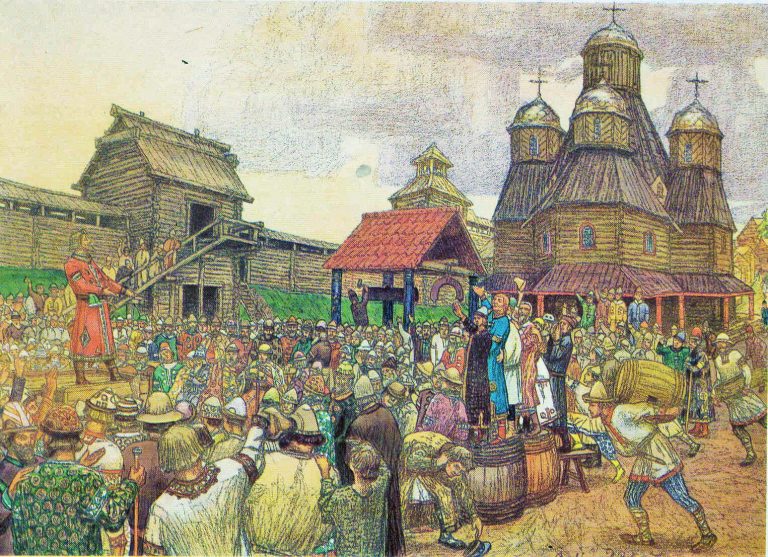 This entered Mankind into the next age, the Age of Legend. Here they founded the Trinary state of Janna where the remnants of mankind would band together with the forces of dwarves and elves. It was here that the dwarves taught the remnants of man their skills in laborious toil, and did the Sun Elves enlighten man with the faith of the Solar Temple. This lasted for a time, until Artex, who was not yet the Ego Emperor, gathered that Mankind should rule, and that Solarius favored Man before all. These thoughts and subsequent actions led to both the fall of the Trinary state of Janna, as well as the birth of the first Empire of Man. During this time did many great feats of heroism and myth be committed to history, left in the libraries of the world as well as etched into nature itself. Such was the great works of Artex that it is recorded that he was the reincarnation of Adalmin, the First Man, and ascended into the heavens to rule Firmament upon the Overthrone.
As the First Empire of Man reaches it peak, it does so at the cost of the Dwarven Underempire's crumbling at the hands of the Conclave. Growing to new heights placed the First Empire of Man well for the storm that was brewing ahead. With the now Underkingdom of Khazgarim recouping it's land and stone, the already sundered United Trinity of Elves and the Conclave were hit with the Chaos Incursions. Another very famous and well recorded event; the summary of this world-shaking event is as follows.
The Doombringer, a Tyrant the likes none have ever seen in comparable power, agent of the Chaos Gods, invades upon the Interior. All races join the fight, with nearly all falling. The First Empire of Man bears the brunt of this invasion, and ends up falling to the crimson blade of the Doombringer, his sword drinking the life of the Emperor himself. The crumbling of the Empire however paves the way for the other races to finish the fight, and the tides of Chaos are sent back whence they came. Mankind spreads in a grand diaspora to the various nations around the lands, to lick their grievous wounds.
In the 4th Age, Age of Destiny, all of the modern human nations exist in full force. Where the 3rd Age saw the claiming of land for the Empire of Man from the Underempire of Dwarves and the United Trinity of Elves, the 4th Age bore witness to the unbridled expansionism that man is capable of. This increase in power leads to the rebirth of the Second Empire of Man, which picks up right where it left off before. Sending the conquered Galen off to fight in the Wasteful Wars, the Volkan invasion of the Verdant Wars, the Great War of Volantis against Igashu, Ōkami and Volkar, much war was seen in the 4th age by the Empire.
The Empire of Man grows into a terrible regime with an impetus of control through never desiring to reach the brink of genocide again. The secretly developed Dragon Emperors were formed, a cruel but incomparably powerful line of rulers guided by what is believed to be an Archdrake behind the scenes. A drastic famine shows its head, and the dominoes fall to create an insurrection and the implosion of the Second Empire of Man following a drastic civil war. With this second destruction, more power is given to the distant human powers, namely the Ōkamis, who exist for a short period as the premier human power. A small group of neo-imperials formed a sort of democracy for a time, but were swiftly squashed by the Unitary Solarate. Those that survived left to join with Culiacán.
Towards the end of the 4th Age, the Holy Empire of Man is formed, with a renewed purpose of adherence to their faith, while tempering themselves of running away with control lest they incite their people's wrath once again. As of the current age, the Age of Darkness/Discovery, the Empire of Man has returned to power, and is poised to soar to heights far greater than ever before, were it not for their gods ignoring their prayers as of late.

Last edited: 7 months ago