
Dwünīr
ᛞᚹᚢᚾĪᚱ
"Children of the Stone"
Synopsis
Disclaimer: The Dwarven race is unified, with all of the 3 cultures united under one banner. As such, this page is longer than other racial hubs.
Primary Polity: Underkingdom of Khazgarim
Seat of Power: Khazgarim
Polities that are predominantly Dwarven:
Underrealm of Azbar: Glassaxes
Underrealm of Khazgan: Ironfists
Underrealm of Hûzvok: Rimebeards
Term for Dwarves within the Underkingdom: Khazak/Khazaki
Term for the race of Dwarves: Dwün/Dwünīr
Example: "Gimblur is a Khazak, like all good Dwünīr should be."
Term for outsiders: Umyok/Umyoki
Religion: Vae Kinkharum
Language: Dwarvish
Introduction
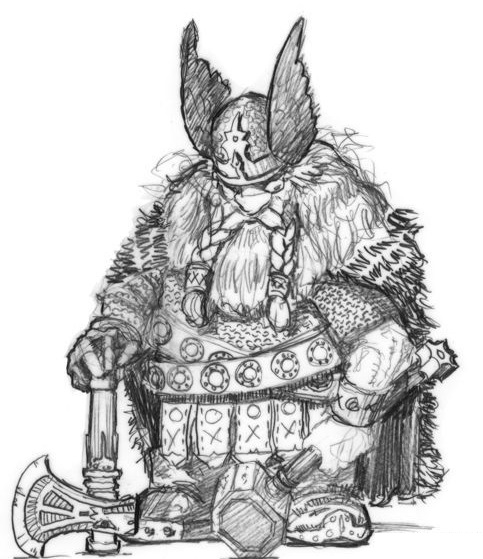
There exists a race of beings in the lands of Volantis as well as below Her, that are known to be many things. They are a brave, courageous, honorable bunch who value their word and their family as much as they value their beards and crafts. They are also prideful, greedy gluttons with a noticeable lack of humility and partakers of great excess. Most of all, these denizens are short.
While still existing as a notable kingdom, the remnants of the Dwünīr (Dwarvish) people are solemn vestiges of a once greater race in the form of the fallen Underempire. Short stocky and stout, they carry the long memory of their forefathers with a vengeance and bear their race’s secrets with greed and guile. Those that survived the great collapse of their empire reformed into what is now called the Underkingdom, holding fast to their ancient tradition, preserving their lives if not solely for the continuation of their peoples memory. Since the beginning of the era, the Dwarves hailing from the Underrealms of Khazgan, Hûzvok and Azbar have poured their craft and remembrance into all they do as a collective memory and testament, coping the best they can to arise to the tall standard set for them by their ancestors. Though their empire has crumbled, deep within the stony heart of their ancestral realm, the enduring strength and grandeur of their legacy remains steadfast.
Physiology
Unique amongst the dwarven peoples is the idea that one is born into a certain mold. All dwarves who adhere to the culture believe that upon birth, one's phenotype determines where one will declare citizenship as well as work. Dwarves with Brown beards can be anywhere. Dwarves with any other color have to be in specific locations. Black in the Rimebeards, Red in the Glassaxes.
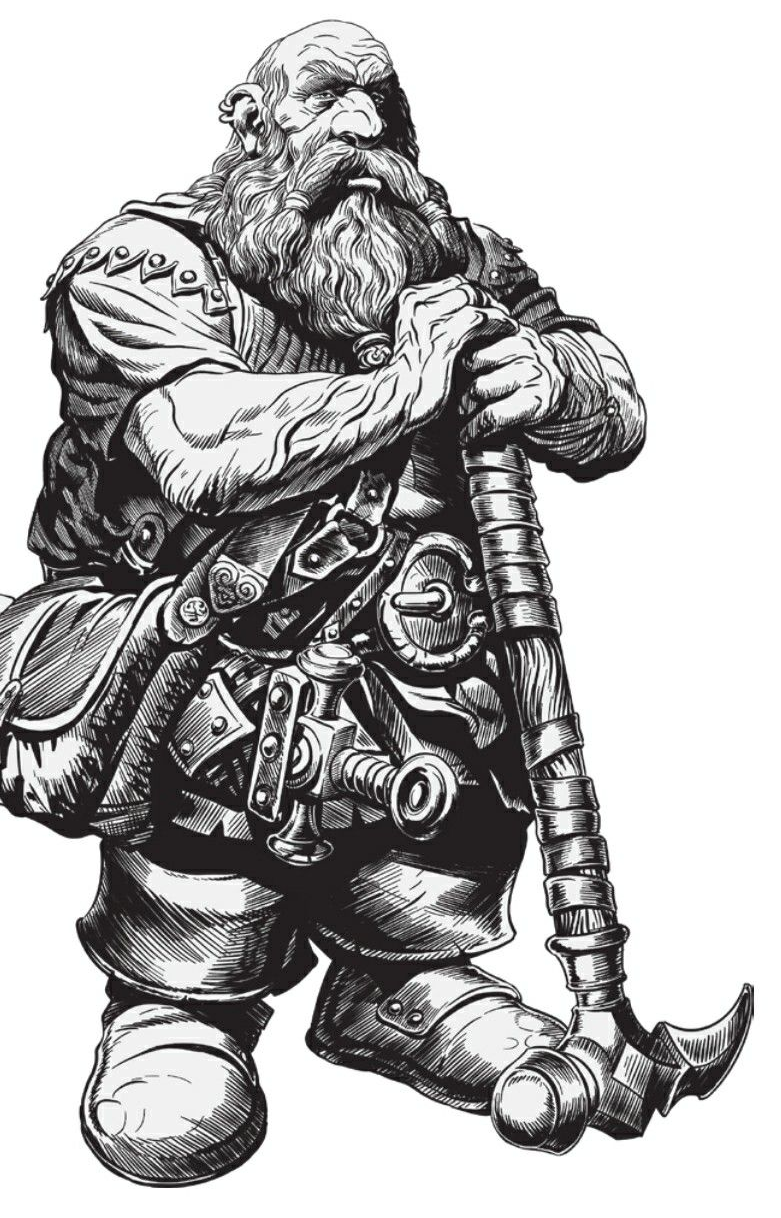
Dwarves are, as their moniker implies, shorter than the average human. Ranging between diminutive 4’ to 5’ and an average leaning towards 4’6’’, the Deepfolk believe themselves to not be short, but rather everyone else too tall. The second most prominent feature one may notice - and the most important that you notice on behalf of the dwarf - is their profound facial hair in the form of beards. Knotted beards, neatly combed beards, braided beards with gems and crystals hidden within, with more designs having unique dwarven words for them. The color of hair that dwarves bear is the same as humans, whilst being more coarse. The hue of dwarven eyes tend to be those of humans, though leaning more towards duller and more earthy colors. Browns, ambers and grays are the most common colors to be featured, with the occasional dim green and blues spotting the population.
Dwarven facial features are always gaudy and prominent. Great noses and forward brooding brows prevail throughout their homes, as well as gnarled hands and feet. Due to these harder and more pronounced features, a dwarf may appear to be less appealing conventionally to the fairer races. Those who are brave (or foolish) enough to remind a dwarf of this are met with a slew of insults to both the offender and all who came before, and after them.
The majority of stout folk tend to be strong and built very well, with their society working together constantly. Both male and female dwarves sprawl with rippling muscles, with higher muscle density than humans and elves. The average weight of a dwarf sits in ranges from 190 to 225, depending on height and sex.
Fashion

The Dwarves wear clothes meant to last, suitable for all weather. They are often clothed in earthen colored tunics and hoods lined with fur. Though in days of yore, often would the cities of the Dwünīr Empire be filled with bright raiment of every color. When the streets were filled, it was a stark rainbow amidst the cold gray stone. Many years have passed since the days of their forefathers and the Underkingdom have no time for fashion and the keeping of appearances when the Ancestors must be honored by restoration of the Empire.
Though their clothes are not well kept or a pleasant sight on the eye, their beards will forever be tamed to magnificence. A dwarf’s care for his beard represents his care for his craft and passion. Their beards are often braided and well combed, bearing clasps and beads of gold and crystal. Never is a dwarf shaved, his beard is his honor, a representation of his spirit. A dwarf never cuts their beard, it’s length sometimes causing a dwarf to trip in his old age. In battle the dwarves will often cover their beard in its own armour and always will tuck it into their belt before combat commences.
Values, Attitudes, Taboos, Morals, and Beliefs
"Traditions are solutions to long forgotten problems."
Though there are many Underrealms, the dwarves all stand united in the Underkingdom, and all share commonalities in their beliefs.
The Dwünīr hold kin above all outsiders. Throughout the history of their people, they have been set upon on all sides since their race was founded. Forever held in their mountains they have befriended few outside kin, only holding those of their blood to trust. All other races are held with skepticism and general contempt. It is said that to make a friend of a dwarf is to be a true judge of one’s character, as rarely do the dwarves keep other mortals in high regard. Though their love is seldom given for any reason, their work can be bought for a hefty sum. None can mold metal or stone as masterfully as the Dwarves. No lesson is forgotten, and such is shown in their craftsmanship, with the knowledge giving the Dwünīr a penchant for mercantilism and oftentimes extortion.
Their ancestral memory aids them in more than just crafts, as they will never forget nor forgive any wrongs brought to themselves or their people. When a dwarf is crossed they would write the wrong done to them on the walls of their very home, so that when rising in the morning or resting at night, they will never forget their need for an undying vengeance on those who have slighted them. It is said in the carven halls of the Great Hold of Khazgarim there is a sheer wall one hundred feet high which bears every injustice born upon the Khazgan, with more than enough room for more wrongs to be written.
While adamant about their grudges, the Dwarvish folk hold honor above all. Theft amongst one another, unjust murder, and brash dishonesty would hardly be becoming of a child of stone. They have no time for petty lies and time spent behind bars; such wouldn't beget them their homeland, nor any profit of gold. A dwarf found in possession of a stolen item would be shunned, and the High Elders would be held astounded by the atrocity.
As part of their psyche, each race has needs to sate their well being. For man, it is the familiar needs of family, food, home, and the like. For Dwünīr, it is the need to behold or touch something of value to them. To sate their greedy desires and lift their spirits, a dwarf may behold riches; going too long without doing so will sour their mood. Each hold and dwarf has a difference in what is dear to their greed, and each object of fixation will suite their needs. A Glassaxe may favor a bronze coin whereas an Ironfist may favor their friendship with the dwarves of a local tavern, as a Rimebeard treasures nothing more than their entire library of frost-coated tomes. This also brings about the almost irrational displeasure a dwarf will be beset by if their riches are depleted, stolen or otherwise misplaced. A dwarf's mood will sour most foul if it turns out their favorite carven stone idol of Kurtan is missing; they may even be moved to spend more than it's worth in the idol's recovery.
Lifespan
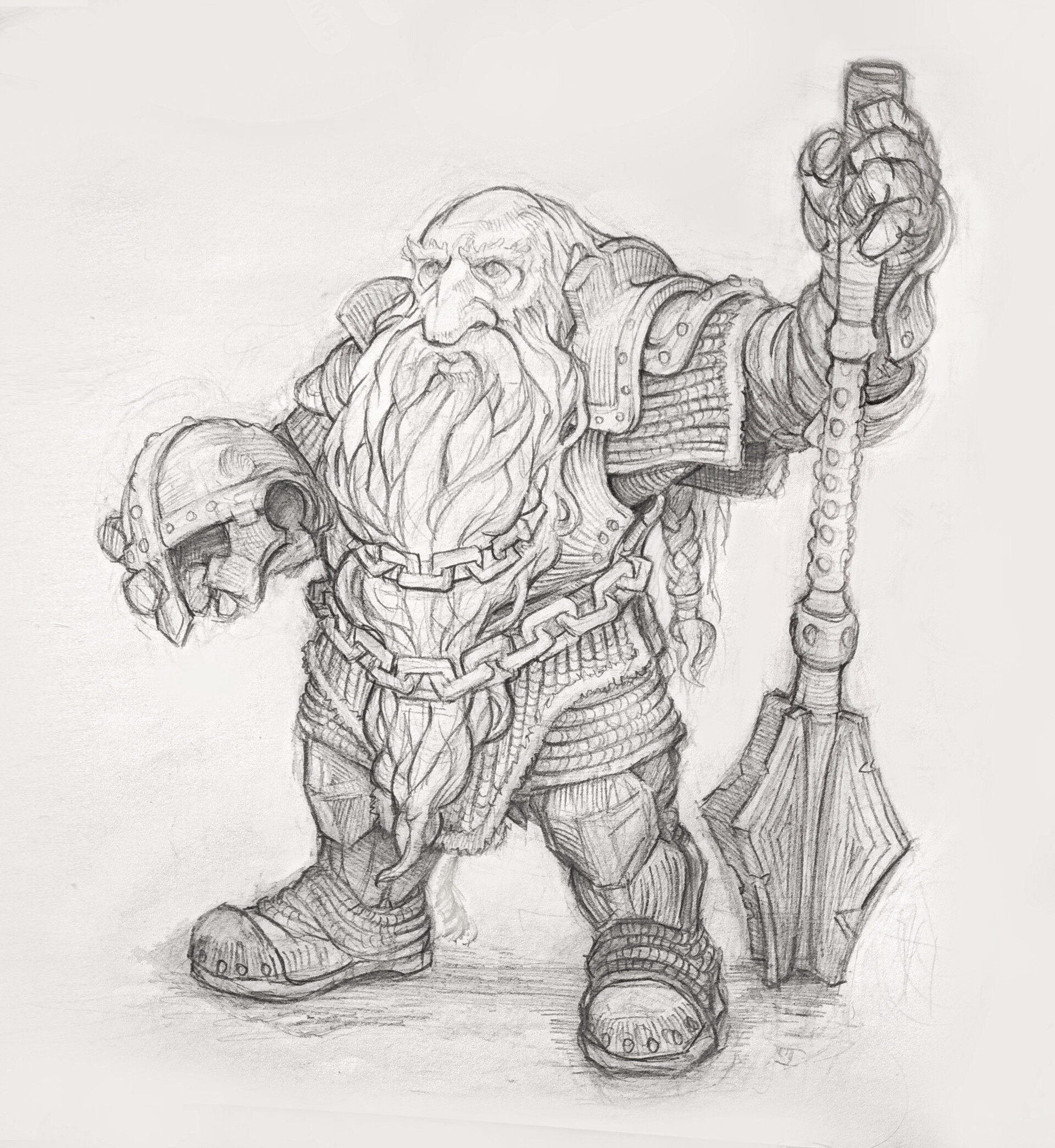
The lifespan of a dwarf consists of 4 centuries on average, to which the dwarves symbolize as the completion of their premier shape of a perfect square. After birth, a dwarf reaches maturity at the age of 30, at which they are old enough by measure of their ability to undergo hard labor. Often becoming apprentices, and then into journeymen later, dwarves at this stage seek to stretch their abilities and push their limits, much to the disdain of Greybeards. These are called Beardlings.
Within the second century, a dwarf often builds off of their efforts in the first century. Growing fame or fortune with their craftsdwarfship, establishing further constructions or perhaps starting up their own guild; the second century of a dwarf is often the most prolific, and noteworthy. They are called Longbeards.
Dwarves who live long enough to enter their third century are referred to by their eponymous Greybeards. While not as wily as their younger counterparts, Greybeards retain their strength of their youth, while partaking in more low energy activities such as maintaining the hold’s manuscripts as Scholars or gemcutting. The most noticeable feature of many a Greybeard is their jaded nature, and their common opinion that all things were better in the ages of yore.
Dwarves who live long enough to enter their four and final century are considered to have “come to shape.” They are referred to as Whitebeards, and are given the utmost respect. Living above the average lifespan for a dwarf is comparable to a human living to 90, and most dwarves do not reach the milestone due to wars or accidents within the caves. There are no recorded instances of dwarves living beyond 450 years of age. While a dwarf retains their strength even in old age, beyond the age of 4 centuries incurs a rapid deterioration of the dwarf’s strength, vigor and stamina.
Family

Work & Trade
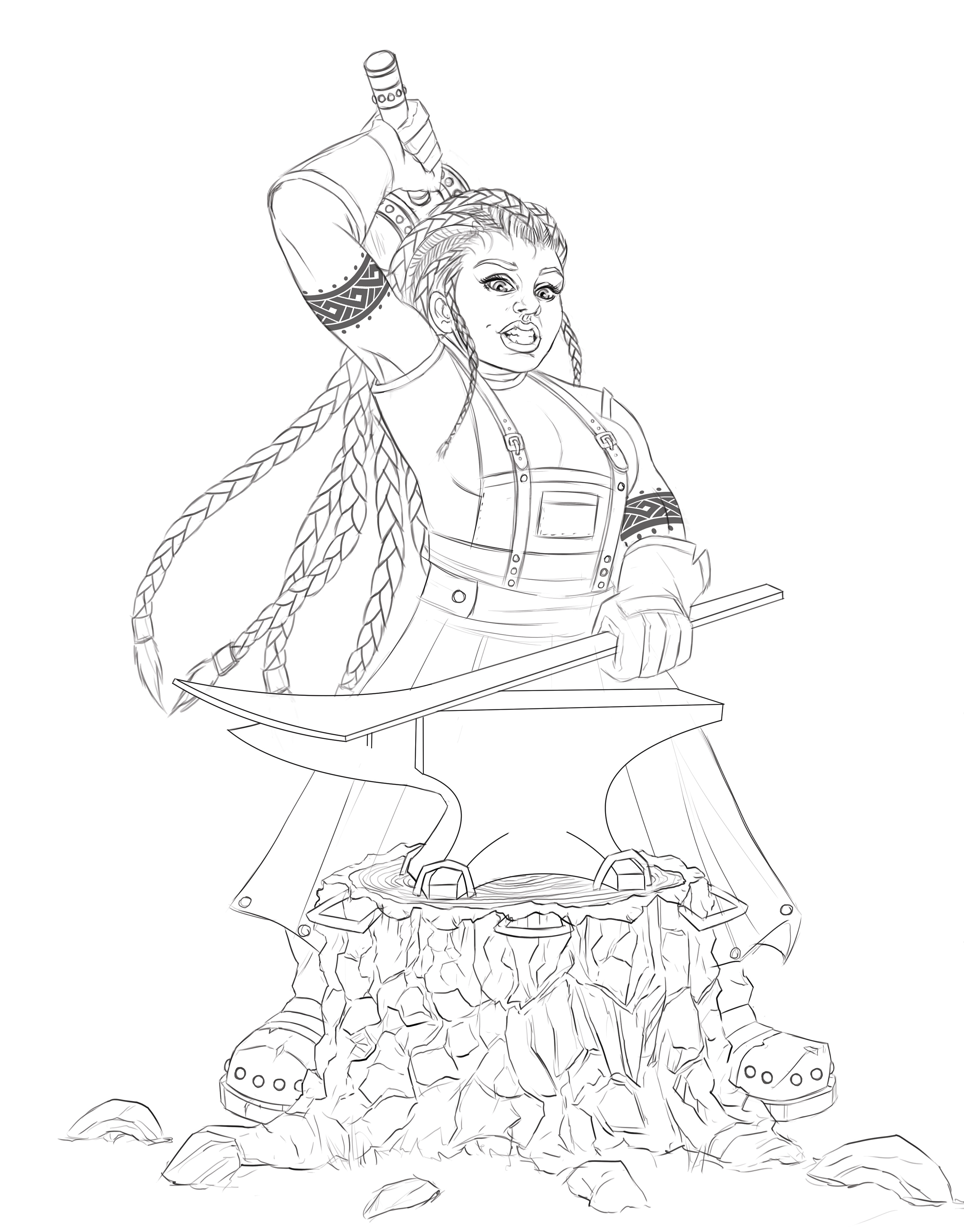
Within these abodes, the hard working nature of the dwarves is prevalent in both male and female members of the Underkingdom; an egalitarian approach to society is the main employment of direction. Female dwarves do not shirk away from good honest work, and can be seen doing nearly all work that their longer bearded counterparts conduct. There are less female dwarves than men to a noticeable degree, or outsiders seem to not be able to tell the difference oftentimes. Dwarves pride themselves on their loyalty to family and friends, as well as those they are indebted to. Rough around the edges, but most are instilled with a dash of wit and dry humor. It is not unheard of to be conversing with two dwarves, only to have them say a phrase in their native tongue and smirk amongst the two before going back to business.
While the dwarves may be a small folk, their creations stand tall and ageless. From the soaring heights of their halls to their magnificent holds they carve out under the highest of mountains, all things dwarven are grandiose in their own right. Dwarven creations stand for centuries, and this craftsdwarfship applies to their main trades as well. All of their creations tell stories as well. Weapons tell stories, scars, tattoos, the stones themselves if you'll listen.
The most common trades within the dwarven civilization are those of craftsdwarfs. Many times more valuable is a work that comes from a dwarven hold than those of other racial settlements, with a skill gained from longevity and entire cultural focus spurring on individual and racial skill. While being excellent craftsdwarfs, the dwarves are also proud warriors and thinkers. It is well documented the extent of dwarven technological prowess, always ahead of the innovations of those on the surface. Advanced metallurgical practices as well as steam pipes channeling blistering vapors throughout their caverns is a common sight for the dwarves.
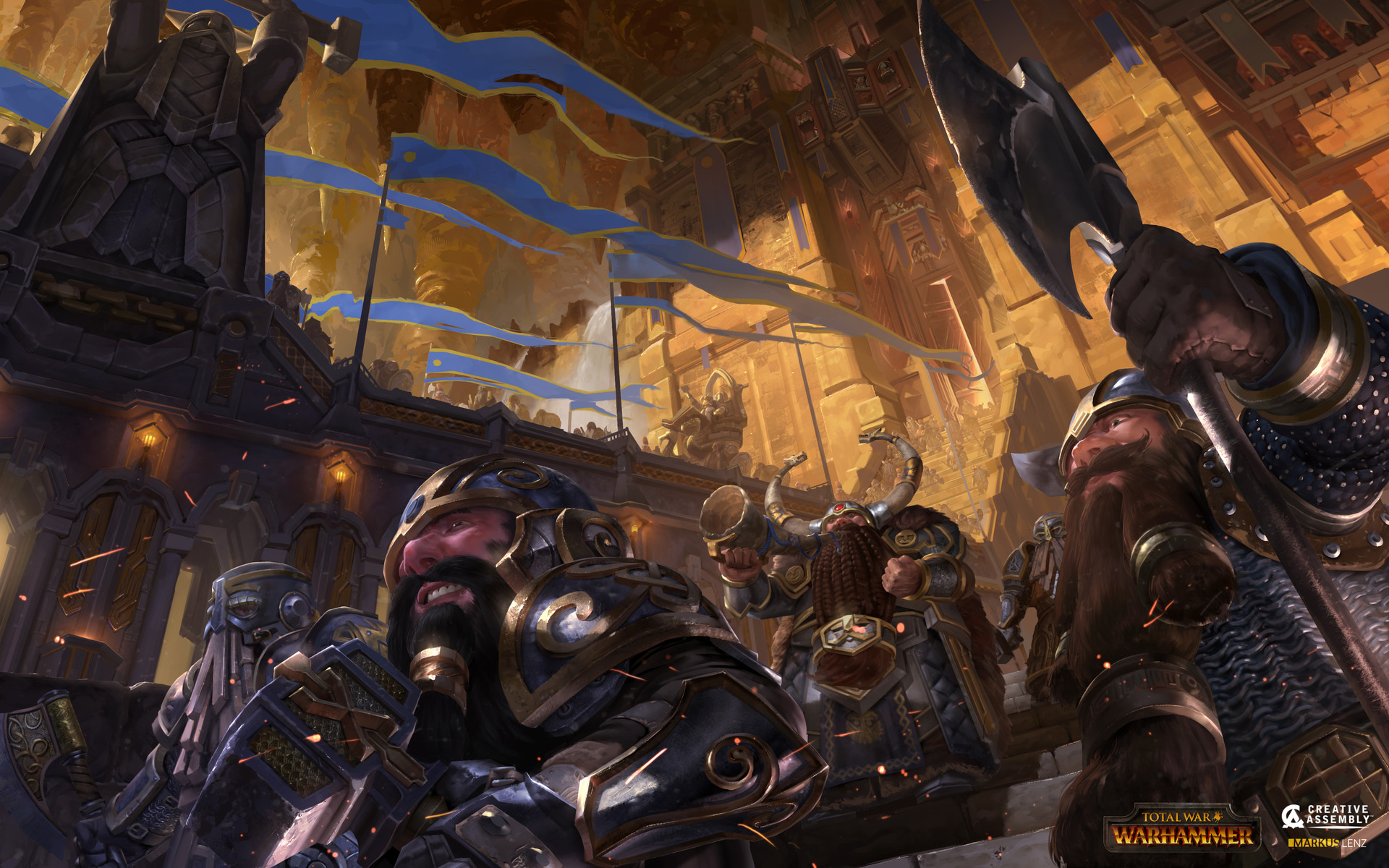
However, in the dire situation that a war is brought to the Chamber’s attention, all able bodied dwarves make up the composition. Rather than leading from behind lines, the clan lords and Underking himself lead the assaults on foes that may dare throw themselves against the towering walls of cold and unyielding stone. Adorned with heavy armor and often spears, the slow moving throng fight in the name of their forefathers to protect and to defend. With all of these factors in play, dwarves have survived countless attempts at snuffing out the forge-fires of their lives, and their unbreakable bonds of kinship make them a unified people.
Religion
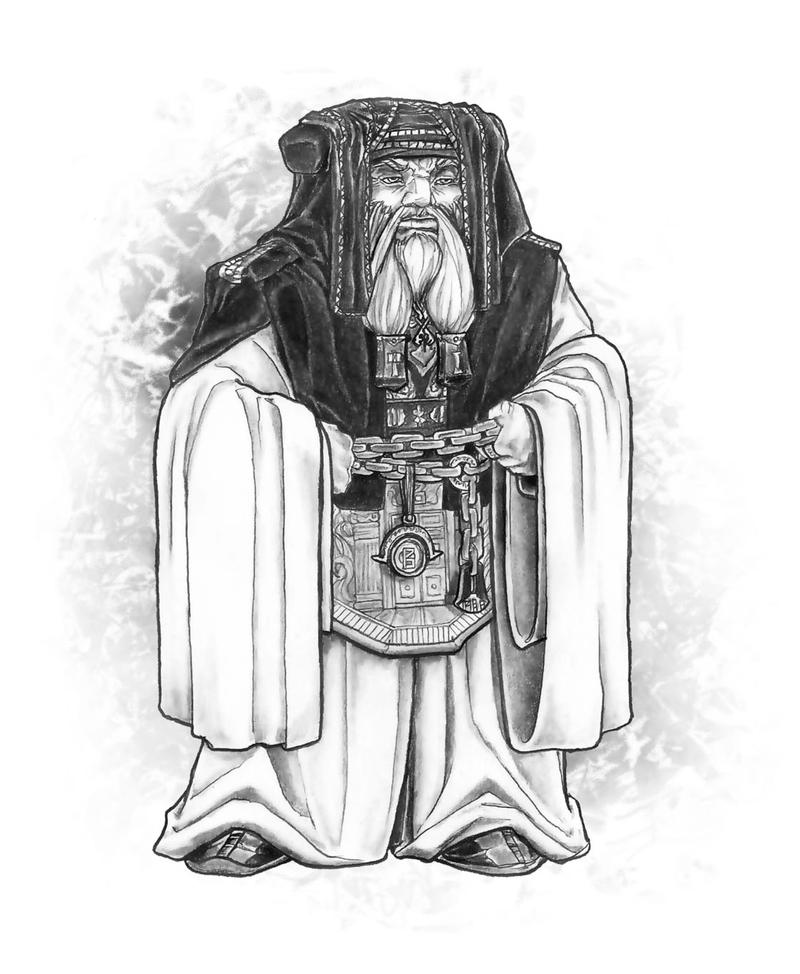
The Dwarven faith has changed throughout history only once; the beliefs of the Dwünīr as stalwart as they are. Prior to the unification of the Dwarven people into one body at the Khazgan mountains, dwarves worshiped their creator Mahal, a great primordial being they called a Titan. Following his removal from the world in the Umbral Binding, the dwarves turned to worship their new pantheon of Ancestor Gods, dwarves who were larger-than-life and mythic indeed, nearly godlike in respect in life and ascending to godhood in death.
The Dwünīr of Vae Kinkharum faith do take heed of the greater beings beyond their ascended kin however, with a Greater God ruling over the pantheon. Known as the Mother Death, the ultimate dwarven god is referred to in the dwarven tongue as Ust, embodiment of the final stillness. To the dwarven Vae Kinkharum and all that worship, Ust is best represented as a great insect with many legs, residing in the astral expanse, and acts as the final stasis that all dwarves meet. All dwarves who meet their demise are thought to be plucked by Ust and placed in the night sky as a star along with their ancestors. Those who lived the more glorious and honorable lives burn the brightest in the night sky, with the Ancestor Gods making up the brightest star in various dwarven constellations. While the dwarves mainly stay underground during their time in the Underkingdom, a visit to the surface while the oppressive sun has receded gives sight to a dark sky more familiar to the darkness of the caverns, and often evokes religious or sentimental emotions.
While Ust may sit above the pantheon of Ancestor Gods, the Ancestor Gods receive far more worship amongst the Dwünīr people. The ancient dwarves of the Khazgan mountains praised a set number of Ancestor Gods that are still in worship today. These were a set of Dwarves of yore and legend, who in many ways embodied a certain aspect of core dwarven ideals; once great Dwün who had lived a virtuous life and perfected their craft or skill greater than any before them.
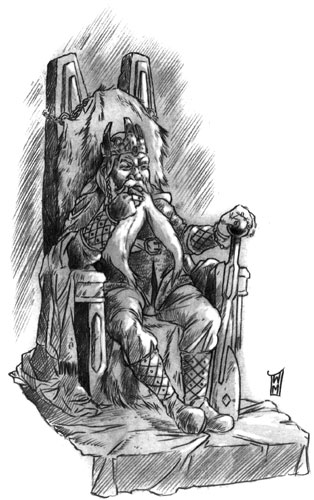
Ovaz- God of Stone, Mountains and Civilization.
Duerdin - God of Battle and Combat
Zirilashok - God of Rune, Shape and Knowledge
Kraltala - God of Meddling, Mischief, Trade and Avarice
Kurtan - God of Hearth and Home and Feasts and Ale
Gromzimbul - God of Exploration and Mining
Kronazul - God of Metalworking
Frimdun - God of Work and Art
Mahal - A Titan, not an Ancestor God, who created the world, not worshiped by modern dwarves.
Ust - Greater God of Death, Stasis, and Finality. Not greatly worship, only venerated.
Worship of the Ancestral gods comes in the form of venerating their name through both word and deed. Devout dwarves going to war against other clans or outsiders call on Duerdin the God of Battle for his blessing, and stonecutters praying aloud with cobblers as they lay the foundations to new aqueducts and roads. Dwarven places of worship mirror their architecture: extravagant. Their windows of temples are adorned with lavish windows of fire agate or white chalcedony, all contributing to the adulation of their ancestors. Acolytes and unordained alike come to the temple of both individual and group shrines, with clans often having shrines erected upon their lands or within the hold.
While dwarves worship their Ancestors far more than they do Ust, veneration for the Mother Death comes once a year in the form of The Remembrance. Often together with their clans, dwarves of all walks of life come together and make a procession to their clan crypt, in which the body of their ancestors are kept along with their riches. There the Clan Elders recite the history of the members of the clan that now hang in the sky as stars, praising the name of Ust as They allow the dwarf’s forefathers to reach the final stillness.
As for the creation of all things, the dwarves have a simple creation myth. In the time before, when the dwarves were unruly and wild, they lacked souls. Groups of soulless dwarves ran rampant, unkempt and harboring undesirable behavior for ages, during what is referred to as the Time of the Warlords. As time went on, the soon-to-be Ancestor Gods would do combat with Mahal the original caretaker of the dwarves, and then be whisked away into the heavens above. There they sat with the stars, and Kronazul, Ancestor God of Metalworking, met with Ust. Ust noticed that these new Gods were lacking a soul as well, and pointed them to the stars. Of these stars did the Ancestor Gods fashion their souls, and Kronazul took one extra, though not for himself. He was to forge Ust a gift for providing so great a blessing unto the dwarves; this he forged upon a cosmic anvil he fashioned for himself, and the sparks of such a monumental forging session fell down onto the world, filling the hearts of the dwarves of today. In this fashion did Kronazul become the Soul Smith, creator of dwarven souls, and Ust enter unto dwarven worship.
When Kronazul gifted Ust this glorious gift, Mother Death declared that He would provide passage for all dwarves unto the heavens, and that they too would be able to join their Ancestors in the stars above in eternal rest. There they can join fallen brethren and kin in eternal paradise within great holds of the Ancestor God whom they most worshiped. Eternal feasts, endless ale, and a resting place for craftdwarves where one can make an honest living for eternity.
Some dwarves claim that Ovaz created the world itself, and later came unto the material plane to lead the dwarves into the age of civilization, but this does not go over well with interactions with the Empire of Man. Pervasive in their language is that their gods carved the world out of raw stone, "in ancient years" through grueling ages.
As for the greater beings of the realm such as Spirits and Gods, each dwarf has their own unique vindications, but share common beliefs. The world-shaping and breaking Mahal was revered with awe and fear, Ust and the Ancestor Gods deeply worshiped, and all other Gods are usually thought to not exist until proven otherwise. Some dwarves believe that other culture's gods are just interpretations of their true gods.
Agriculture & Cuisine

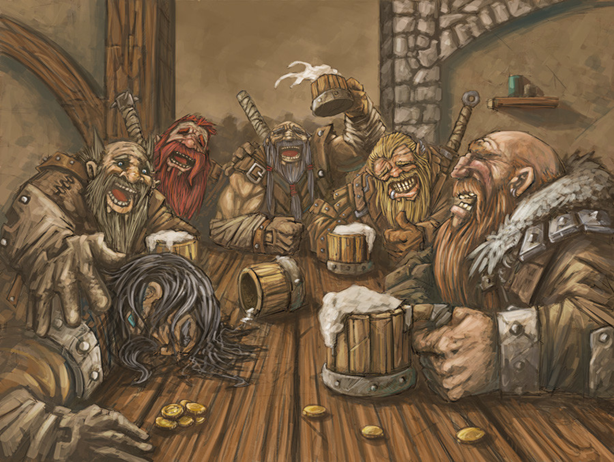
The current diet of dwarven cuisines are those of meats both of sky-side and under the mountain, along with grain in copious amounts. Underground mushrooms and beetles and bugs have been bred to supplement the lack of sky-side production of the dwarves, and make their way into a prominent place at the banquet hall. However, the most important of all aspects of a dwarven diet is beer. Dwarves drink all alcohol varieties as if they were water, and have an uncanny ability to never get drunk from their imbibing. Such is the dwarven demand for beer and ale, that the wider world knows of at least 47 unique dwarven words to describe aspects of their favored drink.
Underkingdom cuisine once consisted only of flora and fauna that have adapted to subterranean life. Mushroom mash, Quarry Bush leaves, stews and broths of various lichens and bug meat were the major constituents of dwarven diets until the first human trading caravan met the great runic gates of Khazgarim. Fortunate does not accurately depict the dwarves who first devoured a cut of cattle; some myths told by dwarven gossipers recounted the dwarves stealing all of the remaining food off of the caravan’s stocks for themselves. After this occurrence, specified dwarves were tasked to graze all manners of beast, from fowl to herding beasts to fat creatures that lay close to the ground. These new meats were added to the sky-side imports along with grain, and have remained staples since. Dwarven pasties are iconic staples in the working dwarf's diet as well, baked by their wifes out of bread and stuffed with sometime sweet like a fig on one end and meat and potatoes on the other, rolled on the bottom with a gripped texture so the miners could hold their meal and throw away where they held to the rats.
Just like the dwarves themselves, beasts of burden aid their grand designs. The most prevalent of these is the bearded beetle, a massive bug larger than cattle, which lugs great loads of stone and timber for dwarves. Their eponymous title comes from their feelers that grow from their chins, feeding off of the ground as it goes.
Architecture & Locale
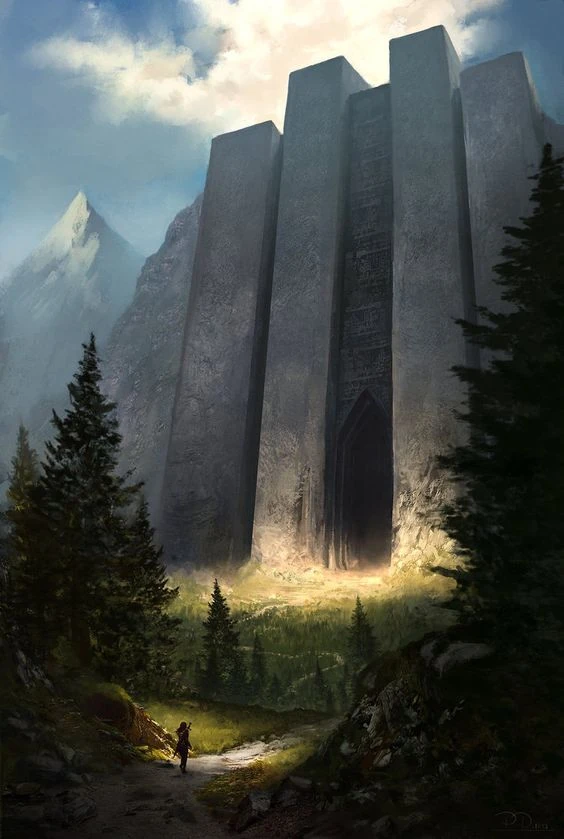
Dwarven architecture is almost always entirely of stone, and marvelously grandious. Carved out of the rock itself rise towering pallisades and fortresses of impenetrable craftdwarfship that has been the culmination of generations. Prominent patterns throughout all dwarven architecture is the incorporation of squares, right angles and knotwork.
Motifs of dwarven construction and decoration include a copious amount of ancestral faces adorning bearded axes and hanging over the entrance to a hall. It is commonplace for a bridge to be supported with the lineage of the clan who constructed it, to have the ancestors guide their footsteps. As a sure-footed and stoic race, they are fond of the stable shape of a square, and find it to be the ideal construction motif. Where circles never find a balance without rolling, squares define dwarven knotwork and artwork prominently. They also think poorly of anything that comes from above, such as stalactites that could fall, or the vastness of the skies above.
The dwarven folk have had a long history tied directly with the mountains they call home. Such is a superstition that a dwarf cannot be far long from his mountainhome lest he turn to mud and seep back into the soil from which he was formed. While this is mostly a myth, dwarves are hardly ever seen outside of their mountains or infrequently in hillocks.
Government & Social Hierarchy

There exists 3 bodies of dwarves, called Underrealms. They are the Underrealms of Azbar, Khazgan, and Hûzvok. Each of these consist of Minor and Major Holds, with the Great Hold being the capital of each Underrealm. Each Underrealm is ruled by a Lord, and these Underrealms also consist of the 3 dwarven cultures. In the holds of Azbar live the Glassaxes, and in the holds of Hûzvok live the Rimebeards. Central to all three lies the Underrealm of Khazgan, which the Ironfists call their home. The Grand Chamber is the legislative body of elder dwarves, Guildlords and other officials that dictate the direction of the Underkindom with the Underking at the head.
In the Underrealm of Khazgan, the seat of the Underkingom of Khazgarim lies, which unites all three Underrealms under one banner. This is ruled by the Underking, which all dwarves swear allegiance to, and all Lord report to. When times of war arise, the Underking calls on all the Underrealms to fight alongside each other, and also demands that all dwarves get along.
On an individual scale, there exist the age-based hierarchy of Beardling, Longbeard, Greybeard and Whitebeard. Outside of age, within families and Guilds exist Elders, which are those who may or may not be of higher age, but are of longer tenure in an organization.
Weapons & Military
Music & Art
Magick

Dwarves are believers of what they can see, rather than the ethereal. This goes for magickks as well, and a dwarven magickian that practices anything but Runeforging is a black sheep. While they are not persecuted (in recent history,) dwarves usually do not trust magick of any sort, and tend to stay away from it, preferring more mundane means.
Simply put, most dwarves believe that all magick, except for Runeforging, Golemancy and select Thaumcraft that depends on the fickle whims of the particular dwarf, is to be shunned. This is not a hard rule however, as it is not unheard of for dwarves in trying times to ally with magickal users for a short time, but to learn a magick is to bring shame upon one's Ancestors, and to be a blight upon one's Guild. A dwarf in ideal circumstances would avoid magick users, lest the Inquisition rise again. Dwarves who are particularly zealous will inscribe the Rune of Mind, devised by the Rimebeards, into their skin. This rune incentives the abstaining of casting magick, as doing so will turn the caster into stone with repeat casting.
Uniquely, Umbral magics and other dark arts are not viewed any lesser than the other types of magicks. A dwarf from the Ironfist lineage will be just as likely to ally with a Tyrant, than a Templar.
Magicks within the Tradition of Thaumcraft are adored and coveted by the dwarves, in spite of all other magickal beliefs. These magicks are tied to work and crafts, which appeals to even the most prudent dwarf's sensibilities. Alchemy, for example, is occasionally seen in dwarven circles.
Some dwarven mages in the past have earned seats of respect amongst dwarven minds, but they exist as outliers, rather than the rule.
Others
"The stone underfoot bears more trust under pressure than the fickle mortals of these lands."
Dwarves: All dwarves who hail from either of the Underrealms are to be respected. The bonds between dwarven clans and families are stronger than Kronril.
Elves: Elves hold the greatest number of wrongs on the Wall of Wrath, with the woes of the “Knife-Ears” impressively documented. Surprisingly enough, Dwarves were once cordial friends with elves until a variety of wars, and the last friendly king was the last ruler of the kingdom before it fell, which modern dwarves recall with superstition. In any case, no elf, Sun Star or Moon, is to be trusted, with some radical dwarves viewing elves as KOS. The rest will likely find elves to be intolerable to be around.
Humans: The average dwarven response to humans is that of annoyance. Being the new mortals on the world, humans have a tendency to act as if they know best, and blunder their way into inconveniencing dwarven plans. In terms of the Empire of Man itself, there have been times of great war, and times of meaningful alliances between the two peoples. Dwarves are well aware that while Humans have good relations with the dwarves in recorded history, the Empire would gladly steal dwarven inventions and incorporate them for their own use. Beyond this, it is up to the particular views of the Underrealm the dwarf calls home to make their opinion on human peoples.
Conclave - Mer: Responsible in part for the downfall of their Empire, most dwarves refuse to work with any and all Conclave, and are actively antagonistic to most of them. In locales where the two races are separated from their main cultures this can vary, with sparing accounts of the two races working out their differences, but this often does not happen for the stubborn dwarves. Rather, an axe will suffice in righting one of the greatest wrongs. The willingness of a dwarf to work together and even be amicable with a Mer depends on how much blame the dwarf places on the Elves for the actions of Mer. In times long lost to history, Mer and Khazgarim were on far better terms, even sharing their secrets of Golemancy with their past friends. Those days are gone, and many dwarves are filled with disdain when a Drume is in sight.
Conclave - Ophidian: Dating back to the Age of Scales, the dwarves know of these beings as shock troopers for the Draconic host. Many dwarves have lost their lives in attempting to slay dragons or drakes, and some still remember tales of Ophidian races being directly antagonistic in ages gone by. It is variable how a dwarf will act towards these races, though often they are met with xenophobia and hostility.
Naming Conventions
The names of the Dwünīr are short and harsh. Though some dwarves of ancient noble blood carry ancestral names, which are often softer and slightly lengthier. A dwarf often will not carry a family name, unless it is of noble lineage in which case it will be in the ancient dwarven tongue. Though when a dwarf has gained their renown, it is known for them to be given a name suitable to their personal prowess, whether in craft or on the battlefield. This is a stark contrast from the Ages before, where names were already given upon birth to respect their lineage. When a dwarf earns their surname in modern times, they know it in both common tongue as well as dwarven tongue; the latter they keep secret to surface dwellers in most circumstances, unless they are persistent enough to earn a Dwün’s trust.
Noble lines of dwarven names tend to have 3 syllables, while common names have 1 or 2. This is not a hard rule, but a general guideline.
Of note: most dwarven names end in "of [paste-tense verb][noun]" but those which have gone down in history as venerable figures replace their names with "The [Noun]" or "The [Verb]", denoting their significance. This is a loose rule, and not always followed.
Male Name Examples:
Common: Fim, Borr, Raff, Vimbur, Barin, Torik, Nar, Khanir, Grumnir, Hjalmar, Grom, Thrain
Noble: Gimulthaz, Forobin, Urfimbar, Zimulkaz, Farimbur, Torinfol, Chaduzal
Female Name Examples:
Common: Lis, Frecka, Rosin, Feris, Brindi, Nari, Eran, Urglun, Hjalra/Hjala
Noble: Ezelbur, Frerinror, Razalin, Brezinel
Surname Examples:
Of Sloughed Clay, of Polished Granite, of Frosted Hand, of Gilded Beard, of Bronzed Belly, of Felled Foe, of Sharped Scimitar, of Cut Citrine, of Stacked Silver, of Great Beard, of Long Axe, of Ireful Fist, of Settled Stone
Important Figures
Thoragan of Mighty Hand (later Thoragan the Mighty): The First Underking of the Underkingdom of Khazgarim, Founder, waged the last war against the Ophidian foe of the north during the Age of Scales.
Fulgrimor “Kathakaz” of Heated Hearth, Lord of Khazgarim: Lead the campaign that retook the first incursion into the Khazgan mountains by the Empire of Man invaders.
Volric of Strong Rock: A humble miner who first discovered iron and its use.
Horomir Verezhok of Annealed Bronze: Noble dwarven intellect who discovered bronze alloy. The Horomor Institute of Metallurgy was founded in his name.
Khuzkum of Sloughed Clay: The most prominent Warlord of the Age of Quenching.
Ovaz the Honest: The first united leader of the Khazgarim civilization far before it was a Underkingdom, uniter of the dwarven race, put into power by his political prowess and silver tongue, setting into motion the global power of the eventual Underkingdom of Khazgarim. He would later ascend to become an Ancestor God along with his Chamber, as Ovaz the Father.
Bortun the Black: Dubbed for his retention of his black beard while being at the age of a Whitebeard. It is said that a single sprouting grey hair was found in his beard at his deathbed, and that his black hair was a supernatural gift which kept him alive all these years.
Emperor Rhuen of Frosted Beard: Ruler of the Dwünīr Empire in the ages of yore, and led the dwarven hosts to the greatest peaks they've seen in their existence. His tenure began as harsh ruling in his earlier years with fierce expansionism, which mellowed out in his later years as a Greybeard. Slain in the battle of Azril'du'Zarak, and is venerated as one of the greatest Ancestor Spirits that are not the Ancestor Gods. Hailed from a small Hold of Hûzvok, and died as the final Dwarven Emperor.
Legends & Myths

The Worldshapers: Gauntlets said to be able to shape the world as one sees fit, and bear a strikingly similar profile to that of the Titan Mahal, who the dwarves believe to have shaped the earth. Utilized by Khuzkum of Sloughed Clay and Ovaz the Honest to finish the Time of Warlords and the Age of Quenching.
Slaughter of the Subterranean: Leading up to the fall of the Dwarven Empire, a frenzied Archdrake referred to as the Deep Beast laid waste to the entire dwarven throng, requiring whole armies from all of the Underrealms to be quelled. This happens to be the only recorded account of an Archdrake being slain by mortal means, and causes many disputes amongst scholars who claim the Ophidian to simply be an unnaturally empowered Dragon, rather than an Archdrake.
The Elven Alliance: A fabled period of time in which the dwarves were genuinely allies with the Luari. This came at a time where the Dwarven Empire was at it's strongest, and the Elven Nations were soaring. If this myth is to be believed, this is the first and last time the Dwarves and Elves were on more than cordial terms. Many cannot believe such a story, due to the current state between the races.
Mahal, the Titan: Fabled to have created the Dwarven people, or the world itself, this mythological being was said to have been bound by dwarven magickians in the Umbral Binding, though where (or more importantly, how) is entirely unknown. Some fringe cults of dwarves practice heretical Cubigony, the worship of Mahal and the tribal ways prior to the Underkingdom...
The Great Rune Wall: In the dire times of the annals of Azbar's founding, and when the Mer Menace spurred on by the conniving Sun Elves, the totality of dwarven might banded together to create a miracle to save their kin. Stacking stone brought by great beetles of burden, a wall was built between the capital Lorundar, and the rest of the Aranthas Desert. Laden with enchanted runeforged magicks, the wall still partially stands today, protecting the Glassaxes just as it had once before, though the Chaos Incursions have leveled much of the wall.
Festivals & Holidays
Beyond the central festival, dwarves still celebrate unique traditions and festivities unique to the Underkingdom. Most if not all trace their origins to clan practices, and are nearly always in worship of the Ancestor Gods. Along with all the festivals and holidays found in the separate Underrealms, Kingdom-wide celebrations include:
Day of Remembrance
During the Dominion of Dawnstone
The oldest tradition of the Dwarves of Khazgan is the art of remembrance. Stories and lore passed from father to son, mother to daughter, for generations since their race began. The memory of the Dwarven people is crucial to its survival, if all their knowledge and craft was lost to them they would be naught but stunted yet hardy fools. In times of old, there was an order of remembrancers, who held all knowledge and wisdom of their race, as well as many secrets of their mortal counterparts. It is said this order remains to this day, though no tall-folk have ever heard whispers of its existence. What remains today is a celebration to memorialize the great loss during the Age of Quenching where the Dwarven Warlords were united under one banner, at great cost to dwarven lives. The festival honors Ust for His service in taking dwarven souls to the skies above as stars, often symbolized with floating lanterns.
The Great Unkegging
During the Dominion of Eye's Mirth
A monumental day for the dwarven Underkingdom, in which alcohols of all makes and tastes are uncorked after possibly centuries in a grand flow throughout the feasting hall in a river of drink. It is a time to be merry and to dine on great meals. Competitions for both alemakers and aledrinkers are common on this day, as well the dangerous task of blind tasting dwarven brews, of which outsiders are heavily discouraged to not partake in, for their own safety.
Dwünsmas
During the Dominion of Icewind
A holiday with sour roots best lightly mentioned, this is an aptly named giving of gifts forcibly started upon the Underkingdom of Khazgarim. Wise Dwarves of the Austral South were demanded by the Empire to bring gifts to their king, to be symbolic of the Dwarves not being controlled by their greed. The Dwarves eventually turned this into an event where they would get gifts themselves as well, leading to what is now know as Dwünsmas. All races often participate, despite the name, and gifts flow from all cultures. It is custom to leave a small cookie in the shape of a sun within a gift's packaging.
History

Synopsis: In the ages of Yore, the dwarves were born and guided by Mahal, a great Titan in the Age of Quenching. This was a time of great bloodshed, with roving bands of dwarven warlords prevalent. This unrest led to the War of the Worldshapers, where a fantastical artifact shaped the destiny of the dwarves, leading their Ancestor Gods to slay their creator and being their journey as the Dwarven Underkingdom of Khazgarim.
Soon after began the Age of Annealing, where the times grew more stable, and the dwarves grew to their greatest heights. The majority of dwarven exploits are documented in this Age. The Dwünīr Empire was founded and many centuries later destroyed by the invasion of the Conclave, ending the glory of the dwarves.
Further details: To be located and rediscovered in-game.
Trivia

- Dwarves of yore threw up and couldn’t see if they went into the sun. It was a common practice for mischievous dwarves to be “sent sunside” as a moderate punishment.
- While not being able to see in the dark, dwarves are able to see through darkness much better than a human can. Living underground since their inception, their night vision is similar to that of a cat, even without a feline pupil.
- When dwarves look at the mountains and caverns, they believe that, as with all things, they and their ancestor gods are now in control of the world and how things should be. Always making their own fate. Literally wresting the godhood from the titans into their ancestor god’s own hands.
- It is unknown what Ovaz did with the Worldshapers once he founded the Underrealm of Khazgan. Some say that he offered them to Ust as an offering for his success, while others say he lost it playing Farkle in a tavern to a one-armed masondwarf.
- Clans died upon the fall of the Dwünīr Empire, but dwarves nowadays act “in the name of” or “glory” of said clan.
- The Age of Annealing is sometimes referred to as the Time that Was within dwarven circles, in a bout of nostalgia.
- The dwarves, in bouts of anger, often use the term Clinker for other races, defined as the waste material from smelting and forging. It is likewise believed that clinker, or the slag/dross waste from metal forging, is evil.
- After the fall of Emperor Rhuen, a common saying that has prevailed since the fall of the Dwünīr Empire is "Brumaz Azril'du'Zarak" which translates to "For Azril'du'Zarak", the fallen imperial capital of the dwarves now infested with rot and decay upon it's seizure by the Conclave.
- The current dwarven capital of Khazgarim has never fallen to outsiders, despite many attempts.

Written in part by Rhewen in days of yore.
Last edited: 7 months ago