
Mer of the Conclave
ᨆᨙᨄ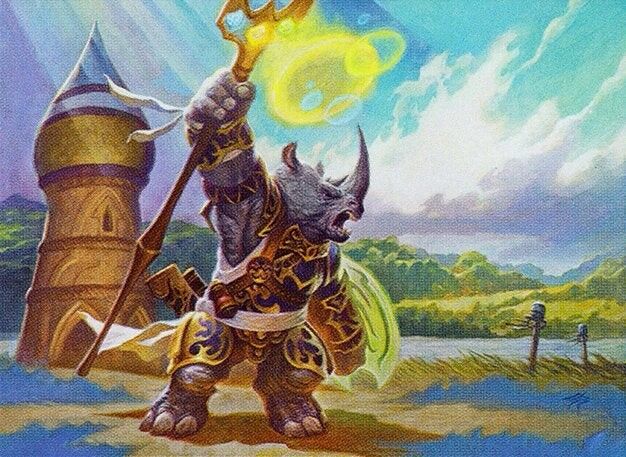
"Power without purpose is a burden best left to the feeble"
Synopsis
Seat of Power: Alqern, Arumvex's Foley
Part of: The Conclave
People Name: Mer/Mer (Kurvakant/Kurvakantar) (Singular/Plural)
Adjective: Merwin (A Merwin sword)
Religion: Vita'karn
Language: Jabarant
Introduction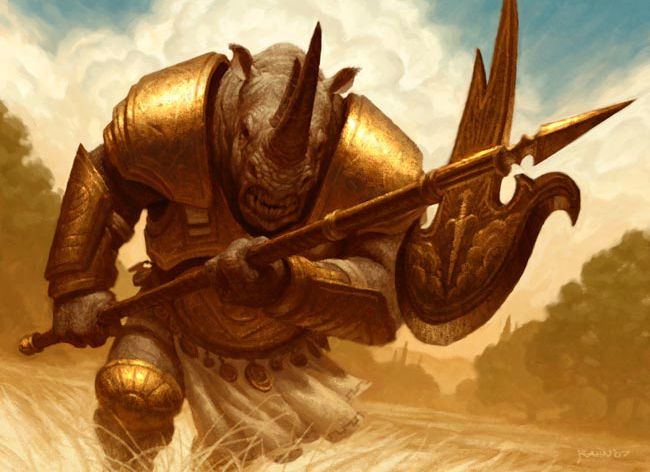
Of all the strange races that call Volantis home, the members of the Conclave are the most alienated. The Kurvakantar, or Mer, are no different; where most other mortals are similar to one another in their similar smooth skin, similar eyes, manner of speech and mentalities, the Merwin people are wholly different. Looming, powerful, and assertive beings, these rhino-like humanoids are often associated with war and destruction by some, but are known for their courage, heroic, ambitions and pride by most. Mer strive for challenge, and most importantly, victory, even going so far as to worship it.
Mer are fully aware of the disdain the Empire and Solarate spread, and in their defense will simply say they are not nearly as evil as many demonize them to be. Evil or not, the actions of Mer have been tantamount to legend, standing at the forefront of some of the continent's most critical moments. Most notably, they commonly attribute their actions and that of their leader Red Horn as the key reason why the Doombringer was defeated in the Second Chaos Incursion, securing the fate of the realm's life. Nearly every people has Merin their pages of history; for better or for worse. Now, Mer are rising to peaks once thought lost to the passage of time, while most other peoples on the continent see unprecedented darkness in faith and country. What Mer will do with this advancement, only time will tell.
Physiology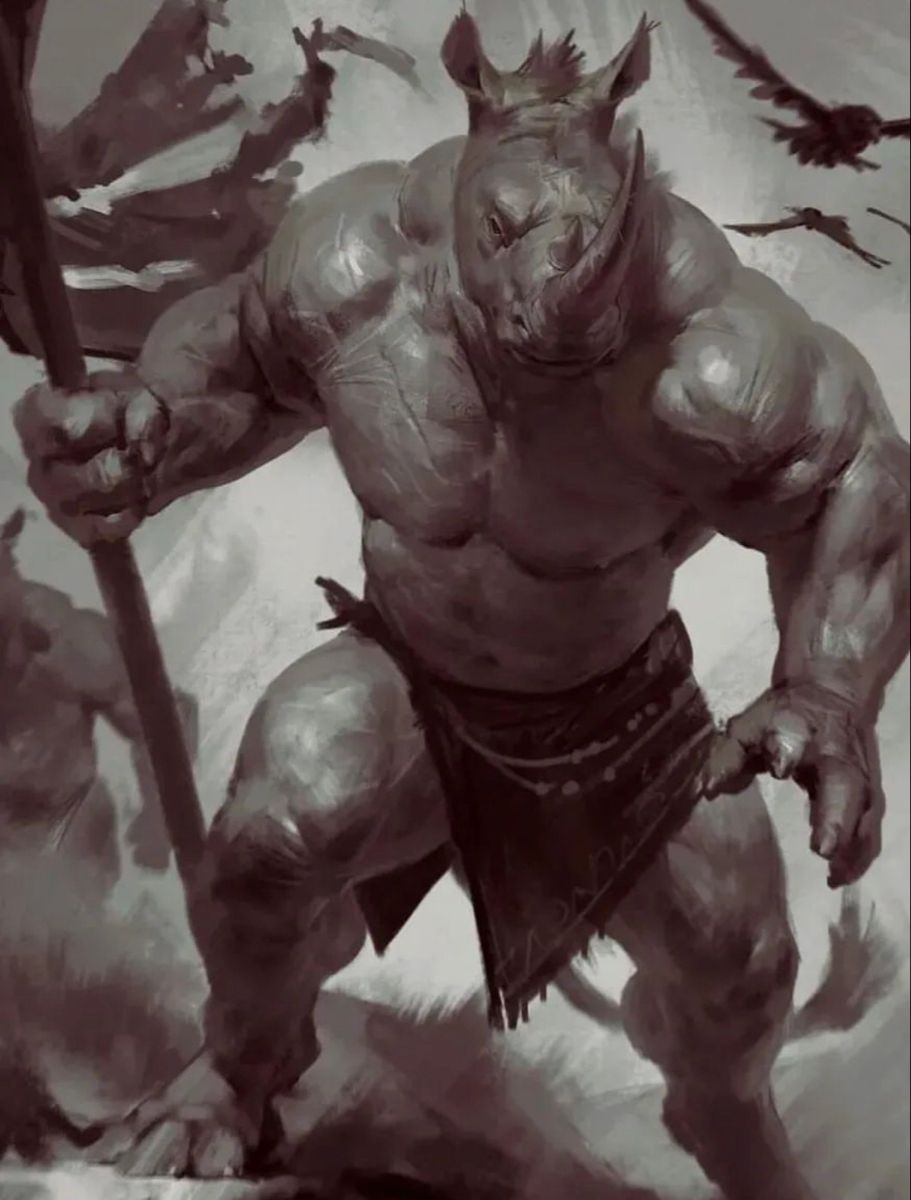
Mer are the largest mortals on the realm, standing at a staggering 7'5'' - 8' for males and 6'8'' - 7'10'' for females. Their thick stature weighs in at an average of 470 lbs, and 510 lbs fit for males, while 450 lbs is the average for females, and 465 for females who are more muscular.
Merwin skin, or hide, is known as rugose; much like that of the elephant or rhino as many will point out. Beware bringing this up, lest ye wish to be compared to a primate. Their skin is rough and tough, cracked and sparsely scattered with hair follicles. This thick skin is like leather, and often gets cracked and dried. Mer assuage this with special ointments, or if in a pinch, mud will do.
As for the color of their skin, Mer can be most shades of brown and grey. Females are a more muted green, while males are a more dull grey, and either can be shades of brown. Their eyes can be seen in many hues, such as grey, brown, amber, gold, dark red and both dark and middling hues of green. For a race that looks similar to a rhino, their eyes are rather human.
The body of a Mer is similar to that of a rhinoceros, which is what most compare them to. However, there are subtle differences that differentiate a Mer and a mere beast. First, the snout of a Mer is more flat, far shorter than that of a rhino's. The head of Mer is raised high on their shoulders rather than set forward and low. They lack the large hump of a normal rhino, and their jaws lack an underbite, with sharp chins for most and fatty gizzards for those who are overweight. At the top of their head is missing the large hump most rhinos have, being flat. Even more differently than the rhinos many compare Mer to, is their smaller foreheads, as well as the fact that their heads angle forward, rather than downwards.
Mer do not grow facial hair, or chest hair, or hair anywhere other than sparsely around their body. Their hair grows atop their head as well as their shoulders, with that atop their head being a hispid line that grows straight and out, stiff like that of a zebra. Most mer shave all of their hair off, or leave just the hispid line, like a mohawk. The hair is usually brown, and can be black, grey, ginger, and dark red. As they get older, it grows white, like most races. When they grow older into their life, a patch of stiff hair begins to grow directly under their chin, hanging down in an odd goatee.
Another defining Merwin characteristic is their tusks and horns. Males feature more prominent horns, thicker and wider, while females show short horns. Females are also the only Mer which exhibit tusks, growing from each side of their jaw backwards to their cheeks and further, guarding their face. Many females, especially those not in the military, will trim off their tusks, or keep them cut to nubs with ornate metal caps covering the stumps.
Their ears are flat and circular, and rather expressive. They are able to control them similar to many creatures, and usually display emotions subconsciously; flattening when mad, pulling back when scared, fully up and out when alert. They do not stand up straight, but at an angle, with hair at the tip.
Studs can be found in their lips, ears, eyebrows and noes, as well as septum piercings. Mer hands feature 3 thick fingers and 1 opposable thumb, while their feet are only 3 toes, one larger one in the middle.
Mer speak with a unique accent, replete with character. Their vowels are elongated and flattened, a noticeable drawl affecting their intonation. Their inflection rises much in their words, as if their statements are questions. All mer have deeper voices than most, and is more gravelly, guttural, as if there is water in their throat, though this is almost not noticeable in the youngers, and gets worse as they get older. ((OOC: Think the accent of australians, with the tone of the Cabal from Destiny 2.)) Also, in their native language of Jabarant, there are no conjunctions, and they do not speak such in the King's Tongue of Sarword. Haven't is Have Not, and Wouldn't is Would Not.
Mer teeth are more humanoid like the other mortal races, straying from the cud-chewing frontal teeth of herbivores. They also get ashy on their elbows and knees. Notably, they do not have tails. Their fables speak of a time where they did, though...
Fashion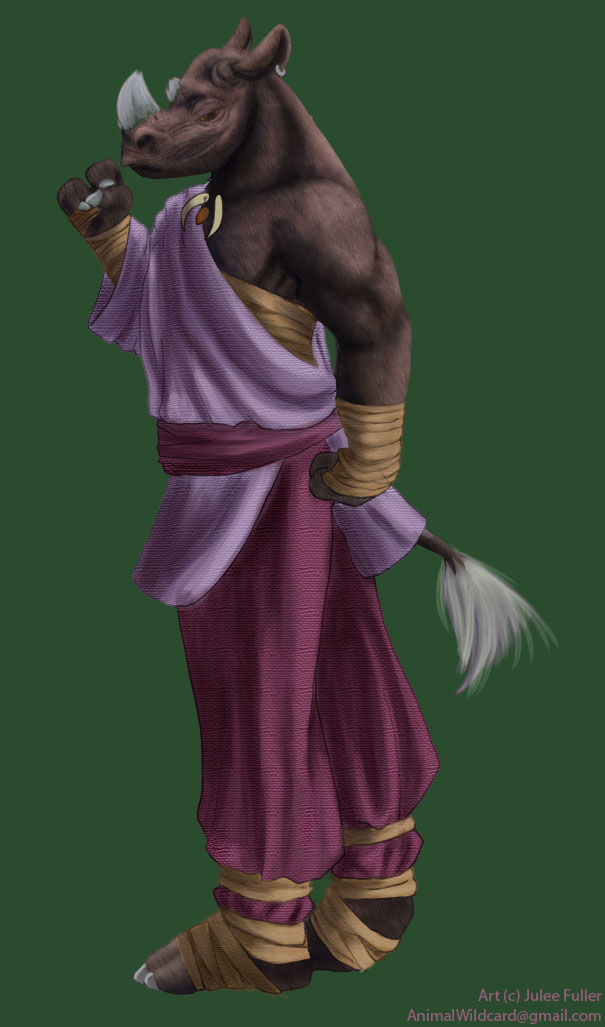
Contrary to popular belief, Mer do not wear their armor at all times. Rather, their cultural belief is that armaments should only be donned with the intention to use them. As such, a Mer only equips their gear when they intend to do battle. Most of the time, Mer are in their casual clothes.
Though they do not wear armor unless in active combat, they will almost always wear their Kamel'gaan, or Triumphs. These are traditionally made as tassels of leather and silk to show and remember their greatest accomplishments and victories. Triumphs are worn in and out of combat, and a sign of great social status. Those that have a great deal of Triumphs (who also happen to end up as leaders and political figures) often opt for a Sagum, a type of cape or cloak sewn with stories and experiences displayed proudly upon the fabric. Mer cherish their Sagum above nearly all else, and will go to the ends of Volantis to ensure its precious history is preserved.
The average attire of a Mer consists of a two-fold fashion; outer, and inner wear.
For outerwear, they us a number of materials, but weave them into a thick gabardine, a twill worsted wool. The rough skin of theirs necessitates a material that can resist abrasion and wear, something that the strong woven pattern of gabardine enables. It is tightly packed, and resistant to wear and tear, as well as water and creasing, which mirrors their own rugged natures. The gabardine is usually fashioned into robes and tunics, specifically togas which they dye a range of colors, which makes up the most common Merwin attire.
Leather is also a common outerwear, with fashionable civilian brigandine specifically fashioned for non-combat flair being a popular fashion choice these days. Leather straps, hooks, belts, loops, and pouches make their way into their clothes often.
For innerwear, a specialty material is employed, known as rock silk. This is a favorite of Mer, spun from Dhungo Putali, a moth from the slopes of Mount Stargon that was exchanged many decades ago from the Star Elves. Rock silk is a type of Tussore, a rougher silk known for its durability. Rock silk is most often dyed in a range of golds and browns and tans, which makes up the majority of medium to upper quality undergarments, scarfs and decorations in order to keep their large and bulky leather attire or even their wartime armor from chaffing and cutting.
Their favorite colors for their clothes are orange and brown, with reds and pinks being mixed in as a secondary. Tertiary colors include gold, black, white and red. Purple is seldom used, due to its controversial connotations with Divan, who employs the color extensively.
Surprisingly to the outsiders of Merwin homes, especially their capital of Alqarn, Mer do not wear shoes in their homes, and often in their homeland at all. They only wear shoes around others to fit in with other races.
The most prominent feature of them, mer love their horns. Males will sharpen them, whereas ladies like to put tassles and bows on them, sometimes even between their two horns. The females of course enjoy painting them, though often just the tip, or patterns, rather than the entire horn. Mer take pride in waxing and polishing their horns, but it is taboo to do so with others watching. It is considered a private act, and can be seen as primping for the day, and can come across as flirtatious to the opposite sex.
When they are able, the more wealthy Mer will incorporate Glazeplate or Zoro'lith into their attire. Zoro'lith may be found as buttons or small pendants, polished or raw, where Glazeplate is a more complex art of bell-crackling and make some of the most refined necklaces, amulets and other paraphernalia to adorn the rich.
Values, Attitudes, Taboos, Morals, and Beliefs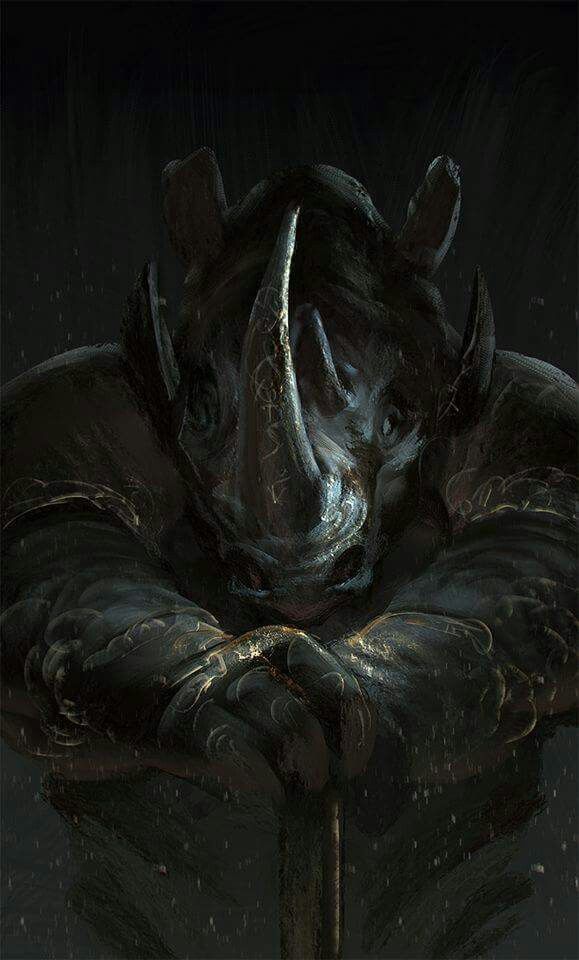
"Whatever it is that you do, it must be done with all of your might, and all of your heart."
Merwin philosophies and mindsets are simple; Be proud of your heritage as a warrior race, and worship the Brothers of Victory in all you do. The school of philosophy is what the Mer call Victorianism, and can be summed up as a single word: grit. Mer are willing to suffer through anything to achieve their goals. With a mindset set on victory at all costs, there is no other culture so hellbent on completing a goal. Such is their passion for completing their goals, that to do so is the greatest good one can do. So much so do they crave victory, they even expect it to happen; as such, mer will take to great theatrics to reach their goals, taking the unexpected route to complete a goal if victory is deemed too easily attained.
Outside of this, mer are surprisingly slow to anger, but they are also slow to peace. "A horn for a horn" is the common motto, explaining their cultural significance for retribution on those who wrong them, and their own duty to repay others they have wronged. Looming, powerful, and assertive beings, these rhino-like humanoids are often associated with war and destruction by some, but are known for their courage, heroic, ambitions and pride by most. Mer strive for challenge, and most importantly, victory, even going so far as to worship it. They’re very calm, though they will still jump head first into things and deal with the consequences later.
Victory does not only mean against others; the mer are surprisingly one of the most apt for self-improvement in their lives. Some may even call them ambitious in their endeavors of improvement in their lives, but rather they are uncompromising if they are convinced of something.
A cornerstone of merwin mindsets is dedicating one's self to a victory worth striving for. This is at odds with the fact that mer are not creative. They struggle with apathy; so many ideas fall before them, but they are all mundane. A mer strives for a true goal, one that brings out the greatest in each mer's heart. However, this ends up that they suffer from not finding many things worthy of dedicating their intensity to.
This is because mer are not creative. Mer love goals, but find it very hard to set them in the first place. They will devote themselves wholeheartedly to any task you give them, but don’t expect them to set their own tasks. Should a leader form amongst them with a truly worthy goal, all mer will rally.
Cursed with fits of apathy and disinterest, a mer may throw themselves into larger goals like wars or great deeds of valor, because they can easily fit themselves into something that will give them meaning. Some may even call them temperamental, or dramatic at times, possibly even suffering mood-swings, but a mer will simply say they live best when living a meaningful life.
Mer are also quite shortsighted. As they care only for the victory and the achievement of the task, they care not much for what happens after. This is not to say that they are unintelligent and unable to plan far out in the future, but rather they prefer to live in the present; the future will resolve itself. Today still needs it's own victory.
Combining this knowledge of a mer's deep care for victory, but poor ability to create goals to achieve victory in, it is established that enthusiasm is critically important to the Merwin people. Enthusiasm is fleeting, but while it is here, it allows even the most mundane of tasks to become great. It allows them to look forward to challenges and the dangers of life, even combat.
Mer believe it is their civil duty to remove those in power who are unfit. Whether it be a king, a ruler, a lord, a guild leader or even a medic at the local clinic, ineptitude is disparaging to them, and they will not be afraid to voice their opinions bluntly.
Mer also care much about respect, militant authority, and martial prowess. Honor and loyalty are core values, with individuals swearing oaths of fealty to their leaders and comrades. Breaking an oath is considered one of the gravest offenses to a mer, though not to such a degree as a dwarf.
Their culture is also obsessed with history, in a similar fashion to dwarves. Mer will inscribe stories upon ostracon, full pottery works, even their houses, to tell their greatest stories, both personal and cultural. Personal stories often find their way in the form of leather bands that are affixed to their attire or horns. Fundamentally, mer will never destroy a home their own or others, as they themselves write their stories upon them. To loose a part of history is tantamount to tragedy, erasing the past victories, and dishonors the story being told.
Mer take pride in waxing and polishing their horns, but it is taboo to do so with others watching. It is considered a private act, and can be seen as primping for the day, and can come across as flirtatious to the opposite sex. Another taboo is to have scars on one's back. To a mer, it is seen as fleeing from a battle, and running from your victory, truly disgraceful.
Not much care is given to the sides of Chaos and Order, though mer tend to be grouped into a more chaotic mindset, especially by those in the Interior like the Empire of Man. Mer do not think of themselves as very important to the world, but rather as a part of it. They are just here to experience what life has to offer, the good and the bad. They love to explore other lands as well, being fascinated by uncharted lands and frontiers, always striving to push their dominance further.
Mer are also not xenophobic, and contend with star elves as the least xenophobic group in Volantis. As mer are so different from others already, they know what it feels like to be ostracized from society and their neighbors, and as such welcome all to their lands.
The following are an assortment of merwin mottos:
"They have failed more times than you've tried."
"Fortune offers itself to those bold enough to reach out and grab it."
"If it is possible, consider it within your reach."
"The same blood, the same breath, the same fleeting daylight of every leader, builder of empires and conquerer before you, you have now.
"Strip away doubt. Step into courage."
"Do not look at others and say 'they are different.' Look at them and say 'they are proof.'"
"Every mountain climbed by another is not a wall to stop you, but a map to the path."
"Remember this. The limit of possibility has never lived outside of you. it has always lived in your own belief."
"Take the first step. The rest will follow."
Family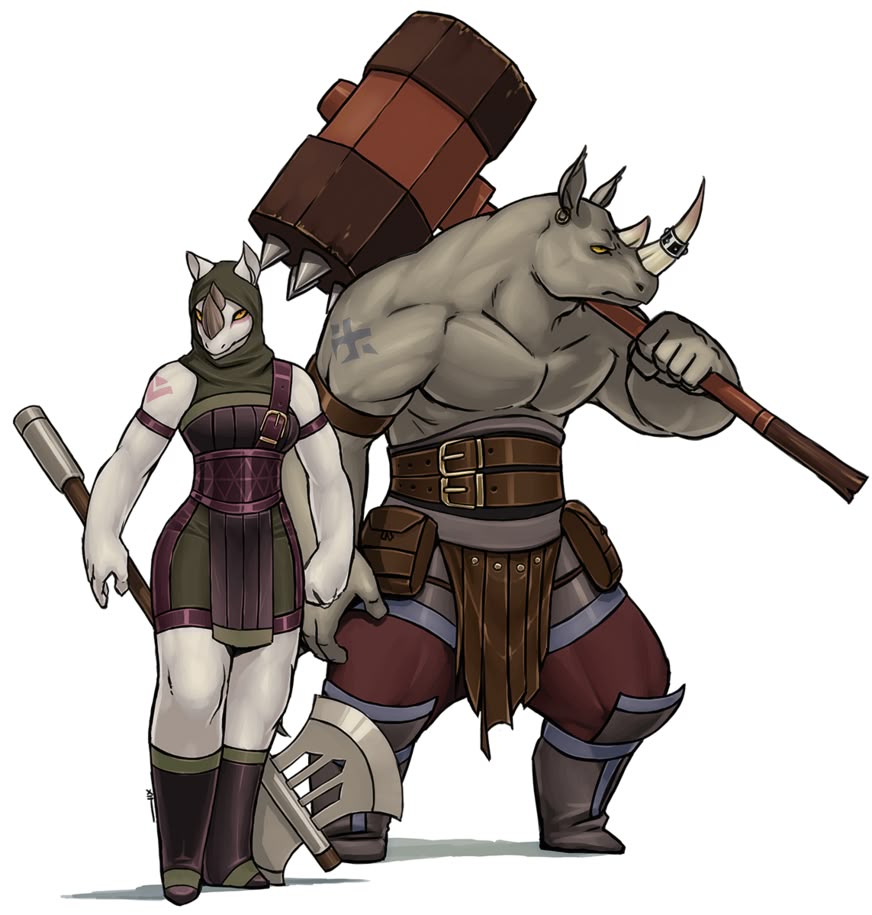
As different as mer are, their families are just as unique.
The right to have children is considered reserved for the strong. Those who are sickly or weak understand culturally that parenting descendants would not be in the best interests of their people. This is not always followed, and in the times it is not, social strife ensues.
Pottery is often done by females, but both of the sexes will gladly do it. The acquisition of the skill to create quality pottery is considered one of the requirements for entering adulthood, and a mother may tell potential suitors that their daughter is not skilled at creating pottery, thus indicating she is not of marital age.
Military work is done by both the male and female mer, with females not shying away from ferocious battles. Outside of military work, the males and females have their own designated roles. Males are often seen as brutish despite their intelligence, and tasked with more menial work and leading, while females are prescribed more scholarly pursuits and medical matters. Crafters and worksmen are often workswomen, though both sexes will work in the trades without any social taboo.
Family bonding features many aspects seen in other cultures, but also has a rougher side. It is common for fathers to send thugs to beat up their sons throughout the year, assaulting them, in love. Mothers will rarely put non-lethal poisons into their food they give their daughters, urging their kin to be on guard for such treachery in the world. Better to be tested and fail by your parents, than be tested by another and die for it.
Males love to wrestle with each other. Such is their desire to wrestle, that if two brothers are in a family, it is considered eerie if they do not wrestle daily in their homes. Uncles, fathers, sons and brothers all will throw down in a test of might, birthing rivalries both friendly and not so much.
Merwin families are usually large, with 2 children often the minimum a family desires before being satisfied, with the average sitting at 4. It is not unheard of for there to be 8 children in a household. This is acceptable in their society because the village raises the children together, allowing them to all be schooled, disciplined, fed and reared in one tribe.
When a child is expected, a Rannu'tlo'tl is made, which is a small jar of clay, fired and glazed with colors and symbols that are to represent the future child. Family members and travelers are allowed to place trinkets and gifts into the jar for the child to recieve in the future. When the child is born, the jar is either shattered, or kept as decoration, for either the parents or kept for many years until the child has a home of their own. It is a precious keepsake for many, and well guarded. To have your Rannu'tlo'tl break while the child is still yet to be born is a grave omen indeed...
School is very important for them, and is often abroad. Every couple of years, the class of young students will get together and be led off by chaperoning adults far off into the continent for upwards of a year to learn, study and see the world. When their studies are done, they can return home, and travel off to another land for the next year.
Work & Trade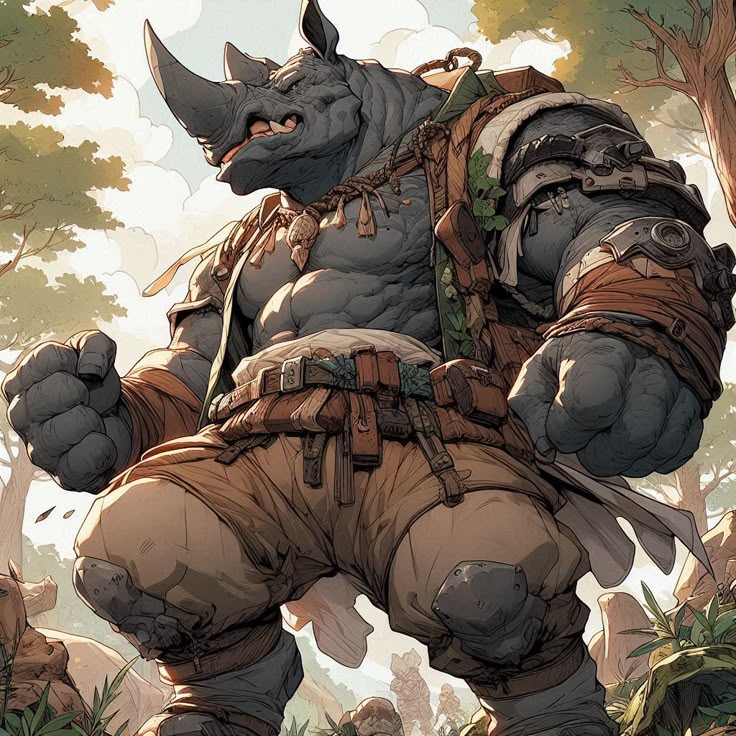
"What is virtue, if not tested?"
Mer are hard workers, when they can be convinced to the task. As they often lack enthusiasm, they will achieve their work and no more; while they are achieving this work, they try to do their best at it. Whether it be a diplomat, a apiarist, a trader, a ceramicist or a Drume crafter, mer are aggressively intent on completing their work. Mer rarely have the tendency to leave their work half-finished however, as they no longer see the need to complete the task, deeming it unworthy of their time. Beware the mer who is determined, however, as a merwin trader who is focused on meeting the month's quota is an aggressive trader indeed.
Many mer love to work on pottery, and those that don't adore works of pottery for all purposes. Tableware, water collection, jewelry, even their houses, merwin society uses much cermicware. It is even said that before agriculture was developed in Arumvex's Folly, pottery was invented. Agriculture was simply a means to put something on their plates.
Mer are very invested in the depth of their work when it comes to pottery, moving into a territory of art, which can be seen further in the section on Music and Art. Their culture harbors the most advanced potters and ceramicists in the lands, with their tableware mixed with minerals to prevent heat conduction, and their cookware contains other minerals and specific clay to make them heat proportionately.
Pottery is often done by females, but both of the sexes will gladly do it. The acquisition of the skill to create quality pottery is considered one of the requirements for entering adulthood, and a mother may tell potential suitors that their daughter is not skilled at creating pottery, thus indicating she is not of marital age.
Many materials find their way into the forges and kilns of the Mer, such as Emperium, which they use for most things. By far, the most precious three materials for them is Glazeplate, Zoro'lith and Ardent. Glazeplate is a variant of Teethstone, featuring red lines in the pale white ceramic rather than the golden fractures seen in Teethstone.
Zoro'Lith is said to be the bones of Zumrikhaul, falling from the sky as the refuse of where their god Rhazu slayed the Comet Drake, the god of the dragons. Whether this is true or not, the stone still falls, scattered around the lands in the form of meteorites, centering around the lands of Arumvex's Folly, for Arumvex is the name of Zumrikhaul in Sarword, the King's Tongue. Zoro'Lith is of great religious significance to the mer, and is incredibly hard, bearing a white, granite-like stone with red streaks throughout it's thermochromic body. If there is any Zoro'lith in the lands, or the sight of a falling meteor detected, the mer are swift in claiming the bounty as their own.
At the pinnacle of their adoration is ardent, the legendary red metal of myth, said to be the greatest metal in the land barring fulgurum. It was ardent that was formed from Rhazu's own blood, far more potent that the Comet Drake's. Ardent is what gave the infamous merwin warrior of legend Red Horn his moniker, as his horn was coated entirely in the divine metal.
Religion
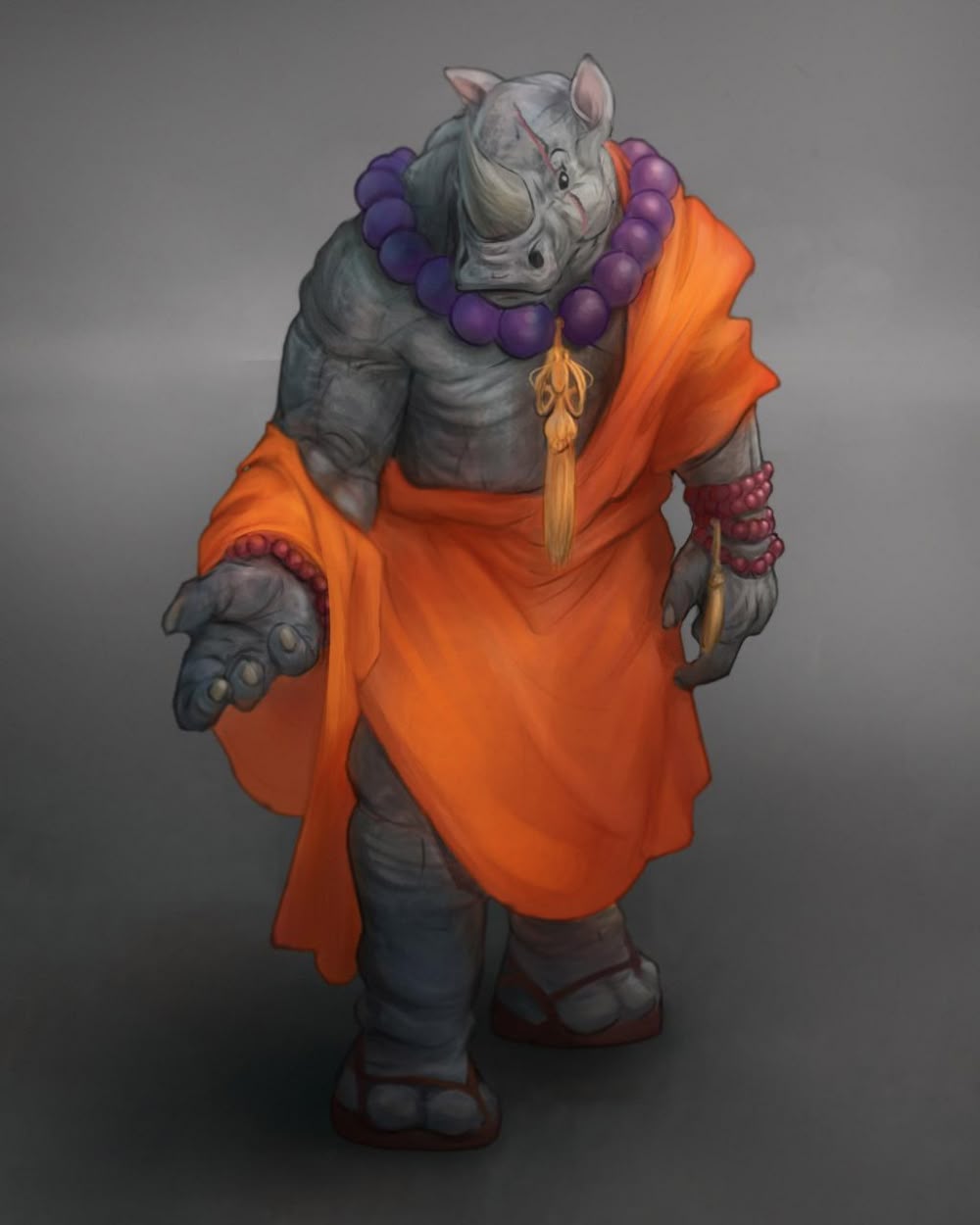
"A prayer that all will go as it must... and the way it must go, is struggle."
The merwin faith is Vita'karn, meaning "Victory March" in the King's Tongue of Sarword, and envelops their entire culture. Their beliefs are as such.
The mer do not remember a time in which they were ever elsewhere; they have always been in Arumvex's Folley, long before it was stained red with the Meteor Drake's divine blood. As such, they have established that they were born of the clay of Volantis, rising from the ground on their own accord as pottery vessels spun by none. There was no god that formed them, no creator being, and they do not ponder much of the details on their arrival to this world.
When their time upon this world continue it's march, there were no gods of their own. Other gods did indeed exists, but none to call the mer their own. Other races would find themselves also rising from the clay, but salt made it's way into their clay, birthing vessels impure from that of mer. The gods of that time chose these imperfect vessels anyways. This was a poor time to be godless, for the land of Volantis used to be far more primal, far more dangerous.
A great Primal Beast roamed the lands that mer called home, and they were entirely defenseless against it. Spined with great frills upon it's back, with the body of a raptor but with sharp talons the size of houses that cut into stone like butter. Another Primal Beast existed in the land, far less aggressive and terrorizing. It resembled a hippo in both appearance and mannerisms, full of slothfulness and gluttony.
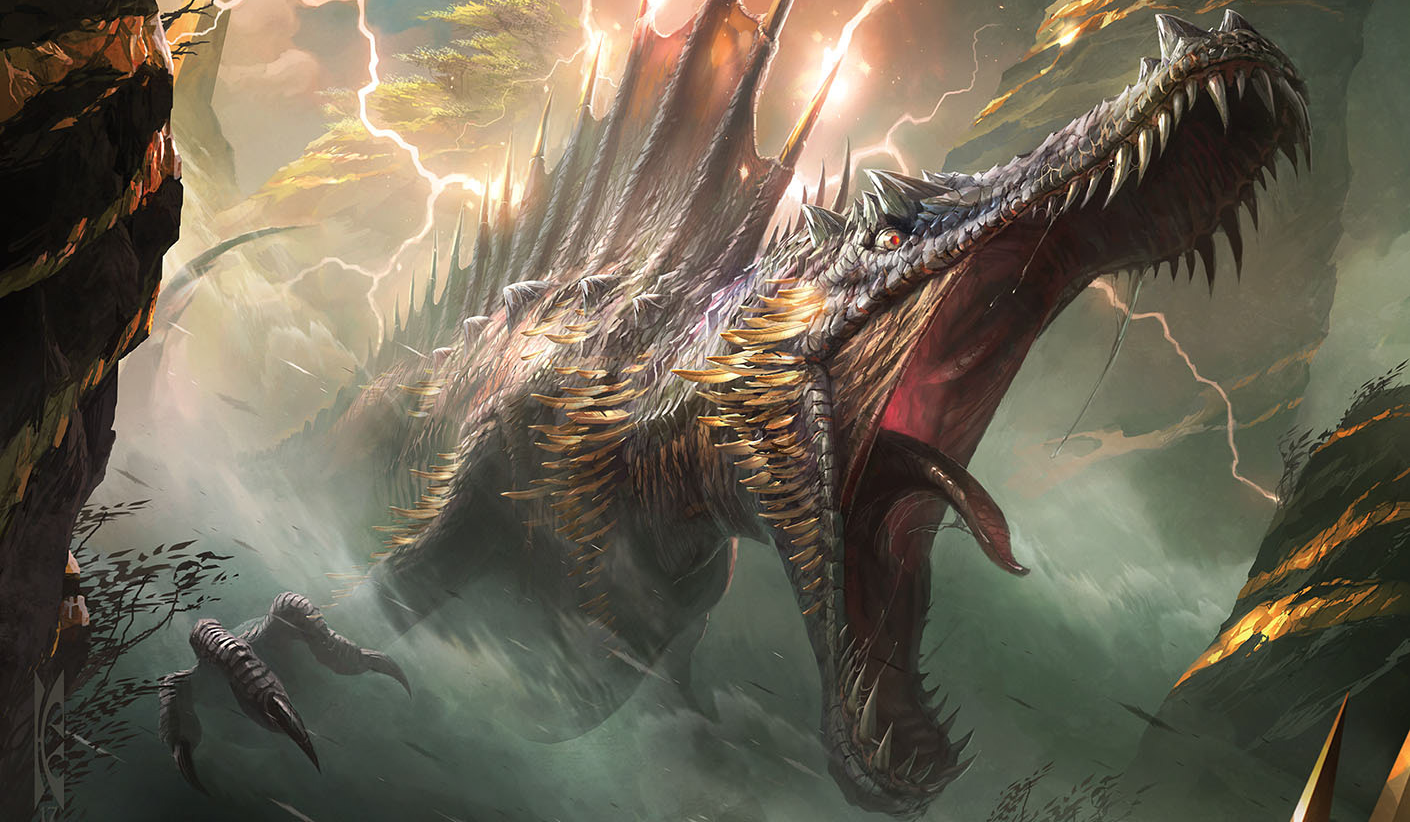 In these times, mer followed the ways of this great Primal Beast, whom they called Leak-Leak, the Lazing Lord, while they hated and despised the other great Primal Beast which stalked the lands. They called this predator Ribattal'ug, the Thundering Threat. So it went; the mer lived in slothful and gluttonous ways in emulation of their psuedo god, reveering it's ways and feeding it great amounts of food for it's protection. Ribattal'ug would not kill Leak-Leak, though it seemed defenseless. It took many a century for the mer to realize why.
Those on the outskirts of their land were the focus of Ribattal'ug, much to their dismay. While their people suffered, those closer to Leak-Leak lived luxurious lives of safety, splendor, and sinful passions. Those of the interior lands were shaken out of their stupor when Ribattal'ug devoured the daughter of the tribal leader as she was visiting the outer lands. Realizing their great mistake, all of the tribes of mer took to arms and slaughtered Leak-Leak, refusing to be made in it's image any longer. After the Primal Beast had been killed, every mer cut off their tails, as a symbol and reminder of what they had cut off from their tribes that day.
Upon Leak-Leak's death, Ribattal'ug ceased it's assaults on the land of mer. However, in their fury, they attempted to siege the great Thundering Threat. Futile was their efforts, but upon seeing their devotion, bravery, and sacrifice that day, Ribattal'ug bestowed unto them one of it's fangs, instructing them that there would come a time where they would need it's power to do unimaginable change to this world. Ribattal'ug left, and was never to be seen again.
Many centuries passed, and mer fashioned themselves in a more active image rather than lazy luxury. This was to the benefit of the entire world, for a new foe loomed over the entire land; a horde of ophidian foes, replete with steel scales, gnashing fangs and sharp claws as they took to the ground as well as the skies. There was to be war, and every dwarf, man, elf and mer would be needed.
In the great battle that was waged at the end of the Age of Scales, the great heroics and deeds of the mer are too numerous to count; to do so would fill an entiry library with names and stories. In this time replete with valor, one mer stood taller than the rest. His name was Rhazu, a mortal just as his fellow Kurvakant, but all knew of his larger than life presence, for he sought victory at all costs, and was an albino, standing in pure white.
The story of the battle is told in many tomes by many races, but as for the matters of merwin faith, only one story matters. That is the story of how Rhazu vanquished Zhumrikaal, the Comet Drake and God of both dragons and all Ophidians. Legendary as he is now, his renown for a number of stories was already known to his peers even in the 2nd Age, and he was given the fang of Ribattal'ug, now fashioned into the shape of a proper spear.
The divine dragon maintained it's lofty flight far above the world, it's beats creating terrible downdrafts and casting meteors upon the world that destroyed entire battalions with explosive power while it flew impervious. Or so it thought. Rhazu saw that this comet was out of his reach. So the mer grasped his spear, and took aim. Another god, the one the Volks call Peruyn, but mer call Kilá'vahn, aided in the battle, ensuring that the spear would make it's flight through the air and strike with the force of a thunderbolt. The spear gifted by the Divine Beast took flight, and flew miles into the sky to sunder the god, piercing it's side and bringing it crashing down. 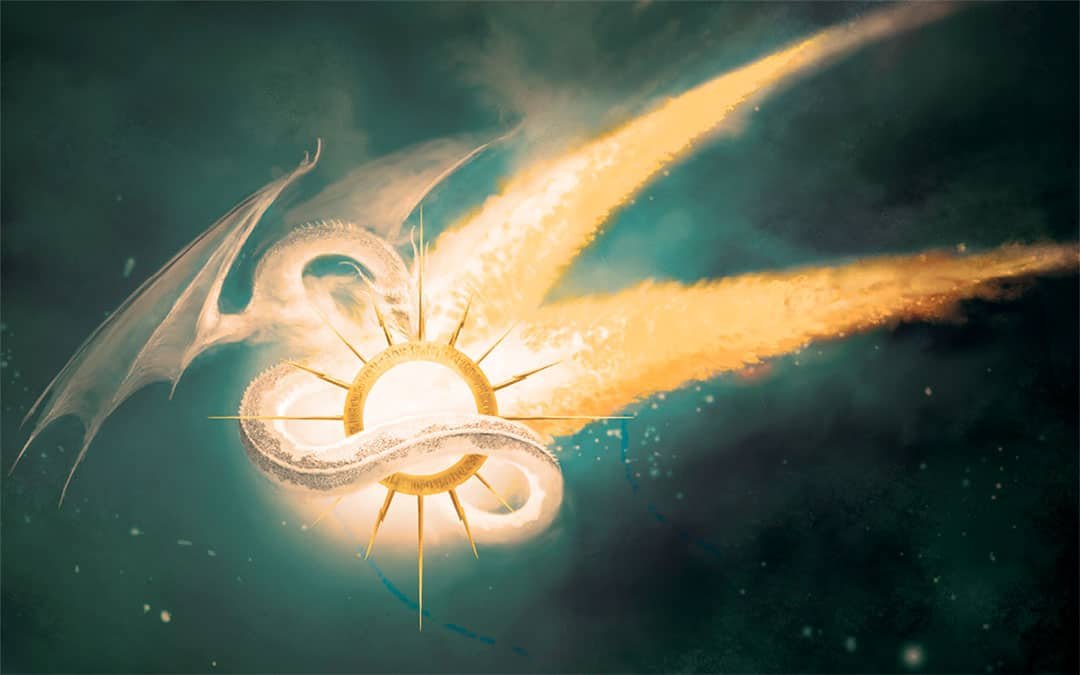
While the draconic god was grounded, it was not defenseless. The way the mer tell the story, a battle of mythopoeic magnitude was waged by all; human, elf and dwarf fought the scaled armies, while the mer focused on the god before them. The mortals were no match for a god, wounded as it was, and were routed by deific flame that melted them where they stood.
In their final hour, Ribattal'ug, the Thundering Threat, reappeared after a great absence, and joined the battle. Ribattal'ug lurched at the god, and a magnificent bout took place. The mer, now walking the path of Ribattal'ug and victory rather than Leak-Leak and contentment, chose to help their once oppressor. While the god and Primal Beast was locked in combat, Ribattal'ug bit it's neck, allowing Rhazu to land the final blow on the beast, cutting off it's head and ending the war.
In it's blood did Rhazu ascend to godhood, becoming the God of Victory for his people. He would be known as the Thrice Great God, embodying that which the Thundering Threat sought to bring out in the mer, that of Devotion, Bravery and Sacrifice. For sacrifice had already taken place; a grand swath of mer had died in glorious combat, fallen to molten puddles by divine fire or other casualties, as well as Ribattal'ug, who succumbed to it's wounds during it's valiant showdown.
When Rhazu, in his apotheothic victory, had claimed the life of the divine, he set the entire world that Volantis is set upon as his Bell of Conquest as a symbol of what he and his people had done. Each footfall upon it from then on would ring out his victory for now, and forevermore. Knowing that no feat could ever surmount his own, he took his axe and sundered himself thricefold, creating 2 other gods from his own self. Rhazu, the God of Victory was now Rhaurc, the God of Sacrifice, and his 2 new brothers were Bral'vort, the God of Bravery, and Val'ast, the God of Devotion. Together, they are still equally one single god, Rhazu, God of Victory, but individually they retain their own domain, aspects of the same triune god. The trio is known as the Brothers of Battle.
In their triune state, neither god is the other, but all three are one. Rhaurc is not Val'ast, is not Bral'vort, but all are Rhazu. The trinity of the Brothers of Battle are all known as one single god, Rhazu.
These brothers would go on to lead the mer in the ages to come through trying times and great victories. As their faith would tell, Val'ast, God of Devotion, would sire a child with Kamadek'our, Goddess of Freedom, a minor god in mer faith that is attributed to routing an entire army of dragons with her shield and glaive, much to the appreciation of Val'ast. Their child is Pilian, Goddess of Choice.
Bral'vort, God of Bravery, would find a terrible end in the later ages of the world. In a clever ploy, the God of Fear known as Malla'kuul, trapped the daughter of Val'ast, his daughter Pilian, in a clever trick of the tongue, for she is unable to resist making a choice in matters. Flying to his neice's rescue, the divinely brave Bral'vort saw his niece in peril at the hands of Malla'kuul. Leaping to her aid, he sacrificed his life to rescue the Goddess of Choice, being defeated and slain by the God of Fear and his demonic host. It is for this that mer hate nothing more in this world than fear. Mer are not sad for this death, for how noble a death it is to be victorious in the saving of a god. Their total and utter hatred for the God of Fear is only comparable to the hatred the Moon Elves have for Ka'ra't, God of the Sun.
As so told in their stories of myth, the Mer have three pillars of faith, established through their triune Gods of Victory.
Devotion - Devotion is the commitment of your task to heart. To do all you can to achieve what you desire is to be devoted to it's success, and your own victory.
Bravery - To be brave is to face challenges head on, especially in dire odds. No true victory is claimed without the bravest of hearts.
Sacrifice - For a victory to be true, something must be sacrificed. Whether it be the hope of the enemy for victory, or the denial of your weaker self, a something must be offered up, in order to achieve something greater.
Victory - The 3 pillars, Devotion, Bravery, and Sacrifice, amount to the required elements to create Victory.
These 3 pillars, devotion, bravery, and sacrifice, form the Three Pillars of Sejati, or True Victory. True Victory is not achieved without all of the 3, and if it is, is it truly a victory worth celebrating? What good does achieving your goals do if it required no sacrifice? Is the battle honorable if you were not brave? Was your work considered victorious if you did not devote yourself to it fully?
As for the belief of an afterlife for the Vita'karn, there is none. No heaven or hell exists, but instead, the fallen are written onto the Bell of Conquest of Rhazu, that being the world itself, in a manner akin to spirits. Their stories are written into the dirt, and they live on in their stories. Should this history be forgotten, the spirit is lost forever. The world itself is never to pass away, or a future rapture to come and cleanse the world, but rather it shall remain, forever a testament to Rhazu's greatest victory. Each person that passes instills their story upon the Great Bell of Conquest, their spirit becoming a minuscule fragment of the whole story of the world.
Those that endure are seen throughout the world in reminders, both small and large. Those of minor influence on the story of this world may be expressed in the pattern of bark on trees, or the way lines flow in sand dunes, whereas those of greater effect may be elevated into the carve of rivers, or even the constellations in the night sky.
Priests of the Vita'karn focus on seeking and interpreting these remnants of their ancestors, reading the ripple of rolling hills for the testament of a victorious warrior, or the wisdom of a scholar through the etchings found in river stones. They pass on the vast knowledge stored in nature, and provide guidance to the living, even though departed. Particularly noteworthy locations even bring pilgrims, seeking knowledge, a path forward, or simply to be strengthened by the memory of those before, attuning to the spirit of the world. Over time, this accumulation of the stories strengthens the world, making it more vibrant, powerful, and sacred.
The Vita'karn is not strongly centralized, often without large churches or monestaries, though arenas and fanciful natural environments are often constructed. At Alqern, a trio of 3 govern their faith, known as the Ultima. Each three represents one aspect of Victory: Devotion, Bravery and Sacrifice. They advice the Dominus and other officials of the Ostracon on important matters.
Priest, as well as other acolytes of the Vita'karn faith, wear songko' batu, or "Crowns of Stones." These stone spheres are made of a variety of stone as well as ceramic, and are held around the neck in a necklace. Each stone is hollow, inscribed with small stories and can be taken off and struck together, producing a series of tones; mini Bells of Conquest.
Agriculture & Cuisine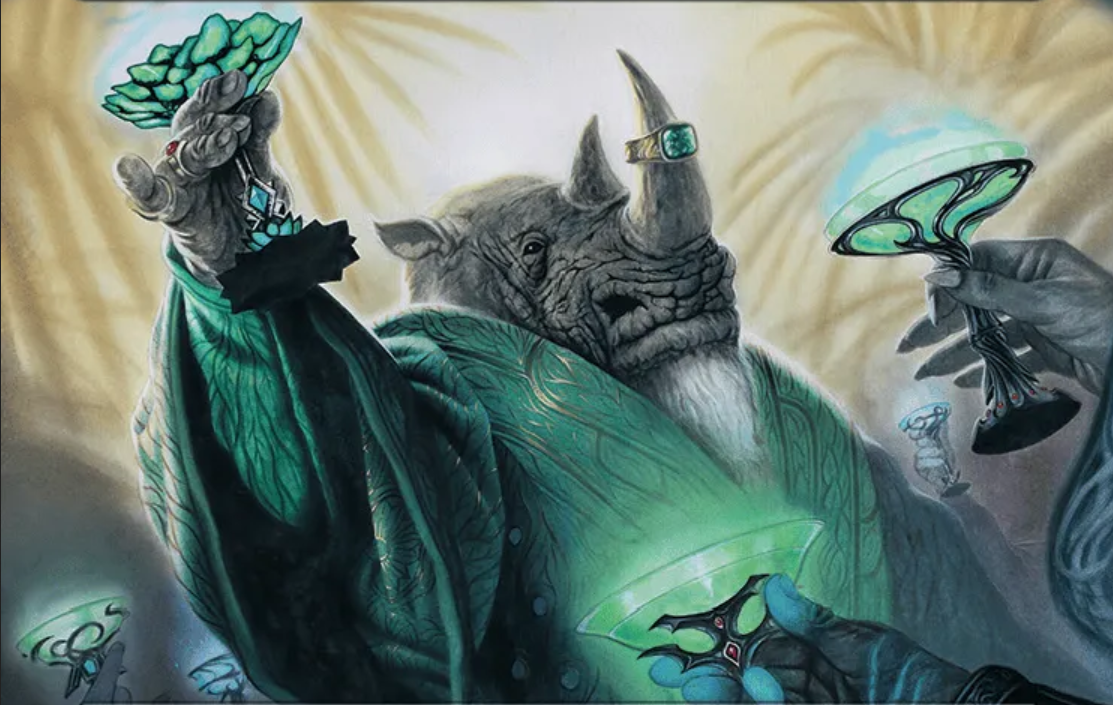
It takes a great deal of agriculture to support such hungry mouths, and in merwin settlements, food is abundant. A veritable bounty surrounds them in their blood-red lands of Arumvex's Folley, filled with exotica. Striking Bolthogs, variants of the simple Bolthog of the Bridge Delmar, flash across the plains, right into merwin cuisine. Disputes with the wildlife over banana nuts and samassa root with the Crimson Panda is commonplace, though as in all things, mer are persistent, and incorporate the wide bounty of their lands in their meals.
Samassa fufu is a popular staple of dishes, made into loafs or balls. The roots of the Samassa tree are hacked away and harvested for their rice-filled insides, but have to be carefully cultivated as to not kill the tree, to continue growth. They are baked with banana nut, a large tree nut that grows long like a banana though entirely straight, peeling and falling to the ground when ripe, leaving the extremely hard shell in the tree for a time. On their own, banana nuts taste bitter like almonds, but with a creamy taste after it has faded.
These grow alongside K'vetcha, a type of legume full of fuzzy flowers. The K'vetcha's pulses, or seeds, are brown with a purple, wavy band around them at their seam, and are firm with a starchy taste. They go great in any dish when sprouted. Notably, the K'vetcha plant is pollinated by the Lime Shade Moth, which looks nearly identical to the flowers of the plant, and spends much time on the legume, which many creatures (and mer) mistake for the plant's flowers.
Mer also cultivate Mer Cows, which are named for the noise they make, not the fact that the mer keep them in their husbandry. These exotic bovine feature dark green spots with drooping horns on the males, and the females produce milk tinged green, unappetizing to most outside of merwin households. Mer also do not pasteurize their milk, their stomachs able to handle semi-spoiled food better than all in the lands. For food on the go, mer cow cured meat and especially tough jerky is stored in their travel pouches, always on standby for a bite.
Speaking of their stomachs, mer cannot take spice well in their food. Pepper, both black and hot, is the limits to what they can stomach. The spicy cuisine of the elves is not appetizing to the Mer. Beyond just sating their appetites, the Mer are also very careful about how much they consume. As they believe to have once been seduced by the gluttonous ways of Leak-Leak, the Lazing Lord, modern mer watch their excess carefully.
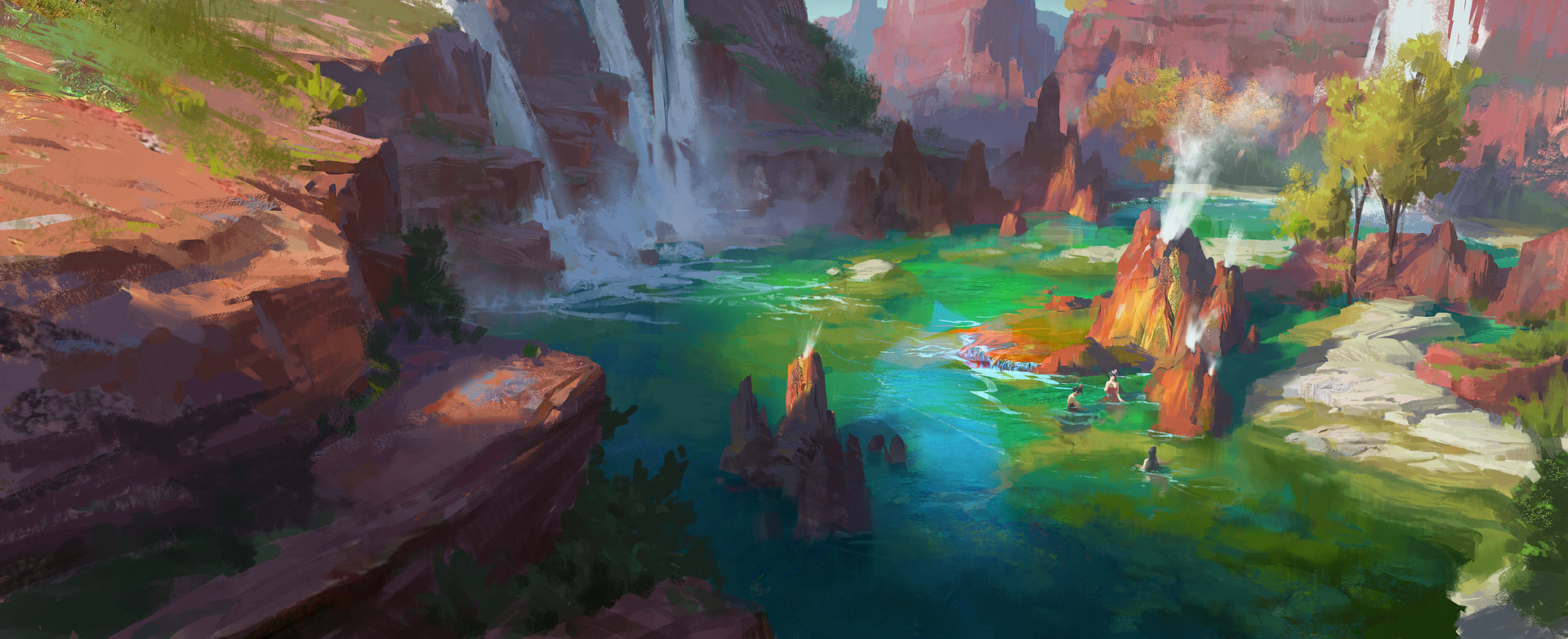
As for cooking, one of the main methods of baking and cooking is through tar pits, where they put their food in sealed stone or ceramic jars and lower them down into the tar pits, heated by geothermal currents and covered by boiling black bubbles. The most popular of which is black bread, sometimes called tar bread, made simply through baking in the heat of the pit. Morstrews are a favorite way to serve meats with tar bread, wrapped up in a pierogie style, or one may choose to try the divan gyro, with the exotic shadeberry, found in the far-off lands of Divan. For dessert, merwin honey cookies made with phu-bee honey are every so sweet, while smokey stone are a no-bake option for those who want a more earthy, chewy taste.
They are masters of ceramics and pottery, and incorporate their skills into their tableware. Mer are fond of eating out of dried gourds, hardened with ceramic and painted with faces on the bottom so that when you drink it looks like a mask.
Despite their animalistic appearance, mer employ forks, spoons, knives and other tableware in their dining. They dislike eating with their hands, finding it unkempt and a drifting to the ways of Leak-Leak and gluttony. Dirty hands are taboo, and should be washed as soon as possible. It is also taboo to finish your plate. It is customary to leave a single bite of food on your plate; any more, and you are wasteful, whereas any less, and you are a glutton.
 Less cuisine and more drug, passum bako is beloved by many surly mer. It functions as a tobacco-filled mouthguard, often made of wood, set as a retainer for continued chewing with their large flat teeth. The block features grooves, satisfying to the mouth. When they want a more puffy mode of tobacco, they opt for a hanging cigar, one they hang around their horn by a string or strap, and have it constantly on standby when a puff is needed. Some even go as far to do this with food, but their fellows may call them gluttons for such. When they are not using a passum bako, mer will smoke tobacco products in gourds, and sometimes even opioids. Smoking out of gourds is seen as respectable and cool, especially by younger mer, much to the disdain of their mothers.
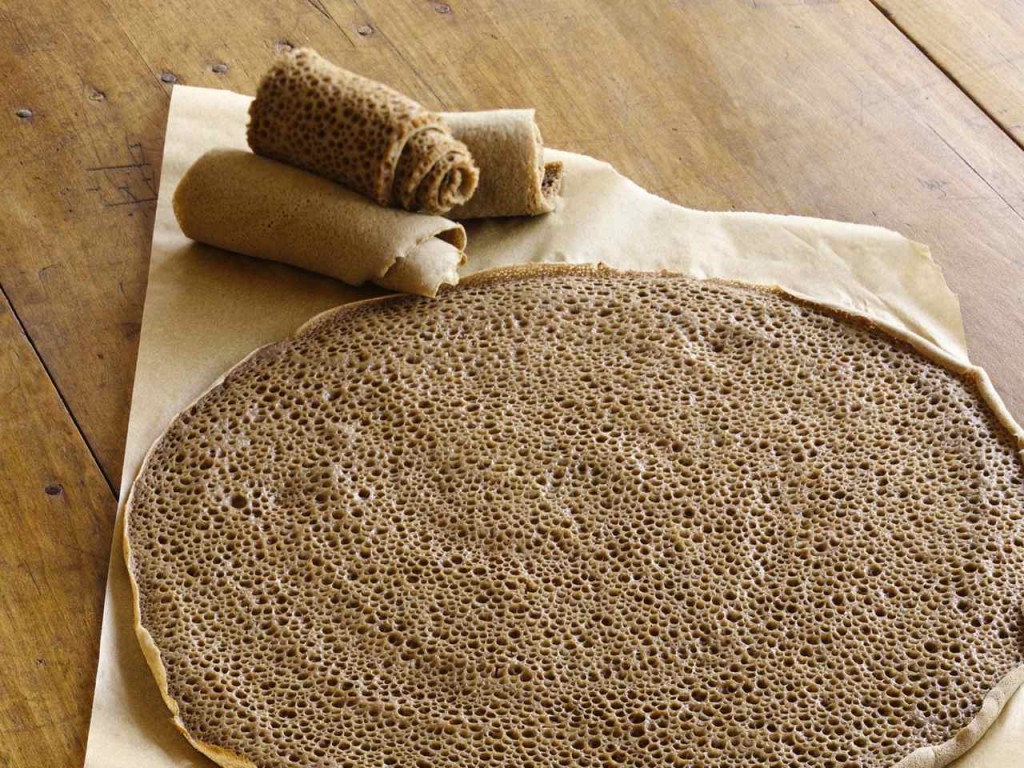
Accompanied with the Samassa Root in their meals, roti moss is also a staple of their meals. It is a type of grain that grows on stone like a moss, with such small grains that the bran and germ are left on, creating whole-grain breads. Roti is baked into spongy flatbread known as injera, and sit at the bottom of their meals to hold in other food. The women in merwin societies are judged based on their ability to make good roti injera, and babies are rolled in it for good luck. The flatbread is made entirely flat, pressed as thin as possible before being leavened with powdered mushroom. Dishes of roti injera often have a fruit serving of Melrula, a small lemon-sized fruit with wavy stripes that grows on the Melrula tree and tastes like a gummy citrus spiked with salt.
As part of their cultural exchange with the nearby Moon Elves and Gales, much was traded between these people. However, original to the Mer is apiculture, or beekeeping. With their thick skin, they are able to tend to hives without much protection, and many different bee species were cultivated. Their bee of choice is the Phu-Bee, an energetic bee that produces the sweetest blue honey, but beware their shocking stinger!
The towering giants also received the gentle Dhungo Putali, a type of moth found in the sheer stone cliffs of the Lauttersänger Mountains. They spin a silk similar to tussore, a type of silk that is known for being more coarse but more durable than typical silk, suited for the leathery skin of mer.
Beasts of burden aid them in their daily labors, mer employ a wide variety of beasts. The Kassa'kenna is one of such beasts, an odd avian creature. It stands taller than a man at around 7 feet tall, and is almost all leg. It's head peers out of a body entirely of spotted feathers, giving it the appearance of only being a ball of feathers with enormous legs. The bird is flightless, but can be harnessed with a large load and transport it far, and fast. Another creature is the Kammunat, a four-legged titan of a creature. Standing at 6 feet tall and up to 30 feet long, it closest resembles a warthog but with far thicker and shorter tusks, and covered in thick leathery skin with fine tan hair. it has a mellow temperament and weighs over 5 tons, ideal for hauling great burdens. Mer laborers hook ropes around the tusks of kammunat, almost like a horse's bit, driving it here and there.
Of course, merwin agriculture could not be spoken of without mentioning the Bawaal, a small creature with cloven hoofs, short hair on brown skin, and most notable of all, a thick, portly belly. Their heads are long and thin like an aardvark, with large floppy ears atop their heads. Their tails are long and hairless. Wild bawaal lack a obscenely large belly, but domesticated pets are positively rotund, their stomachs dragging on the ground by their stubby little legs. Bawaal in the wild also can curl their tails up on their backs, but domesticated bawaal cannot, instead curling it under their fat bodies. They are some of the most amicable pets in the land and are comparable to dogs, though outsiders generally consider bawaal to be highly unappealing as a pet. Bawaal are also troublemakers, fond of getting into trouble by a variety of means, most commonly by getting stuck in places they shouldn't be, and then putting their ears over their eyes in fake regret. The mer adore them, feeding them their table scraps and letting their pet bawaal be the glutton on their behalf. Some even dress up their bawaal, favoring fancy attire and small monocles, treating them as nobility.
Architecture & Locale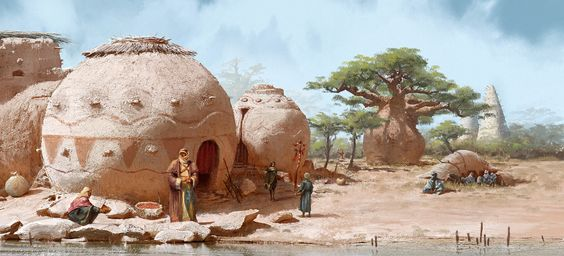
The land the mer call home, that which Alqern their capital is seated, is a bloodied land. The grasses are deep red, said to be the spilt blood of Arumvex, whom the lands are named after, as Arumvex's Folley. The land's unwilling creator of draconic godhood was slain according to merwin myth, his divine blood staining the land and gave life to the alien ecosystem with. A savannah born of divine blood, great beasts and unique plants not seen anywhere else roam the lands. Tar pits and bubbling bodies of water sparsely scatter the lands, with trees in whites and blacks standing proud against the setting sun. Dust devils kick up and ride along the land, said to be the dying exhale of Arumvex, continuing to roam the land of unwilling creation. Towards the back of the land nearest to the coast lies an odd geological formation that the Mer claim is the skull of Zhumrikaal/Arumvex, in which they have placed their towering capital.
For those that live here, houses made of clay and stone are fashioned in the manner of gourds. Though the mer are large and lumbering, they are a careful people. Their homes look like gourds to some, or pottery vases, inscribed with the stories of their families. Dirt and cobble roads weave between them, shaded by thick trees and traveled by wild beasts such as slithering battlesnakes and nude je'nelugg. Large, green and orange statues recreated in the hot sun loom throughout the land, testaments to the power and might of their civilization. At the heart of their cities lie colossal fortresses, beset with harder stones and steels with imposing and sharp defensive structures. These hearts are designed to withstand attacks, set with thick walls, hidden traps and elaborate escape routes.
In the times before, their houses were purely of clay, but after the late 4th Age a cultural trend has emerged to incorporate stone into aspects of the house, such as the foundation, rather than a purely treaden clay and dirt floor layered with planks.
Government & Social Hierarchy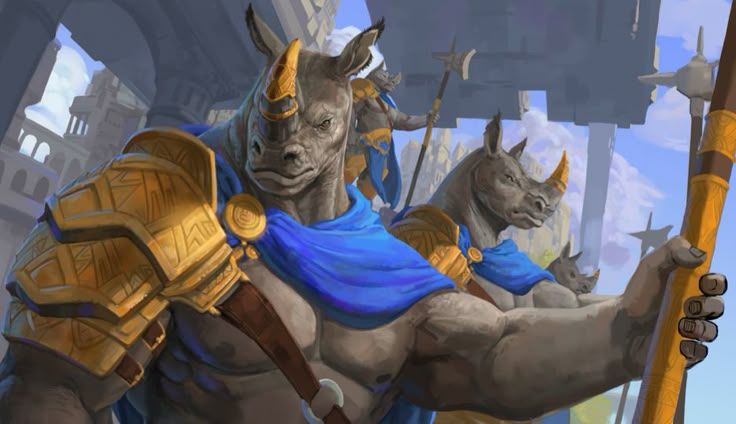
"A king who cannot hold their power must be betrayed."
The success of the Mer on the stage of Volantis is largely in part due to their efficient government. They are governed by a military order of officers and other officials, forming a stratocracy. The governing body sits within Alqern, and is called the Ostracon. As such, the military and government is as one; promotions in the military are promotions socially. The mer consider physical aptitude with governing aptitude, though those who are more gifted at battle than politics find their way settled lower down on the hierarchy - usually. On occasion, those of highly advanced combative skills end up in powerful positions despite holding little to no skill in such seats. Otherwise, it is known to most mer that there is more to military prowess than just combat. Those who are shrewd, decisive and willing to work for victory are wise, for a well placed strike to the chest is better than a strong blow in the dirt.
At the peak of their stratocracy is the Dominus, total ruler of all of the Conclave, not just the mer. This is a more recent position, created after the 2nd age, the Age of Scales, in which the Ophidian merged with the Mer to create the Conclave. The Dominus' word is law, and his actions exude victory. Only the best of their people become Dominus, known for their unparalleled mental and physical prowess. All of the Conclave will rally at just a word from the Dominus, but he is wise to listen to those in the Ostracon. Notably, the Dominus has not always been a mer, and occasionally is an Ophidian.
Below the Dominus is the Cornicern-General, Leader of Legions. The Cornicern-General is the oldest title for ruler of all the Mer, and was the rank of Rhazu before he became the God of Victory. Below the Cornicern-General is a singular Primus for each group within the Conclave, acting as Lords for their people. Then there are the number of Warus, though woe be upon he who calls a Warus a Walrus. The Warus is the leader of a legion, subject to both the Primus and the Cornicern-General. Below a Warus is a Strategus, a general, and second to them is the Optio. Individual members of their military are known as Bellators, and their officers in their legions being Bractans.
Secondary to these military leaders is the second-half of the Ostracon. They are the Tribunus Consuls, a council of guild members, led by the Primus Ferrum, selected from the military to guide those in the guilds with the aim of the greater Conclave. They are joined unofficially by the religious leaders of the Vita'karn, a set of three Ultima, each representing either Devotion, Bravery, and Sacrifice.
A notable special legion in the Conclave is that of the Wardancers, led by the Vexillarius. These are what are claimed to be their magisters, though their power is up for debate. Still, a merwin battle is not complete without the thundering of drums upon taught skin with powerful mallets and the shouting of passionate voices harmonizing with the din of battle.
Outside of the government, one's social standing is tied to one's greatest military feats or other victories. The victory of slaying a great beast is viewed equally with the victory of getting a book published in a hostile land, should the devotion, bravery and sacrifice required be of equal measure.
In order to become a citizen in Alqern, one must undergo military training. Outside of the homeland, this is still undertaken for those who wish to join merwin settlements. When they become citizens, they are able to vote, doing so with an Ostracon (as their government is aptly named), pieces of clay pottery broken from a single vase, which they stain for the color of their candidate and rebuild the vase for the results.
In both their military government as well as their social politics, there exists much cloak-and-dagger antics. As big and blunt as mer are, they are not incapable of subtlety when the time arises. Revenge plots, subterfuge, betrayals; all can occur to ensure that victory is attained at any cost.
Weapons & Military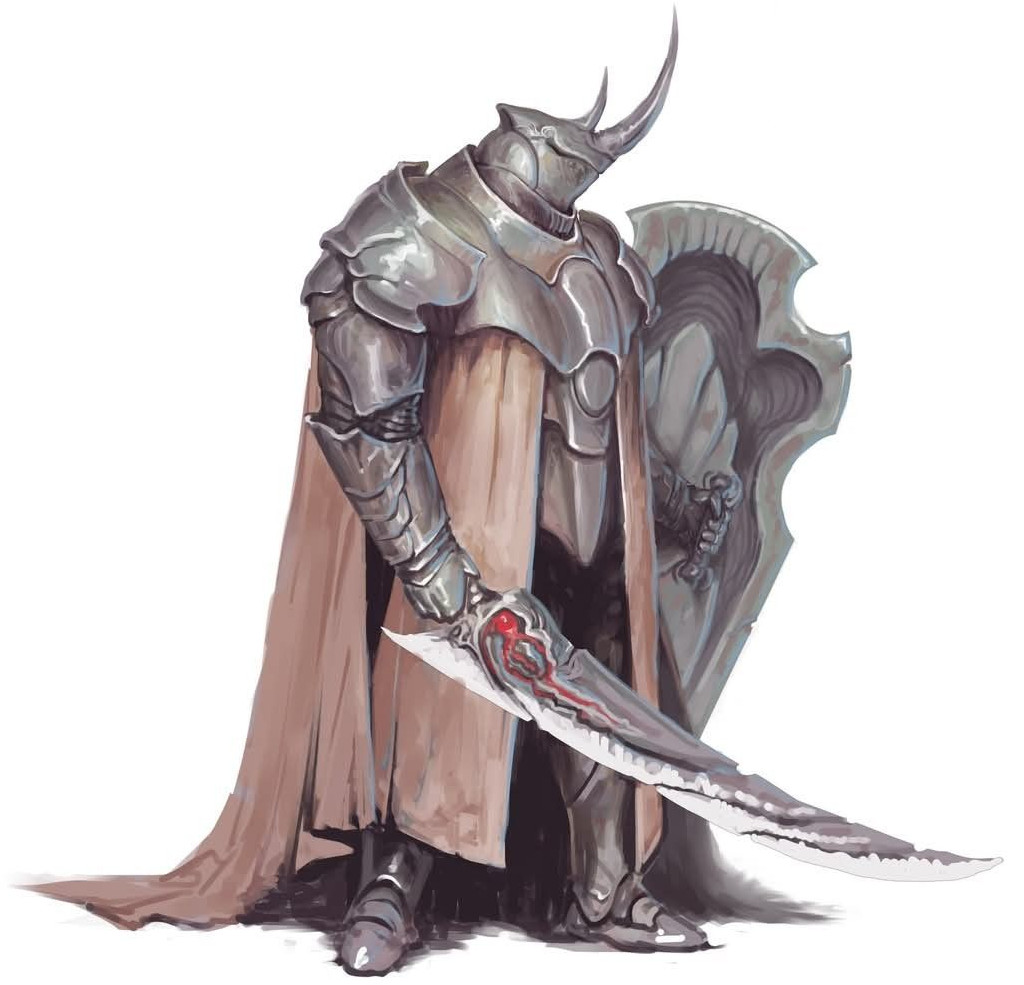
"If it is endurable, endure it. Do not complain for want of lesser battles."
Born of war since the beginning, the very psyche of the Mer is melded into a conduit for achieving victory in all things, especially battle. Truly said, in matters of personal combat, there is no greater military on Volantis. The dwarves may have their golems and engineering feats, while the elves have their magick and strategies, and mankind their numbers and will, but it is the mer who dedicate their entire being to victory, at any costs. So much so do they crave victory, they even expect it to happen; as such, mer will take to great theatrics to reach their goals, especially in battle.
Tied to their ancient history, mer have a number of weapons adapted from hunting beast, now suitable for hunting mortals. Spears and javelins of thick gristlewood sing through the air, plunging into prey with sickening snaps, while bows short, long and great twang with taught tendrils, soaring towards their target to take their lives.
Even their armor is an instrument of battle, being weaponized with sharp spikes and catching plates to crush and assault those unlucky enough to meet a mer in hand-to-hand combat. Though as with many things regarding the mer, their armor is not of the highest quality. No time to improve one's armor when victory is just over the hill - all one needs to take it is an expertly forged javelin to bring it down.
Likewise, they do not have the most advanced shields and swords, preferring more blunt weapons like maces, clubs and flails. When a bladed weapon is preferred however, the iconic dual-wielded axes is preferred, often in Victorymonger style. In other cases, the iconic merwin invention of the Rua-Glaive, a dual-bladed glaive is weaponized, slicing through the air while fixed with flitting ribbons at the haft.
Contrary to popular belief, the Mer do not wear their armor all the time. Rather, their cultural belief is that armaments should only be donned with the intention to use them, and as such they only equip their gear when they are ready to go to war. Most of the time, they are in casual clothes. 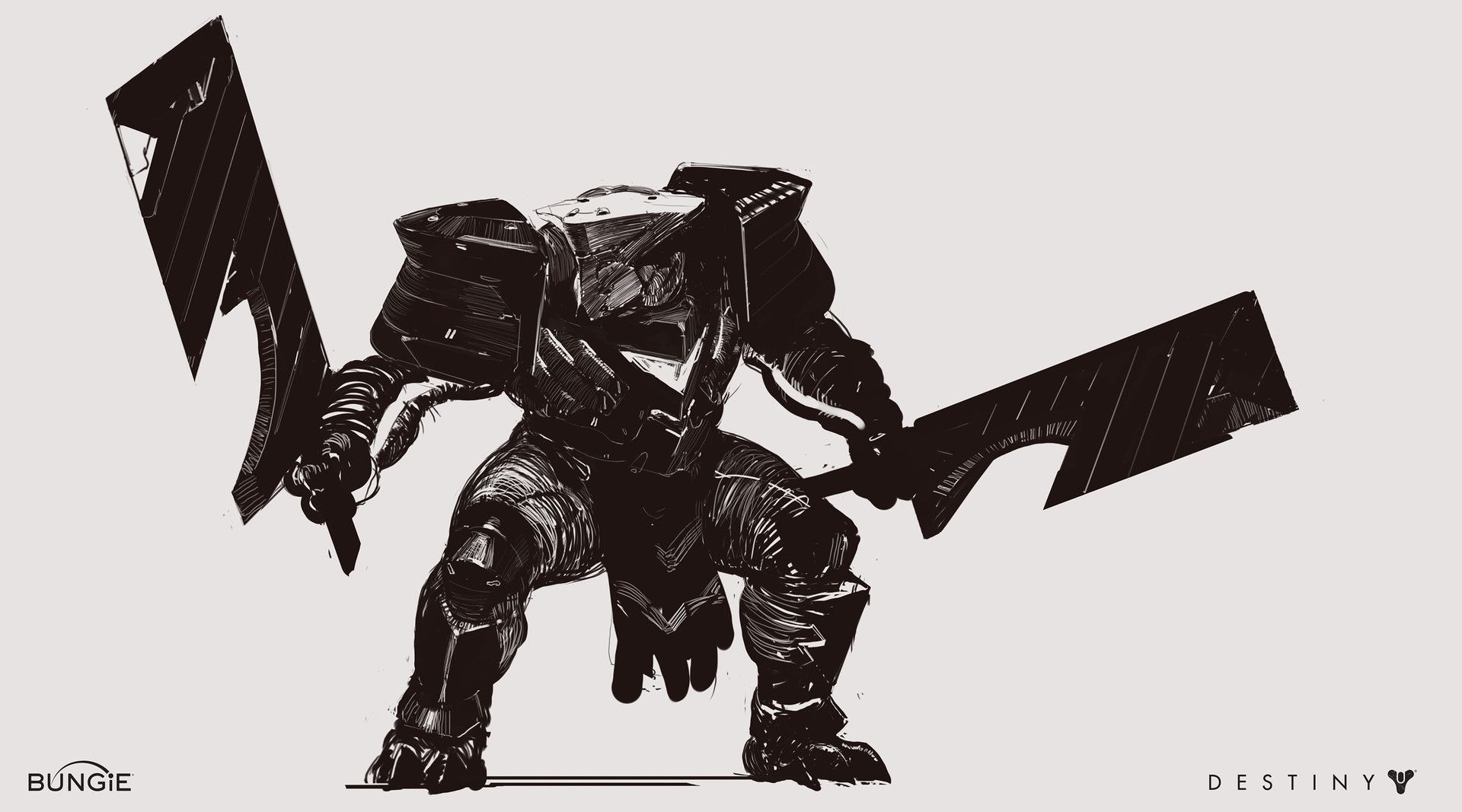
When the time does arrive for battle, mer do not hesitate to don flamboyant uniforms. Helmets rising with crests of bright plumes, affixed to breastplates of black iron or bronze metal, with greaves of hardened leather and sabatons mimicking that of a Kassa'kenna is a common set of armor for merwin warriors. They are adorned with glyphs and symbols that make little sense to outsiders, but are ever so important to mer. Their armor is important to them, and very well taken care of, despite their scratches, dents and bruises - a better story to tell, a mer may say.
The greatest of them, starting with their officers, wear their Kamel'gaan, or Triumphs. These are traditionally made as tassels of leather and silk to show and remember their greatest accomplishments and victories. Triumphs are worn in and out of combat, and a sign of great social status. Those that have a great deal of Triumphs (who also happen to end up as leaders and political figures) often opt for a Sagum, a type of cape or cloak sewn with stories and experiences displayed proudly upon the fabric. Mer cherish their Sagum above nearly all else, and will go to the ends of Volantis to ensure its precious history is preserved.
The main armies in Alqern are the Legions, led by the Cornicern-General, as detailed in their government, which is synonymous with their military. Outside of this, many mercenary armies exist; groups of mer and other mortals that band together to seek out their own fame, glory and gold. The greatest of these even content with public opinion similar to politicians, without the strings attached. To outsiders, the mercenary bands of mer tend to be far more vile and cruel, often denoted as a "People of war." Most of these become Victorymongers, mer who are so obsessed with victory that they throw off all other pursuits in life and act as roaming gladiators, fighting in whatever battle they might find, whether that be of clashes of steel or mind. If a Victorymonger attains political office in Alqern, outsiders take note, for they love to start wars simply for the challenge.
Into larger battles, mer are seen mounted upon great beasts of battle, swaying too and fro on stubborn kammunat, or employing siege weapons drawn by the strong kassa'kenna. On the topic of magickal warriors a mer is displeased, finding magickal combat lacking in bravery, as required by their Three Pillars of Sejati, or True Victory.
As for the metallurgy of their armies, emperium is the standard. The Mer are not a wealthy people, at least in material value like some others. A mer greatly desires to have better armaments however, and steel is coveted for it's strength and it's ability to be tempered into a variety of colors to their liking such as a bronze or black. For materials more exotic, zoro'lith is used, though only by those who are devout to the cause of Vita'karn, pushing the pursuit of victory with their very weapons. Officers and the well-to-do wear armaments of glazeplate, the smooth ceramic protecting their hide as well as serving as sharp swords and spears. Though it is not their metal to have, the greatest of them, especially a Dominus, may find themselves blessed by their fellow members of the Conclave a work of draconic steel, though this may simply be a fantastical retelling of how powerful their mundane weapons were. For the truly mythical, ardent is sought after, though it's acquisition lost to fables...
When great victories are won with blackened iron and victorious mercenaries armies, or even if a goal has been achieved in the family for saving up a grand sum to barter for ancestrial land thought long lost, a Bell of Conquest is erected. These are the most sacred items of the Mer, forged of a unique bell metal with delightful and thundering tones. Each bell is made with a coin thrown into the molten metal before being cast as a symbol of sacrifice and good luck. Around the circumference of these bells are carved the story to be told. At the end of one's life, a singular Bell of Conquest is created to commemorate the greatest of your victories. It is a common saying in merwin culture to state "may your bell be large" as a show of respect, for the largest one's bell, the greater and grander their life was. After all, so grand was their god Rhazu's conquest that his victory became the world itself. Merwin graveyards are full of bells, quietly tinkling away in the wind to perpetuate the stories of those long past.
Music & Art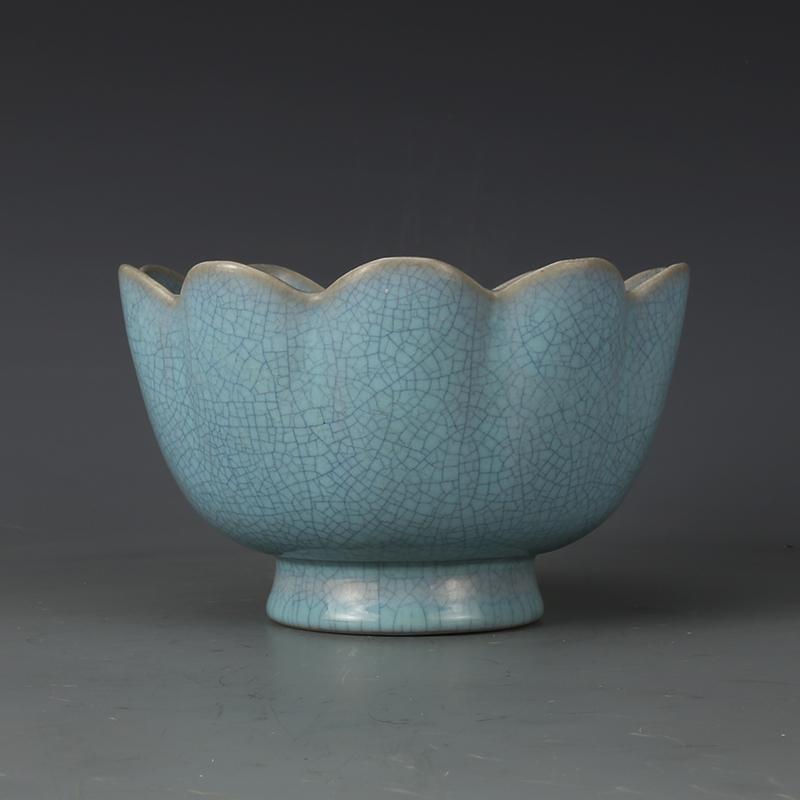
Though their love for battle and all things challenging is great, the Mer do not neglect the finer things in life.
Above all, mer are master ceramicists. From tableware carefully mixed to suit their purpose to colorful pottery said to be able to predict other's intentions, mer are steeped in the art of pottery both coilled and spun, painting with glazes and slips of bright minerals. Their tableware is mixed with minerals to prevent heat conduction, and their cookingware contains other minerals and specific clays to make them heat proportionately. Quite humorously, mer make a habit of serving guests of their house specific pieces of ceramic depending on how much they like or dislike them. Even the colors of their pottery is important, and much superstition abounds. Pink pottery is said to bleed if it is filled by the one who wishes to do you harm, whereas celadon hues will shatter if filled with poison. Ebony pottery is smoked and considered best used for religious purposes, as well as a long list of other hues with their own abilities.
The skill of mer does not stop with tableware, as veritable works of art are frequently produced. Through the cultural exchanges in the land, the mer masters have learned many techniques on the art of porcelain from Ōkamis. In exchange, the iconic alabaster white seen in merwin ceramics has it's methodology traded, giving birth to the famous white and green porcelain seen today in Ōkamese lands. In exchange, the Mer received ever so delicate porcelain known as hira-sen porcelain, with sections created so thin that they glow in the light when held. They also have picked up the practice of restoring broken vessels from the Ōkami, opting for colorful mosaics of molten stained glass rather than kintsugi in their ceramics.
With Culiacán, they sell a special type of ceramic that seems nearly supernatural, for it hides it's glazed crackle when drenched, reemerging when dried out. For others they create Wind Ceramics, a light-blue and fragile piece of pottery that, through means unknown, tinkles and crackles when grazed with light wind. These are often set in doorways on nearby tables, giving an auditory chime when someone has arrived.
Using the same Jhotasite as the Ōkami, Mer turn the river clay into a new ceramic, which they call Glazeplate, rather than the Teethstone the Kamirisei ceramists craft. Glazeplate is created by the well-known and famous tradition of striking a resonant item, usually a bell, against the middle of the item, which creates the crackle under the glaze. The note the bell is tuned to, as well as the bell metal, is a closely guarded secret.
For more firm mediums, Mer stonemasons use Zoro'lith, a white and red stone of great hardness. Firmer than granite, it is a feat worth striving for to carve something of note from the blessed stone said to be the spilt blood of the Cornicern-General, calcified. Whenever any meteor of this stone falls from the sky, Mer are quick to claim it, for they believe the holy stone is rightfully theirs.
One of the most popular sports in the land hails from the lands of Arumvex's Folley. Called Angga'gaa, it is a game based around getting a thick rock through a series of goals, in a odd twist on football and basketball. A full-contact sport, the game takes on aspects of shot-put as heavy smooth stones are thrown from teammate to teammate, all the while avoiding the enemy team's tackles. It is not a game for the faint of heart, even for mer.
For more relaxing games, they love to play Pītasowin, a variant of carrom invented by the Star Elves, where one carefully flicks a polished stone across a wooden table to knock other stones out of place as well as to settle specific colors into appropriate zones. As big as they are, mer enjoy games of precision and dexterity.
In Merwin societies, art and warfare are synonymous. The art of warfare is a focus of great songs, epic poems and stunning visual displays that celebrate the greatest of heroes, and the bravest of victories snatched from the jaws of defeat. Any trophies taken from vanquished beasts are swiftly turned into more elaborate displays or incorporated into their lives in some fashion like shoes or swords.
Mer truly adore music. It’s an integral part of their lives, and while the elves may bear the title for the best performers and compositions, mer enjoy music like no other. It does not require a flowing melody or a catchy motif for their people to dance in raucous joy, stomping their feet and cheering loudly.
Their instruments of choice include the flute as well as the Tampa'pel, a type of double bass drawn with bows of the Rakmanuk. Following these instruments in popularity is the Kithar'aul, a zither-like instrument created from a barrel and strung with taught strings. It is set on the lap or braced against the chest, and offers a deep, resonating timbre. It is difficult for anyone other than Merwin to reach their arms around these instruments, as most citizens in Volantis do not have the span to reach around the barrel.
Central to most of their music is percussion, often deep and sonorous drums that rumble in the chest and shake your feet. Whether large or small, standing or worn, a variety of drums can be found in most Mer performances. These instruments are fashioned into thrilling marches both happy and serious, inspiring the listener to movement, whether that be to dance, or to battle.
How much better to listen to music while dancing, say the mer! Much movement goes with their music, and a mer can hardly sit still if the groove is stirring in their soul. Fortunately for them, their friends in Culiacán feel the same, and have taught them many new dances. Forefront is Capoeira, a dance that is a mix of moving, spirituality and martial arts. While upbeat music is played, a dance battle is undertaken, where the winner is chosen through both fancy footwork as well as whoever is not lain out on the dirt. Safe to say, mer have put their own physical twist on the dance
Magick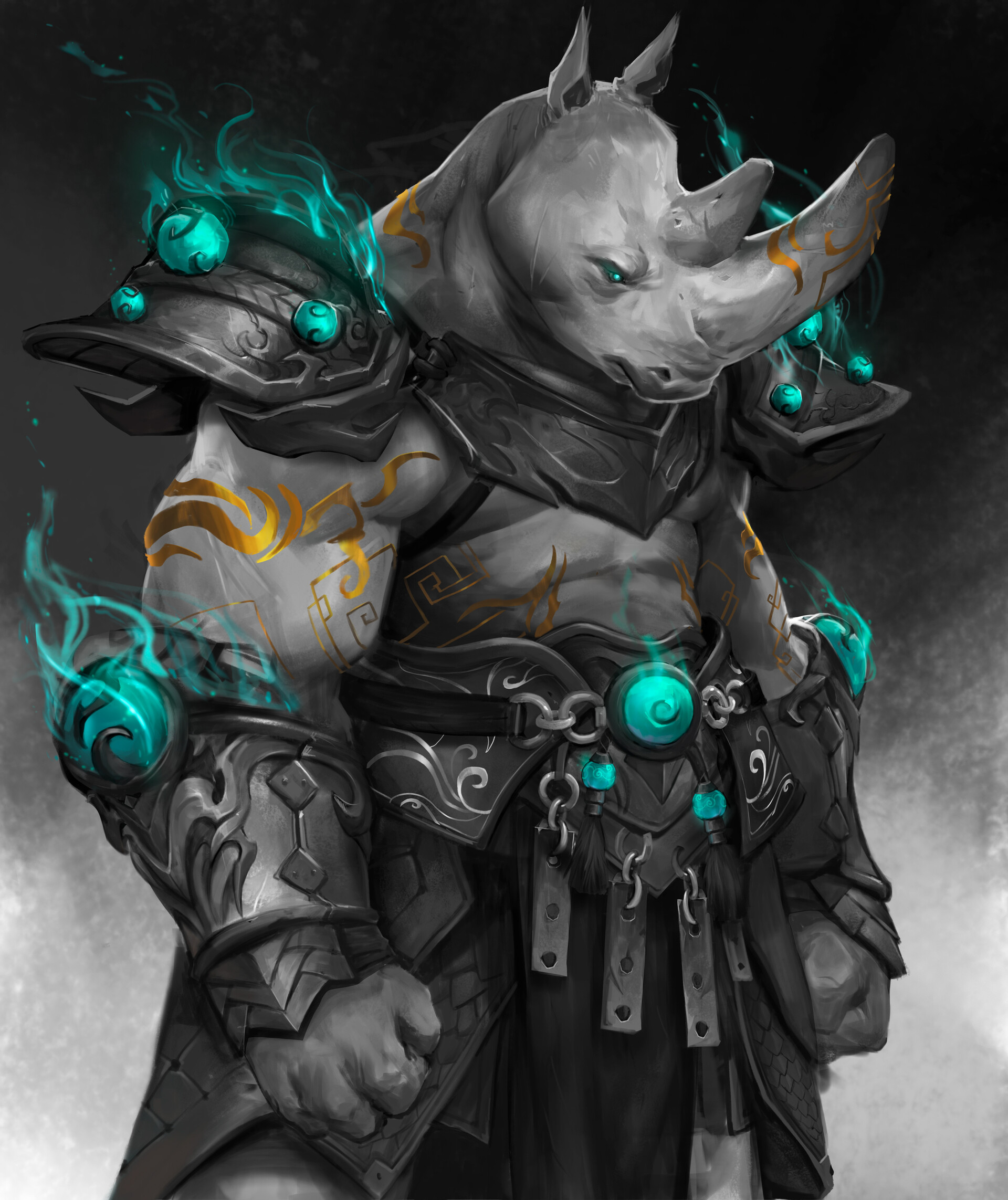
“You know, after watching the ecstasy the Mer go through in a battle, their passion and their joy as their hearts beat with the tune of their wardrummers, I don’t blame them for living for war.” - An enthusiastic Gale.
The common merwin thought on magick is that substantial physical damage is indistinguishable from magick. They look down on anyone practicing magick, seeing it as lacking one of the Pillars required for True Victory, that being bravery. It is not brave to fling spells and snap your fingers far disengaged from combat, nor is it impressive to have magick give "shortcuts" to hard labor. Where a magister could construct a building in a matter of a day, a mer would much rather do so by hand, over longer periods of time, even if the outcome is worse. It is far more satisfying to see the works of your hand, than that of unknown forces.
Not all mer think this way however, and many can be swayed into acceptance of magicks under the chant of "Victory, at any cost."
In times of antiquity, so far removed from the present that both peoples deny it's happening, the dwarves of the Underkingdom and the Mer of the Conclave were once on such good terms that the Master Golemancers of the Underrealm of Hûzvok shared their stonebound secrets of the Glyphs. Thus were the Drumes born, not of stone but of ceramic, glazed and fired with glyphs inscribed to instill life into the inanimate. Now, Drumes are employed by Mer Lutum Fictōrs, while the relationship between Dwarf and Mer has soured. The greatest of these are carved of Zoro'lith, that holy stone with thermochromic properties, it's veins of burgundy glowing when heated or in movement.
The only magick that mer will so boldly boast in is that of Wardancing. Most scholars cannot deduce whether the merwin "magick" of Wardancing is truly magickal. Try as they might to solve this mystery, they cannot deny the effects Wardancing has on those partaking. The rejuvenating beats, the thunderous spirit that burgeons in their heart with eat strike of the drums, and the energy that lifts their feet with each step they take, all seems like the potential for magickal powers. Wardancing is reserved for wartime activities strictly, along with the special music that accompanies the movements, but on a number of festivities it is allowed.
As for other magicks, a mer will treat them differently. They view magicks in a lens not of Chaos and Order, but Lazy and Honorable. If a magick is deemed to be lazy, whether or not it is of chaotic or orderly alignment, a mer will have a distaste for it. Specifically for necromancy, the mer are torn. On one hand, reversing the sacrifice of one's life is utter blasphemy to those of the Vita'karn. On the other hand, it is truly admirable to be so willing to chase your goals in both life, and death.
Others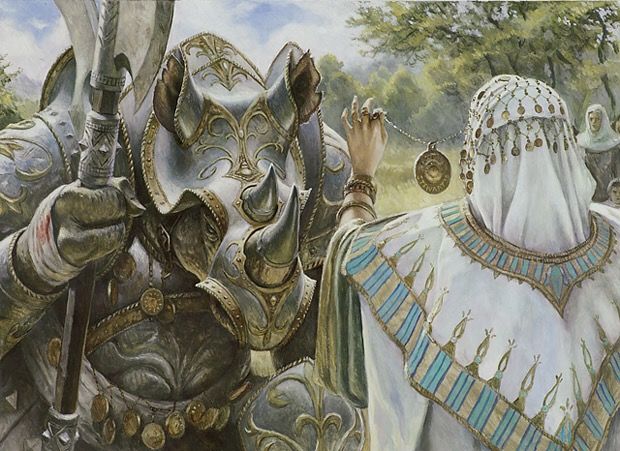
"A good enemy is as valuable as a good ally."
Dwarves: Most dwarves despise mer, for their hand in the fall of the Underempire, though mer know that it was rotten from the inside - they were simply the push that toppled the tower. Glassaxes of yore spat fierce curses at mer after their attempt to squash the upstart Underrealm of Azbar many Ages ago, though a dwarf is not one to forget. The animosity is not returned, however; where a dwarf may spit and refuse to work with a mer, a mer will happily work with a dwarf. Though, in the case that a dwarf is unwilling to work together and not move past their silly grudges, a mer is not afraid to pick up a rua-glaive and topple what is left of these short bastards. The Mer pine the most for their ancient friendship, the secrets of Golemancy and the birth of Drumes.
Rimebeards have little exposure with mer, and the best relationship; though, this is yet to be what one calls a "healthy" relationship. Glassaxes and Ironfists contend with each other for hatred of mer; Ironfists have the downfall of the whole of the Underempire, whereas Glassaxes have the attempted destruction of the newborn Azbaric Underreralm. Ironfists usually win this game of hate, for Glassaxes pity the Mer for being manipulated by elven hands. Mer deny being manipulated into causing the fall of the Underempire, but do not deny being manipulated to attack the Azbaric dwarves.
Elves: Elves and mer tend to get along quite well, besides the Sun Elves, which despise the Mer. Despite this, they still work with them; truly said, some believe the Sun Elves look down on the Mer for their failure to enact Igashian orders to wipe out the Azbaric dwarves. The Sun Elves do not deny this. In recent years, their tensions have been healing, with cultural trade slowly trickling in. After all, mer respect the mindset of Sun Elves, hell-bent on achieving their goal of bringing about a new golden age, even if the Mer do not agree with the outcome.
As for the Moon Elves, mer and they have not had much interactions, though it was the flight of these elves and their siblings across the Sapphire Bay that eventually led the Divan to take the same path. They traded cultural many centuries ago, and the skill of apiaries was bestowed upon the Children of the Moon. However, those moon elves who are more in tune with nature may bristle in the presence of a mer, in reminder that they claim to have slain not only the God of Dragons Arumvex, or Zhumrikaal, but also the Wise Panther Chayol'se, whom the Mer call Ka'bicaara.
The Mer are fond of the Star Elves, as most are. Mer trade them ceramics for specially-made food that lacks the signature Igashian spices, and both peoples are content.
Humans: In general, mer enjoy human ambition, humored by their will to do things such as boreing a hole through a mountain to feed a family, but dislike how humans have the tendency to gather armaments and go to war every decade or so with their neighbors. While it might seem the Mer would love to see a militant heart in imperials, mer desire to see focus towards a goal, not petty political squabbles that cost many good men and women their lives.
Mer are fully aware of the hate the Empire has for them, but this hate is not reciprocated. After all, it is hard to find good enemies these days, and the Empire does the job outstandingly. Where imperials view mer as evil, chaotic and unlawful, mer are reminded of the great days of the merwin mercenary armies, as well as their aid during the Cataclysm.
Volks are favorites of mer. Some mer view people from Volkar as the best humans on Volantis, for they share many of the same thoughts and mindsets. Where they miss the mark and veer from Victorianism, is that volks adventure and battle for selfish reasons such as gold and glory, whereas mer do so for the challenge. A volk will take the shorter path if it means getting there quicker, whereas a mer will want to enjoy the journey. Some cultural issues exist, primarily in death rites; where volks exalt their death and value their tombs and burials; mer do not and burn their dead.
Mer and gale have not had much interaction in the history of Volantis, but the sparringly few times in which they have has not been amicable. Though these events are far in the past and easy to forget, leaving the two people on friendly terms now, respecting the other as they embrace nature, as their faiths call them to do.
For the Joaguns, mer are unfamilliar with these artic dwellers. Once, many moons ago, did the Joagundric Diaspora take place, trekking their entire people across the continent and directly through merwin lands, causing much strife. Wounds heal with time, though, and the people are on neutral grounds.
Ōkamiden and Alqern have not had the best of history together. During the time of the merwin mercenary armies, Ōkami lands were prime targets when mer were hired by the Empire. This was of no objection to mer, as they do not take kindly to the weasely ways of Ōkamese merchants who swindle for every spiral coin. A mer would rather leave the trade, or force the trade to get on with it. Even in modern day, merwin warbands often disrupt trade routes, much to the disdain of the Trade Lords. Ōkamis often employs mer as mercenaries however, holding little qualms with Mer in the theatre of warfare rather than commerce.
The Bridge Delmar is a stomping grounds for many armies, which is unfortunately how mer and culias have met the most. Roving warbands pass by their cities, without much incident, and sometimes even stopping to rest and relax on their way home from victories in far-flung lands. It is a ongoing custom there, for culias to set-up bathhouses and stalls of trade for returning mer, offering them rest and relaxation from hard-fought battles.
Ophidian: As brothers in the Conclave, the Mer and Ophidian are as one, under the same banner. This used to not always be the case however, as in a time far-flung and hardly clinging to historical records, they were at war, in the 2nd Age, the Age of Scales. It is the Mer who claim that they have slain the Ophidian's god Arumvex, with some Ophidian still being angry about this, or even outright denying the god's death. Either way, they are under the same banner now, though the Ophidian seclude themselves in far-flung mountains of soot in the Ashen Veil. Mer are very thankful for the Ophidian offering their race such a great challenge, though Ophidians do not take kindly to the thanks.
Naming Conventions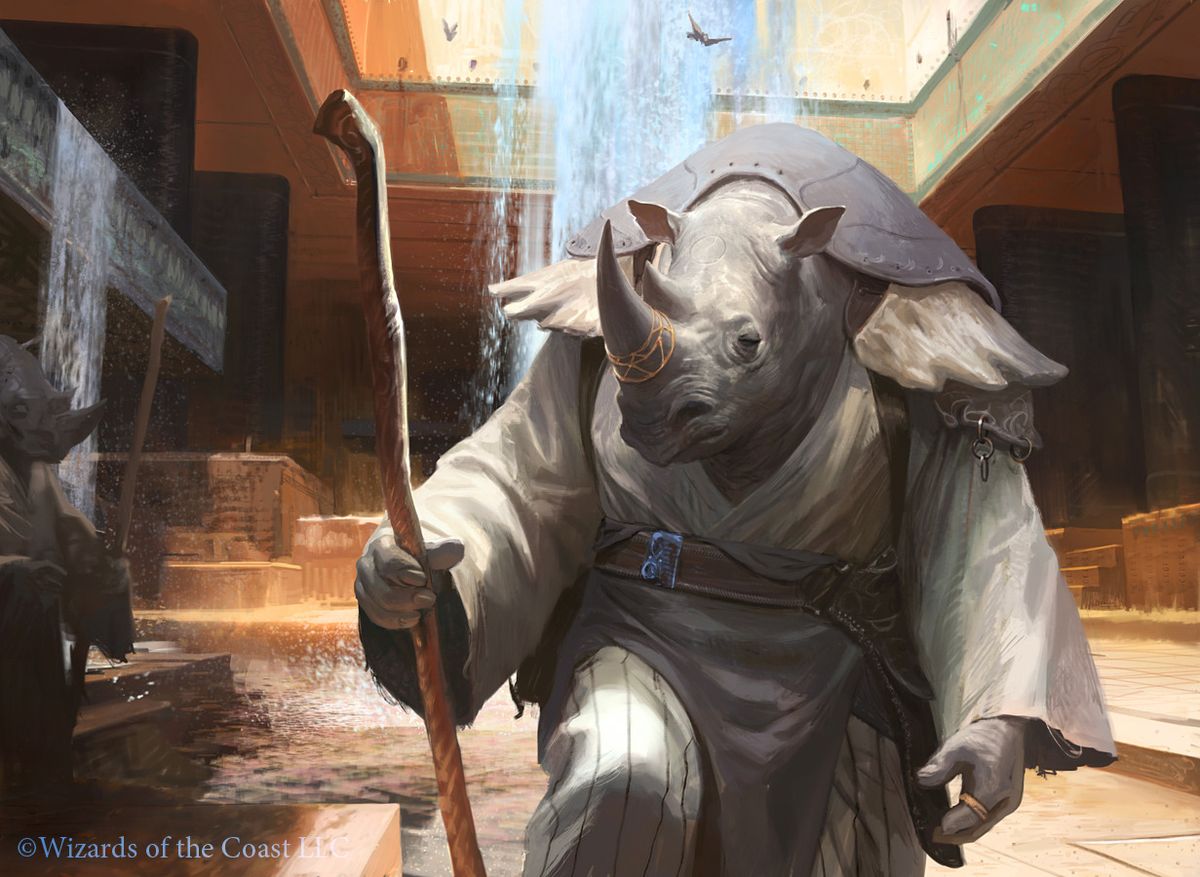
Mer follow the tradition of only having a single name, unless one earns more. All are born with just one name, and only those who have claimed a victory so great as to equate to the greatest achievement in another's life, may they add onto their name. Those heros and greatest leaders end up with so many names that they remove all but one, and go by a title, summarizing their names and their extensive history of glory. These additional names are added at the end with an apostrophe. Duv may be the name of many mer, while Duv'an is one who has achieved a deed worthy of extending their name, and Duv'aanos'khul is a mer most renown. After about the third or fourth extension, the mer will return to their original name (or a new name, if they choose) and add a title to their name. While Duv'aanos'khul may be famous, Duv, the Stonewall, is far greater than he.
As a result, many in Merwin cities and towns have the same name. For to be called differently from others, you must live differently than most.
((OOC Name Generator Inspiration: Name Generator))
Male name examples:
Tharnok, Karnath, Rhogar, Torvak, Goroth, Drakar, Rhazul, Korath, Tharok, Zarnak, Grathor, Vaknor, Rhakorn, Dorath, Zorvak, Tharnakoth, Karn'thor, Rhogaroth, Torvakar, Gorothar, Drakornath, Rhazulan, Korathorn, Tharokan, Zarnakoth, Nozon, Tu'uarn, Tha'auk, Goarg, Go'ourg, Du'atl, Zare'zaaun, Ghour'ul, Ulu'nath, Brae'vas, Brunth, Tra'orc, Aark, Khul, Ghadad, Ghaduul, Zhun, Zhuunat
Female name examples:
Tharsha, Karr'atl, Rhogara, Torvi, Gloratha, Duv, Zan, Zua'aurn, Karnlith, Rhezli, Koren, Drakah, Rhazulron, Koratha, Tharaka, Zarnaka, Grathora, Vaknora, Rhakora, Doratha, Zorvaka, Thariana, Zare'zaaun, Tu'uarn, Naman, Tag, Zhunul, Nau'oul, Shu'uam, Tlovov, Tlotl, Tlolol, Ehztja, Brenth, Imoli, Moli, Shayoter, Ulu, Aedil, Ko'oull, Na'aulk
Important Figures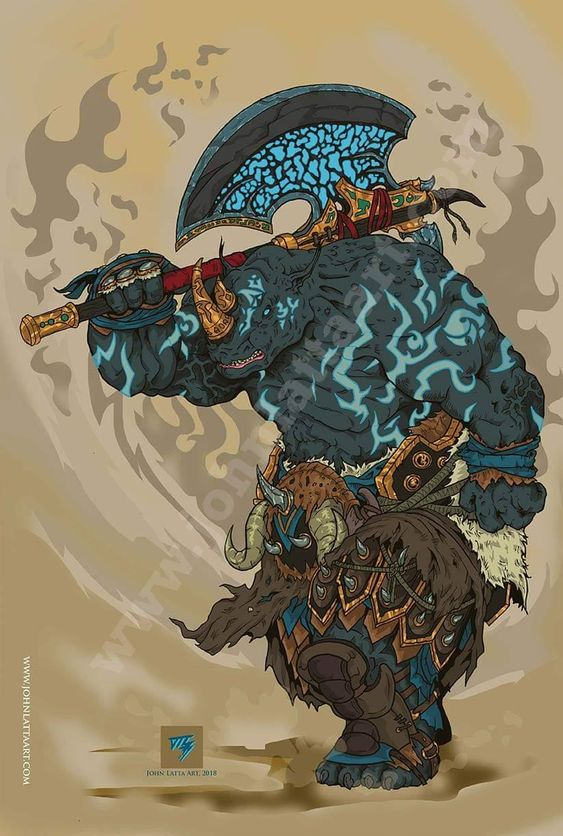
"You do not hunger for victory like I, dwünīr."
Rhazu, Cornicern General: No figure stands higher in mer history and mythos than Rhazu, once Cornicern General, now God of Victory. He was the mer who, with the aid of gods and great beasts, sundered and slew Zhumrikaal, the Comet Drake, the God of Dragons and all Ophidian. With this ultimate victory, Rhazu bathed in the blood of the god and ascended to godhood himself, claiming the earth as his Bell of Conquest. Seeing that he could achieve no greater victory, Rhazu split himself into 3 lesser gods, all remaining fully Rhazu, God of Victory.
Kalus, of Plenty: Not all mer were content with the abandoning of the ways of Leak-Leak. Though it occured centuries ago in the Age of Scales, Kalus, formally regarded as Kalus of Plenty, found that his people misunderstood the lazy squalor of the Lazing Lord for calm safety and material excellence. As Dominus of the mer, he shifted the image of his people, guiding them to a more relaxed and peaceful lifestyle. His reign is known to be the most prosperous, and his lands boomed with harvest. However, those around him in power saw things differently. They saw a ruler who convinced his people to abandon their sharp forms and return to the ways of squalor and pleasure-seeking, lazy and unfit for anything. Kalus was too beloved by the people for the councilmembers to murder him, so they pleaded with him to leave, lest they take his life. Seeing his options, the beloved Dominus called his followers to leave with him to a land far from Arumvex's Folley, in what is now known as the Nightfall. There he and his people created Divan, and are still there today.
Thonoz, the Willing: Once Thonoz'damav'ontow, Thonoz the Willing is a famous mer known for their adherance to the Pillar of Sacrifice. Once a Bellator, then a Bractan in the military, Thonoz fought in a dire time for the mer, where many other cultures all fought against their spreading power. Though Thonoz sought to retire to his twilight years, his country had need for him, and Thonoz was willing. Year after year did the elder mer extend his service to his people, continuing to recieve promotions he was unwanting of. Each victory and display of strategical intelligence boosted the fame of Thonoz, until he ended up as the Cornicern-General himself. When his battles were won after many years and he was able to retire, the mer sat in his home and died the very same day, his life complete. For his undying servitude and self-sacrifice, the Dominus at the time raised Thonoz'damav'ontow posthumously to Thonoz, the Willing.
Kotal, the Friend: In a time where mer were attributed for much of the suffering in the land, a hate was harbored in the hearts of both man and dwarf. Mer were not allowed in their lands for many decades, until Kotal the Friend swore to amend the relations between their people. Through what can only be called suicidal determination, Kotal would travel into dwarven lands with nothing but gifts and himself, and likewise to imperial lands with crafts and weapons of their lands. Much bloodshed was adverted by his cooly-held demeanor in the face of those who would love nothing more than to see he and his people on the head of pikes.
Dugug, Lutum Fictōr Rex Prime: Dugug was the first Drume crafter, bestowed the knowledge from master Golem Masters of yore. Lutum Fictōr Rex, the title given to the greatest of their crafters, and is sometimes seen as the greatest of them all. Her hammer and chisel are said to be able to give life to any stone. The name of this mer is heavily contested, as the runeforging dwarves of late are ever so interested in learning the name, so as to cleanse their line and scrub the knowledge from outside of dwarven holds.
Red Horn, of Might: One of the few recorded mer of black skin, Red Horn one of the greatest mer to ever live, second to only Rhazu himself. Red Horn is written in legend for being the savior of the continent itself during the Second Chaos Incursion, the Cataclysm. When the Empire of Man had fallen and the elves were faltering, it was the mer who arrived just in time to aid their fellow mortals. Without delay, it was Red Horn who charged the Doombringer, his horn coated in ardent, and able to fracture the ardent armor the Doombringer wore himself. Their fight was truly legendary, and is frequently sung in mer music. It is said that the only time ardent has ever broken in the history of Volantis was in this moment, and the effect of such is entirely lost to myth...
Rull, the Great Dominus: Rull was one of the incredibly few Albino mer in history. Said to have been born out of living stone rather than the mud most mer are thought to have originated from, Rull was concieved with a blade in one hand and a torch in another, the embodiment of Bral'vort, God of Bravery. The hero dedicated the ambitions of the entire Conclave towards eradicating those foul Liches of Sun Elven brood, inciting a war with dark and terrible powers in the War on Death.
Thu'uolk, Couth of Will: Some mer take "Victory at all costs" to the extreme. Thu'uolk is known for being the embodiment of this ideal, for nothing was off-limits for this Kurvakant. Subterfuge, murder, backstabbing, betrayal, trade alliances, stealing relics and even political figures; all was taken to advance the plots and schemes of Thu'uolk. The scheming mer eventually did have his victory, pulling strings and toppling stones in order for his house to become the premier house in Alqern for a lengthy period of time. His deeds are memorialized in a swath of land in Arumvex's Folley that bears his family's name.
Khar, Pureblood: When a Victorymonger sets their mind on something, there is little in Volantis that can stop them. Even more so, when embolened and strengthened by the art of Wardancing. Khar is known as the greatest Victorymonger, and is one of the few legendary Ebon Mer in history, similar to Rhazu. When Khar so deigned, a strangled blow of his warhorn would rally hundreds, if not thousands of mer to his cause, for they all knew any conquest involving Khar meant glory to last a lifetime. Khar is credited for having the longest winning streak in the open-arena battles the Mer hold, as well as being said to never have been bested in singular combat.
Shul'voo'aurc: Shul'voo'aurc is known as the greatest Wardancer, though that title is contentious. This is because such were her powers, that many scholars claim she had hold of an entirely transcendental magick entirely, able to sing and dance in such powerful manners that Wardancing could not claim her as theirs. Either way, she travelled the world, changing all she came across with her jovial and hearty tunes with her Kithar'aul, Thundering Threnody.
Legends & Myths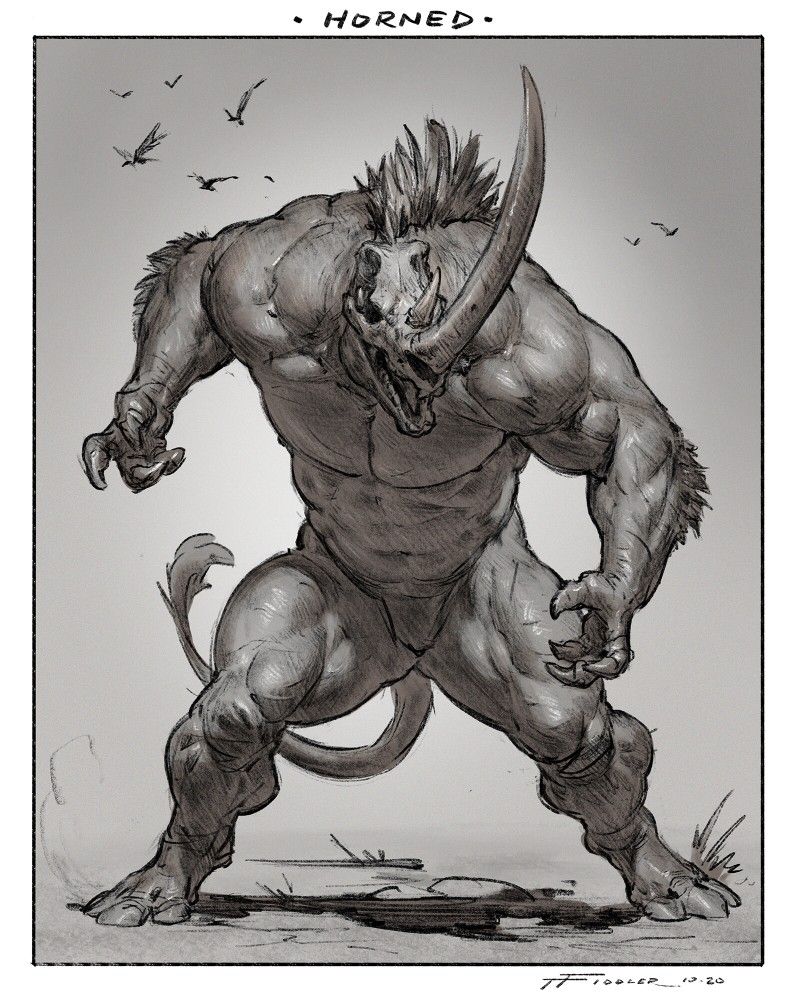
"If you do not sacrifice for your victory, your victory becomes the sacrifice."
Zhumrikaal, the Comet Drake: Said to be the God of Dragons and all Ophidian, this great beast is claimed to have been slain by the mer's Rhazu, God of Victory in the 2nd Age of Scales. His corpse is said to be that comet that circles the continent, raining meteors periodically upon the land. His shed blood is what stained Arumvex's Folley red, and is what the land is named after; Arumvex is the name for Zhumrikaal in the King's Tongue of Sarword. His bones would make up Zoro'lith, arriving upon the land of Volantis as his corpse floats around the world, while Ardent is said to be the blood shed by Rhazu during their legendary fight.
Fixed Odds: The fang of Ribattal'ug, given to the mer upon their abandonment of the ways of Leak-Leak. It was used by Rhazu to decapitate the dragon god Zhumrikaal, and is said to be the most potent weapon in the land, so long as it is wielded by one who is willing to seek out victory at any cost.
The Heartblood: A golden pool of liquid sits somewhere in Arumvex's Folley, claimed to be the blood of either Rhazu or Zhumrikal, depending on the story. Those who drink it are said to live forever, fly, gain untold magickal powers, and even turn into a Dragonborn, so varied are the stories. No matter the truth, what is real is that the liquid is always warm, and it's pool never runs dry...
Ancient Glory: Some within the mer, particularly elder mer, claim that in a time long ago, even before the ways of Leak-Leak, the mer were by far the most advanced civilization in Volantis. They boast claims of great contraptions of green that stormed over the earth, changed the weather, even created entire landmasses and could create anything your heart desired in a blink of an eye. The answer as to why they lost their technological advantage? So advanced grew these ancestrial mer that they ended up destroying their entire lands with magickal technology, reducing their entire civilization to the remnants in Relic Metal we see today. Just boasts, of course...
Albino and Ebon Mer: In merwin history and myth, those mer of white or black pigment are known to be great indeed. As the largest examples, Rhazu was an Albino mer, whereas Red Horn was an Ebon mer.
The World Spirit: According to Vita'karn, the merwin faith, the spirits of the departed live on as voices within the elements of the world: winds carry whispers of guidance, rivers murmur old tales, and rocks vibrate with the courage of those who came before. As the world itself is the Great Bell of Conquest of Rhazu, each person that passes on is written into the world, and remains to give their advice. These whispers might provide encouragement during challenges or offer advice in moments of doubt, directly linking the living with the spiritual. Though not all who whisper do so for your gain...
The Primal Beasts: In the times of old, far before the mer had become a full civilization as they are now, two Primal Beasts vied for their future. They were Leak-Leak, the Lazing Lord, and Ribattal'ug, the Thundering Threat. Each were titanic creatures that were nearly deific in nature, and each had their own views and philosophies for the mer to choose from. Initially did mer walk in the path of Leak-Leak, following the life of lazing and luxury, before the constant assaults of the Thundering Threat led the mer to slay Leak-Leak and cast off these ancient ways. Some say that either Leak-Leak or Ribattal'ug survived history, and now lurks in the deepest reaches of the Sapphire Bay, some say guarding great treasure...
Katallsang of the Lutum Fictōr Rex Prime: The Katallsang, or stonemasonry tools of Dugug, Lutum Fictōr Rex Prime the first and possibly greatest Drume crafter. Her tools are a wide variety of chisels both pointed and flat, as well as hammers of varying sizes. Her tools are said to be able to bring life to any stone.
Runebreaker: A warhammer of Zoro'lith, carven with veritable runeforged runed, though no dwarf created these inscriptions. It was used to aid in the destruction in a segment of the Great Rune Wall in the Aranthas Desert, during the siege against the founding Azbaric dwarves. Runebreaker is said to be able to bypass and destroy any runic enchantment, treating it as just mundane metal or stone.
Veiled Crash: An immaculately carven stonework of marvelous skill. None but the greatest stonemasons of the masterful Dwünīr could compare to the delicate lines and life-like handiwork seen in this masterpiece. It's marble is of the face of a human female, garbed in silken stone, with an air of softness, fluidity and weightlessness. Veiled Crash is so accurate in it's representation that it could easily be believed to be a real human woman, somehow turned to stone.
The Myth of Merwin Tails: Mer do not have tails, but a myth persists of a time where they did. It is said that in their pre-civilization days, they followed a great beast called Leak-Leak, which led them astray in long stretches of gluttony and lazing. In protest to their ways, the Mer cut off their tails, and killed Leak-Leak, vowing to change their ways into a more sharp form.
Fool Forge: Though they are no experts in metallurgy, the mer have a few tricks up their sleeves. The greatest of these is said to be an anvil crafted of the bones of Zhumrikaal, the Comet Drake. It's divine bones constitute a large anvil and furnace of immaginable heat, with what looks to be a faux heart in the center, said to be a piece of that very fool. With it do the merwin weapons of myth lay claim, with even ardent claimed to be melted within the forge of folly. None are able to accurately describe the anvil, however, leading it to be just a myth...
Thundering Threnody: The Kithar'aul of Shul'voo'aurc, the world-renown Wardancer. Never seen without her Kithar'aul, Shul'voo'aurc sang tunes that are regarded as far above anything any other Wardancer could perform, singing in a tongue wholy unknown to Volantis. Some say the secret to her powers lies within her instrument, Thundering Threnody...
Life and Death: The twin axes of Khar, Pureblood, the greatest Victorymonger the mer are to have known. They are forged of blackened steel, coated with terrible Gurza on Death, and Molzen on Life. These axes have tasted more blood than nearly any other weapon in Volantis, and some even say such was the goal of Khar, to taste victory over every living thing in Volantis. Whether or not he succeeded, only his weapons know...
Tarvos, the Drume Rex: Most drumes are anywhere between 5 feet tall up to 12 feet tall. Tarvos, however, was a truly titanic creation if the myth is to be believed. Standing at anywhere from 50 to 100 feet depending on the story, Tarvos was a lumbering beast of pure Zoro'lith, the largest Drume to ever be created. It was initially created in order to fight in the Second Chaos Incursion, felling foes that mere mortals would have no chance combatting. Tarvos was one of the many saviors of that Cataclysm, and survived the war with only minor damage. However, in the peace that followed, Idle hands made for the Tyrant's playthings, as the saying goes. Tarvos was reactivated, and used to beseige the Underempire of Khazgarim, doing mythical combat with the dwarven Imperator Golem Ghundal. It is in those mountains that the body of Tarvos is said to have fallen.
The Red Horn, of Red Horn: Possibly the most inspirational (and even greatest) relics of the Mer, the Red Horn of Red Horn is what remains of the giant horn that grow atop of the legendary Ebon mer who did battle in single combat with the terrible Doombringer. His horn, coated in unbreakable ardent, was plunged into the breastplate of the foe, piercing ardent for the first, and hopefully last, time. The horn bears a chip at it's point where pieces broke off, as well as black stains of blood caked from ages long past.
The Hunt of Ka'bicaara: Another great beast claimed to have been slain, Ka'bicaara is said to have been a great Primal Beast similar to Leak-Leak and Ribattal'ug. Unfortunately (or fortunately, depending on whom you ask), Ka'bicaara was also believed to be the Wise Panther, Chayol'se in Moon Elven mythos.
Festivals & Holidays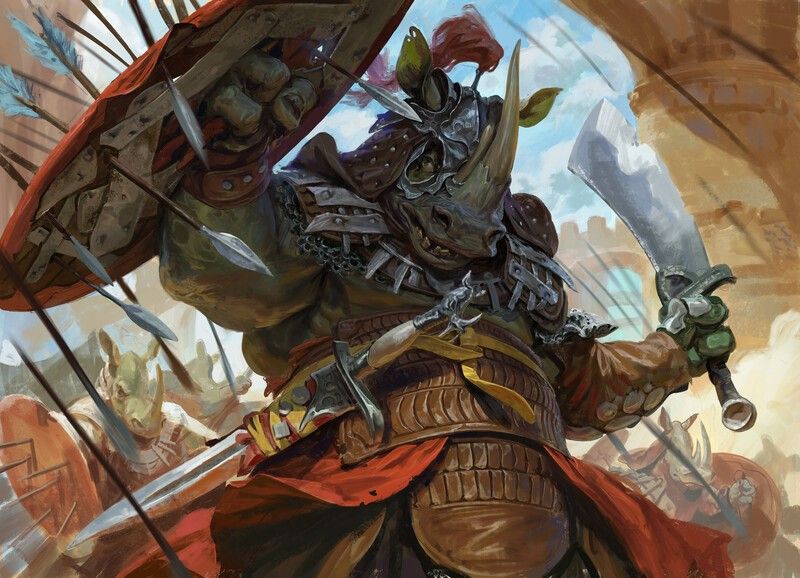
"To be a Gladiator is to earn the right to live with every battle."
Vigil of Fallen Heros
During the Dominion of Hoarpall
A celebration of the life and sacrifice of the noble heros who laid down their lives during the Cataclysm of the 3rd Age: Age of Legend to fight off the scourge of Chaos. Some cultures use this opportunity to pay respect to fallen relatives as well, a remembrance of all who came before, shown frequently in the form of gifts or walking vigil processions, to imitate the mobilization of war.
Day of Wiles
During the Dominion of Stormharrow
On a less-militant note, mer love the Day of Wiles in the Dominion of Stormharrow. As they love victory in all forms, they take it upon themselves to challenge others in acts of bardic composition and humor. Dance battles of Capoeira break out spontaneously in towns, and most of the greatest festivals for mer are held on this day. The wardancers break out their tampa'pel and their kithar'aul, while others stomp their feet to the beat, all while inciting others to carry out acts of tomfoolery and buffonery in the highest degree.
The Fulmination
During the Dominion of Soluary
Set in the hottest Dominion of the Chronicle, The Fulmination is one of the greatest events in the land. Heros, warriors and the greatest swordsmen are invited to the capital of Alqern, where grand battle is held in Olympic style, at the within the skull of Arumvex. All manner of events are conducted, from swimming races, sword combat, knife-throwing, archery, boxing, and even the merwin pastime of strapping huge blocks of stone to the chest and then destroying them with a blow from a freezflame hammer. The main event is the Ascension, where contenders will fight, either in individual tournaments or group ones, until only one stands tall. These fights are held with full armor, a full arsenal of weapons, and the looser is taken of their life. One may cease their ascent at any time after a victory, but those who stay risk death, or true heroics. Many nobles in merwin society are born from victories in this arena, as well as heros that go on to do even greater acts.
War of the Flowers
During the Dominion of Luminary
To no surprise, mer are great at warfare. To sate their desire for action and victory, once a year they orchestrate a false war in their lands, which they call the War of the Flowers. This fake war features organized battles where each town captures neighboring town's warriors, conducting fake blood-sacrifices for points to their team. The event is taken very seriously, as if it were a real war, though the blades are all of dulled stone and wood. Whoever wins the War of the Flowers at the end of the Dominion is crowned with a weave of flowers, which quickly wilt away. More permanently, those who place in higher-positions out of all competing earn the right to wear extravagant wardrobes, and are paraded through streets in very real pomp and circumstance for their fake war.
Mer-der's Eve
During the Dominion of Eye's Mirth
Good spirits, the Mer take part in the very holiday that is created to tease them. They love to wear terrifying and spooky outfits, as well as gentle and soft gettups for the females. Many tricks and demanded, and less-so of treats. When it comes time to terrorize the towns, mer have to ensure they do not go overboard, for some are still scared of their height, and history.
Elfsgiving
During the Dominion of Eventide
Less-so-much as to celebrate the so-called "Enlightenment" of mankind, and moreso an excuse to eat, Elfsgiving is an opportunity for mer to channel those ancient ways of Leak-Leak, and overindulge. Extravangant feasts and banquent tables set for the likes of nobles is had in many a home, bringing students and soldiers home from abroad.
Dwünsmas
During the Dominion of Icewind
Mer love to give gifts, as they are not a very materialistic people. Ceramicware is the most common gift, and other cultures give them various foods, artworks, and the favorite: weapons and armor. In order to fit in, mer even bake the customary small cookie in the shape of the sun, setting it within the packaging.
Funerary Rights
Mer, unlike most, burn their dead. Though they exalt their dead and seek their wisdom as part of the World Spirit, the mer regard their bodies as unimportant. It is unheard of for a mer to risk life and limb to recover a deceased friend's body in a far-off land, to bury them at home. Those that are fortunate to be returned home upon death are cremated, poured into ceramic jars, and buried in stone tombs with a weapon and food beside them, as symbols of their life and it's effect on the world. Depending on the importance of the deceadent, grand monuments will be erected; if one is unimportant, you may get nothing but your death jar, but those who are famous get grand statues, lithic towers and more.
History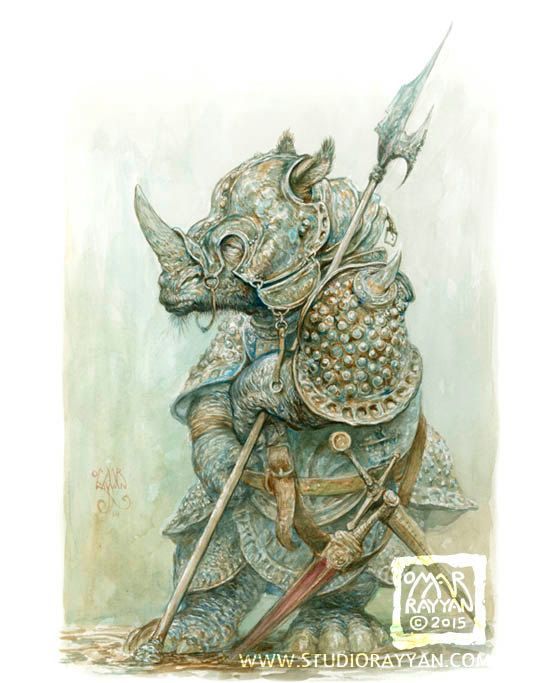
"The sweetest of victories does more than buy life. It rewards hope."
In the beginning of things, mer were scattered like all mortals were, spread out upon the world. If one is to believe their creation story, mer rose from the mud upon Volantis, ready to take on the world. They gathered into tribes, wandering the world until they found the Primal Beast Leak-Leak, the Lazing Lord. As told in their religious texts of Vita'karn, Leak-Leak was slain, as Ribattal'ug, the Thundering Threat, another Primal Beast, besieged their lands and taught them a new way to live. Where Leak-Leak kept the Mer in lethargic contentment, Ribattal'ug showed them victory and conquest, achievement and hard-work. Under the banner of the Predator did the merwin tribes unite, stepping out into a new, sharper form.
This would be the blessing of all of Volantis, for warriors that walked sharp paths would be needed in plenty in the coming decades. The Ophidian races would be rallying, their intent unknown though their threat apparent. All of the mortal races would find themselves at war in what would end the 2nd Age, the Age of Scales. It is the Mer who claim the ultimate victory, their god Rhazu in mortal form landing the killing blow on the leader of the Ophidian side, Zhumrikaal, God of the Ophidians. Rhazu did so with the fang of Ribattal'ug, attaining apotheosis in the act and creating Arumvex's Folley with that divine blood.
Despite their heroics and sacrifice, even so much as killing a god, the Mer were excluded from joining the Trinary State of Janna. Not ones to be disuaded, they licked their wounds and celebrated their victory by settling within the lands their god had made for them in Arumvex's Folley. Much happens internally within their civilization, such as the formation of the beginnings of the Ostracon, the establishment of the guilds, and even a dire famine.
A great deal was happening in the lands of the elves as well, for the dreaded Silent Moon took place, sundering the moon as we know it and fracturing the United Elves, with most fleeing across the Sapphire Bay, while others ran deeper into the desert of Aranthas. A great but short war was even waged against the fledgling Glassaxes, as they arived to the Aranthas Desert to establish a hold, while the Mer met them there to establish whether they were worthy of such a grand deed.
Over many more decades, the Empire of Man had begun to be fully established, and was pushing their boundaries far. They came across the Mer, who were more than happy to have a grand new challenge in the Imperials. What came as a shock to the Mer was that they were loosing. The numbers of many were like locusts, swarming their red lands and defeating any roaming band of merwin warriors.
Though it seemed the Mer were to be bested and driven out of their lands, the Imperials would not forsee those who would come to their aid. As the time had passed in the number of decades since their great war in the end of the 2nd Age, those once-enemies in the Ophidian came to the Mer, and requested to join them as allies. Thus was the first Dominus appointed, ruler of both Mer and Ophidian races, and the Conclave was founded. With both races of scale and hide united, the Imperial forces were abated.
They were only abated, however, as the Imperials were spared the fate of their towns and homes being razed. In the realization that the Mer were not out to destroy them, they came to the conclusion that the focus of mer could be redirected. They were hired, and the first merwin mercenary armies were formed.
Great was this time for mer, with much fame and fortune (especially fortune) acrued. So great were the merwin mercinary armies that they began to grow in political power, roaming warlords that held more power, wealth and political sway than even the Ostracon; worst of all, they were numerous. Mer drifted further into the ways of Ribattal'ug, too far. Like savages did they throw off their honorable ways, destroying homes, raiding and pillaging everything in sight, growing more vile and cruel in their hearts. Enemies were killed and prisoners were taken with brutal efficiency, thrown into slavery simply because they had the power to do so, and thus did they do so. There were no dissenting voices or moral quandries about this within the bands as well, for this was the way, and the only way. They were a people of war, though they continued to recieve great funding, as they were the greatest warriors in the land.
Eventually did these mercenary bands run out of enemies to fight, turning on each other. Those that remained after many blightful years became legend, as well as the new rulers of all of the Conclave. Through political turmoil and a restructuring of power, the mercenary bands were sated of their political desires, while allowing them to play a more minor role in the nation of the Mer.
Not all mer were content with the abandoning of the ways of Leak-Leak, in far away times. Though it occured centuries ago in the Age of Scales, Kalus, formally regarded as Kalus of Plenty, found that his people misunderstood the lazy squalor of the Lazing Lord for calm safety and material excellence. As Dominus of the mer, he shifted the image of his people, guiding them to a more relaxed and peaceful lifestyle. His reign is known to be the most prosperous, and his lands boomed with harvest.
However, those around him in power saw things differently. They saw a ruler who convinced his people to abandon their sharp forms and return to the ways of squalor and pleasure-seeking, lazy and unfit for anything. Kalus was too beloved by the people for the councilmembers of the Ostracon to murder him, so they pleaded with him to leave, lest they take his life. Seeing his options, the beloved Dominus called his followers to leave with him to a land far from Arumvex's Folley, following the path of the fleeing Elves across the Sapphire Bay many decades ago. Those acolytes were numerous, and they believed that the mer of today sought great victory to be written upon Rhazu's Great Bell of Conquest, which is the world itself. They believed this was a farce, and nothing awaited them in the twilight of their lives, but the rulers pervaded this myth in order to keep the masses in misery and poverty, while they benefited from their labor and what they left behind. Kalus and his people settled in the lands of what is called the Nightfall, forming the people known as Divan, and are still residing there to this day.
As the ages turned, and the Mer took part in many more matters both militant and societal, their part was to be conducted on the world stage in the Second Chaos Incursion, the dreaded Cataclysm. In battles most dire, mer banded together at the last moment to face the Doombringer directly, with the mythical Ebon mer known as Red Horn facing off with his mythical Red Horn coated in ardent, piercing the breastplate of that same metal on the Doombringer, weakening him. The Drume Rex, Tarvos, was also constructed for this apocalyptic war, hewn of pure zoro'lith.
Following their victory of the Cataclysm, Tarvos grew inactive, and the Mer, seeking to relive such a grand victory again, send the collosus towards the capital of the Underempire of Khazgarim. What follows is a bloody war between mer and dwarf, leading to the fall of Azril'du'zharak. Many say it was the elves who orchestrated this event, but the truth as a mer may tell it is that it would do their ancestors no justice to leave such a magnificent vessel of Devotion such as Tarvos to waste away. The fall of the dwarven empire's capital is one of the prouder victories of the merwin people. Their mantra entering into the conflict was that of such: "It is our responsibility to topple towers that cannot bear their own weight, no matter how tall... or short."
Now, the Mer believe they are in the greatest days of their people yet. While some pine for the victories of Rhazu and Red Horn, and others the might of the Mer Mercenary Armies, most believe the time of myth is now, seeing this new Age of Discovery as an Age of Opportunity, where mer push their boundaries and seek out new expansions, resources, and conquests, for the betterment of their civilization, and the writing of their victories upon the Great Bell of Conquest.
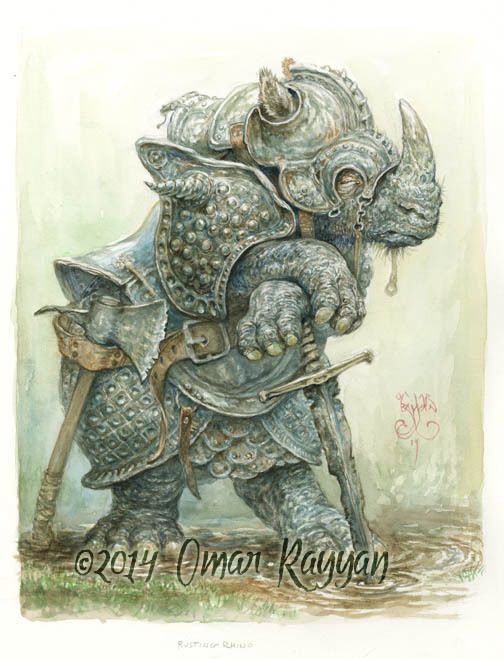
Last edited: 6 months ago